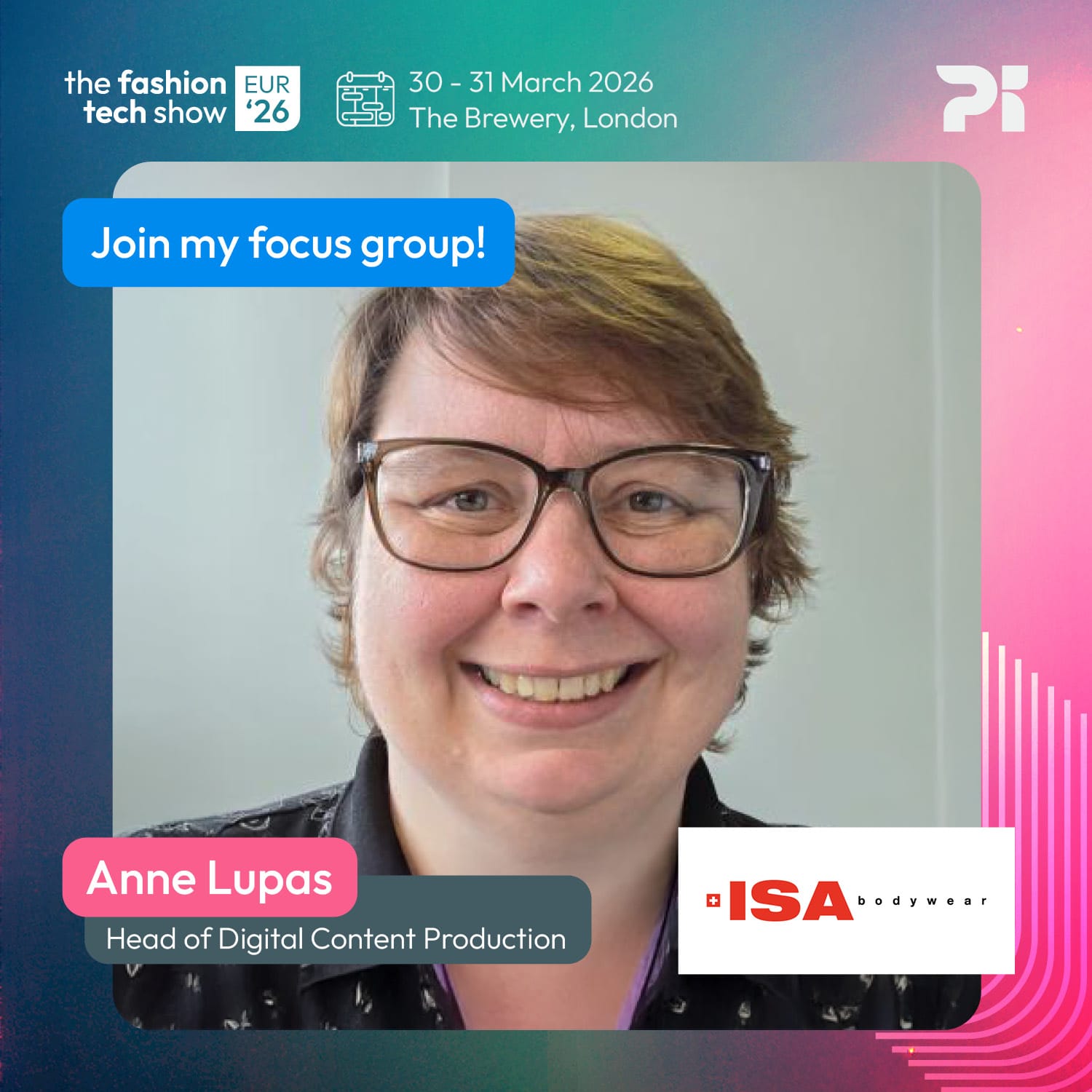

Speakers’ Corner gives you a preview of the voices you’ll hear at upcoming PI events, straight from the people shaping fashion and footwear.
In this edition, Anne Lupas, Head of Digital Content Production at ISA Sallmann AG, shares her perspective on creativity beyond the garment; from why fundamentals like 2D patterns still matter in 3D workflows, to how digital tools, AI, and animation can extend creative expression without replacing a designer’s voice.
1) What’s the most persistent misconception you encounter about 3D or digital design?
That you can simulate digital clothing without 2D patterns and digitized material parameters. 2D pattern is a must, digitized material parameters are needed if you want to achieve a higher quality of end results or use it for a more technical purpose.
2) How has sustainability influenced the way you use digital tools in product development?
The sustainability aspect is the reason I started with 3D in the fashion industry in 2013. I'm convinced 3D software and other digital tools help to make the industry a little bit less pollutive.
3) Will AI become a creative partner — or a creative disruptor — for apparel designers?
I think it could be an interesting partner but it should not be a replacement for your own creative language. It should be the colleague you go to in order to get some input when you have formed your own thoughts, not blur them away at the beginning with a content overdose.
4) What’s the best example you’ve seen of digital tools enhancing creativity rather than constraining it?
3D printing is a good example: you create something digital – a button, a giveaway or something creative for a hobby – and you can bring it into the physical world by printing it out. How amazing is that?
5) What advice would you give to a brand taking its first big step into DPC?
Take your time! Small steps, easy products and don't leave people behind, they need to understand the benefits and purpose for your company to help you reach goals. So far I've met three types of users when it comes to implementing 3D in a company. The enthusiast, always open, always curious, but needs quick results. The sceptic, who’s willing but needs to know why and how it will improve their workflow. And the person avoiding change because they don't understand why they need to change their workflow; they are not willing to change the workflow or they are afraid to fail by using new digital tools.
6) Favourite digital tool in your stack — and why?
Definitely Blender. The software developed into something very powerful over the past ten years and I love to use it for work and private projects. I hope enough companies and active users keep supporting it so that we all can benefit from this open-source software for many years to come.
7) A product you’ve created (or seen) that makes you proud of where digital fashion is heading?
I started working as Head of Digital Content Production for ISA bodywear, a company selling daywear, nightwear and loungewear for women and men. They are a traditional Swiss brand with a long company history of over 175 years. I think they’ve existed as long because they were always valuing their traditions but not shy to adapt new technologies and ways of working like solar powered manufacturing and now a 3D supported workflow.
But what product made me proud lately? Some of my favorite things to create are small animations for social media, showing collection pieces in an abstract, new or funny way. It always makes me laugh and our customers value it with very positive responses. I think these are examples of how differently you can present fashion by using digital tools; it can be bold, generous, engaging or impossible and you don't need the physical garment to create it.
Anne will be leading the Focus Group, 3D Bodyscanning: What Still Matters at The Fashion Tech Show in London, taking place on the 30-31 March. Click below to find out more.