


ISPO may have held its final edition in Munich this year, but its influence reaches far beyond a single venue or industry. Across three days, it offered an unfiltered view of where sport, outdoor and performance are heading by pairing product showcases with an agenda that examined the cultural and technological forces reshaping the sector.
Sport is no longer anchored to one market, one archetype or one logic. Participation is rising everywhere, yet for reasons that differ by culture, community and lived experience. To prepare for the future, we first have to understand these nuances, because the market is no longer moving in a straight line.
This piece brings together the signals that defined ISPO 2025, spanning psychological drivers, evolving retail behaviours and emerging technologies.
Each tells part of the story.
Together, they mark the beginning of a new chapter.
1. Global Participation, Local Logic
The rise in global sport participation is not one trend but a constellation of culturally distinct movements, each shaped by its own logic, infrastructure and identity. ISPO spotlighted five regions that showed just how differently participation is unfolding around the world, and how these differences shape behaviour, retail demand and category growth.
➡️ In the Middle East, sport is nation-building
Across the Gulf, sport has moved beyond leisure into the realm of nation-shaping strategy. Governments are investing heavily - cycling superhighways, open-water venues, endurance centres, and city-scale activations like Dubai’s 30x30 - creating participation from the top down.
When governments build the infrastructure, communities follow.
Robin Trebbe, Al Mana Fashion Group
Here, sport is being designed into everyday life, and communities are forming around that momentum.
Industry impact: With participation rising fast, demand is being driven for technical equipment, premium performance products, and brands that can align with national sporting ambitions.
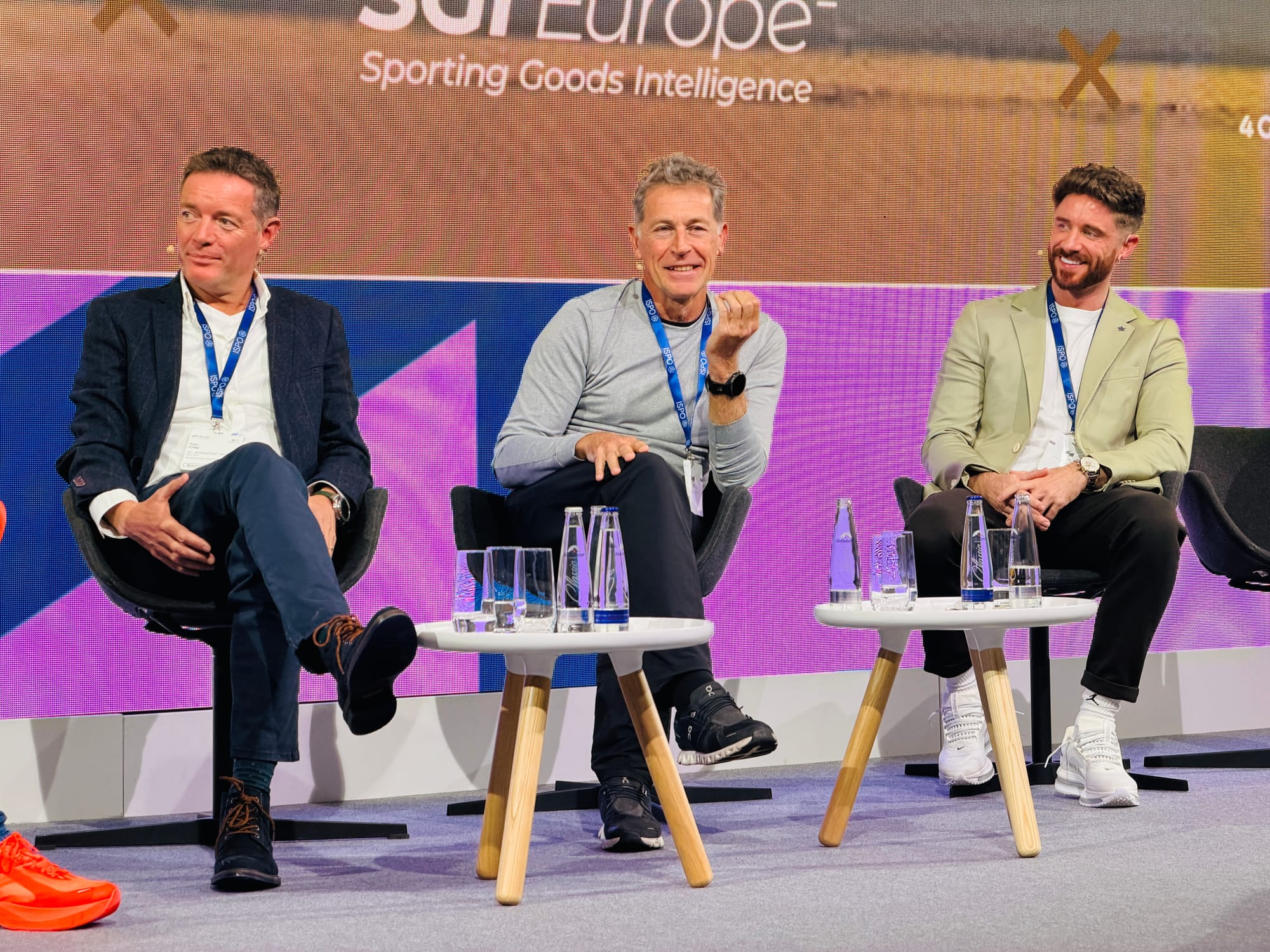
➡️ In China, sport is social identity
Running, trail, cycling and outdoor recreation are exploding, not because of marketing campaigns, but because sport now signals aspiration, belonging and self-improvement.
Outdoor is not a niche anymore; it’s becoming a national pastime.
Oliver Wang, China Outdoor Association
Community leads to premiumisation.
Premiumisation leads to loyalty.
Loyalty fuels domestic brand power.
Industry impact: China is transitioning from volume to value, with consumers trading up, embracing specialist categories and driving fierce competition between global and rapidly maturing domestic brands.
➡️ In Scandinavia, sport is culture
Outdoor identity isn’t acquired but inherited. Technical excellence, functional minimalism and sustainability aren’t differentiators, but baseline expectations. Scandinavia continues to foreshadow where wider European consumer values, aesthetics and shopping behaviours are heading.
Industry impact: Scandinavian consumers set the bar for performance credibility, pushing brands toward better materials, more transparent sourcing, and higher functional standards across Europe.
➡️ In Poland, sport is accelerating
Poland shows what a rapidly developing market can look like when freed from legacy constraints. Hybrid retail is the default; e-commerce adoption curves are among the steepest in Europe. The Polish consumer is highly elastic: price-sensitive yet brand-curious, experimental when value and function meet.
Our biggest advantage is that we can adapt very quickly - to economic shifts, political changes, and anything the market throws at us.
Piotr Turkot, b2b outdoor media/4outdoor Biznes Magazyn
Industry impact: This is a market with rising participation and rising purchasing power; a fertile landscape for new categories, D2C expansion and fast-cycling innovation.
➡️ In France, sport is specialising
Specialist retail isn’t declining; it’s crystallising. As mass channels flatten and e-commerce commoditises, French consumers move toward expertise, service and human connection. Specialist stores succeed not through volume but precision: trained staff, deep community ties and curated product knowledge.
Industry impact: France is doubling down on premium, specialised performance: strengthening technical categories, elevating service expectations and rewarding brands that invest in community and specialist partnerships.
2. Community is the New Product Engine
Community has become the true engine of product influence. Run crews, cycling collectives, cold-water swimmers, climbing groups and outdoor micro-tribes are shaping product expectations long before a brief reaches a design studio.
Across sessions on culture, belonging and motivation, one theme was undeniable: communities are no longer audiences but meaning-makers. They decide what spreads, what upgrades a category and what quietly disappears. Their behaviours explain why aesthetics shift, how emotional needs become design inputs and why certain products achieve cultural traction while others, despite technical merit, do not.
Communities move faster than brands. They discover new use cases, blend performance with identity and create narratives that product teams can no longer afford to overlook. They are reshaping the context in which innovation happens.
If brands once shaped culture, culture - in the form of community - now shapes them. For product and design teams, community insight is no longer a ‘nice-to-have’, but the starting point of the brief.
3. The New Consumer Psychology
Consumers are navigating a polycrisis world in which they are overworked, overstimulated and increasingly anxious. Movement has evolved from a purely physical pursuit to a form of emotional repair, and sport is becoming a way to regulate mood, reclaim agency and feel grounded again.
In the emotional landscape that emerged from the discussions, two forces stood out: Witherwill, the slow erosion of drive under constant pressure, and Strategic Joy, the intentional search for moments of escape, pleasure or delight. These are not abstract concepts; they are shaping how people choose to move, what they buy, and the feelings they want products to evoke.
People don’t just want better performance; they want better feelings.
Eryn Murray, WGSN
This shift has profound implications for product creation. Colour becomes a tool for mood-setting rather than mere branding. Materials become sensory stabilisers that calm or energise. Comfort is no longer a technical feature but a form of emotional architecture. And outdoor design becomes expressive, not simply functional.
Performance is no longer measured solely by what the body can do, but by how movement makes people feel. Teams that design for emotional outcomes, not just technical specifications, will be closer to where the consumer actually is.
4. Retail Reinvented
Offline retail is not fading; it is transforming. Stores are becoming more specialised, more culturally attuned and more emotionally resonant. Retail visits are less about transaction and more about expertise, connection and discovery.
Even in highly digital markets, consumers still turn to physical touchpoints for validation and discovery. Offline retail remains where credibility is felt and where product confidence is reinforced. Stores are evolving from distribution endpoints into cultural spaces, carrying context and identity in ways that digital alone cannot.
Good retail is no longer defined by scale, but by sharpness. Not by endless choice, but by curation. Not by traffic, but by belonging.
5. Identity in the Age of Automation
The power of AI depends entirely on the structure beneath it. Taxonomy, metadata, modular content and connected repositories are not operational chores, but creative prerequisites.
Before AI can think, brands need structure.
Johannes Kastenhuber, INTERSPORT Austria
AI is not magic. It is the consequence of organisation.
But structure alone is not enough. The sessions also warned of a growing risk: if left to its own optimisation loops, AI tends to smooth everything into sameness. Funnels converge, aesthetics flatten, and brands begin to sound and look alarmingly alike.
Automation naturally pulls toward the middle. Differentiation must be intentional.
Michael Leidl, Sport Schuster
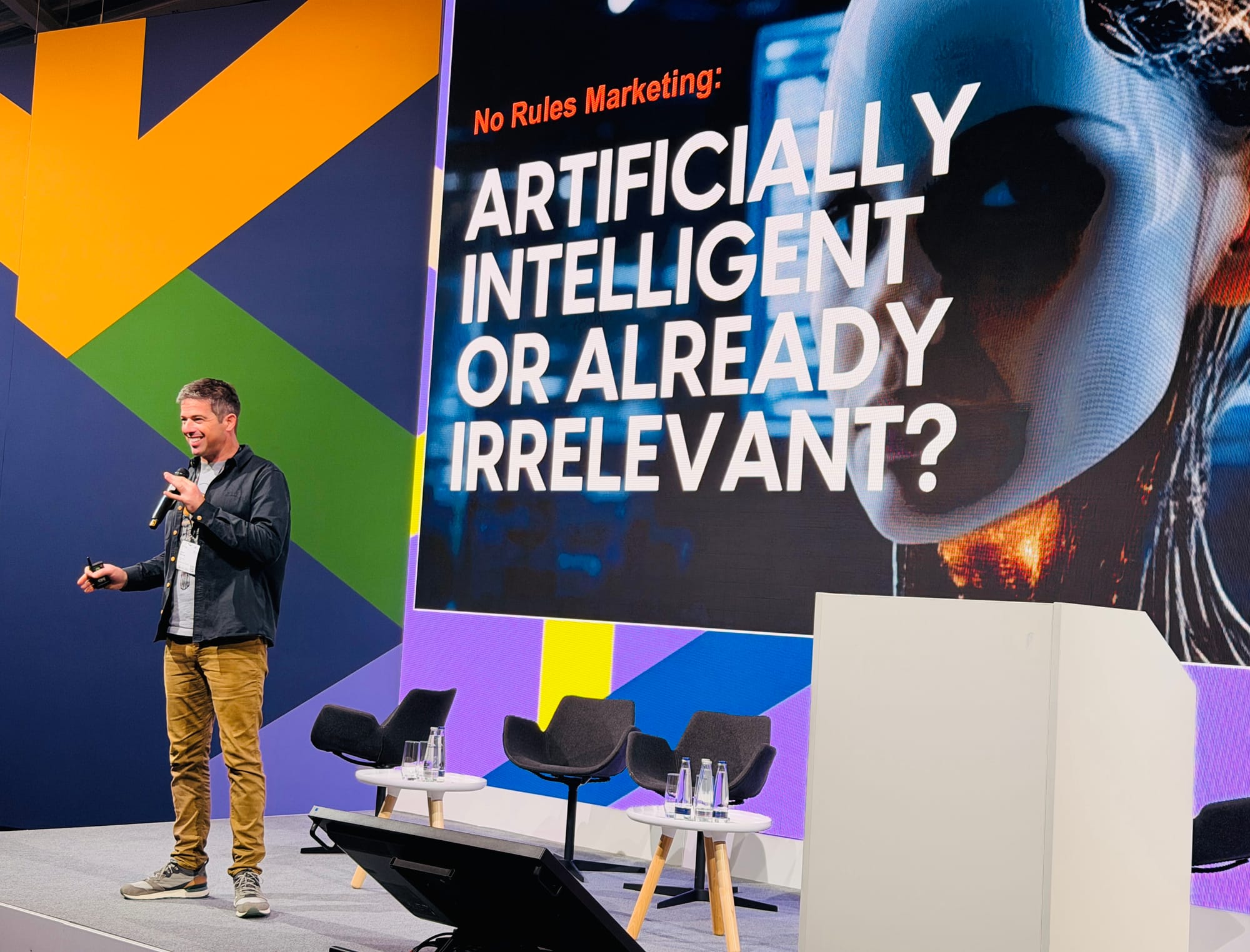
In this environment, identity becomes strategic. Creativity becomes strategic.
With infinite content available at zero cost, originality is no longer a luxury but a defence mechanism.
The rulebook isn’t being rewritten. It’s being deleted.
Daniel Macaulay, Brandwave
The brands that succeed in the age of automation will not be the ones that use AI to generate more, but the ones that use it to amplify who they are. AI can scale expression, but it cannot define it. That responsibility (and that opportunity) still belongs to the brand.
6. The Future of Product Creation
Across conversations, a broader reframing of performance emerged. Movement today is influenced as much by emotion, community, context, digital fluency and circular responsibility as by physical capability. Product creation is becoming an orchestration of these inputs rather than a linear path from brief to prototype.
Tools do not replace intuition; they scale it. They allow teams to test more, fail earlier and design smarter, turning complexity into a creative advantage rather than a constraint.
Nora Kühner, Nora Kühner Fashion Design Consulting
Performance is no longer a single dimension but a composite identity - how a product feels, functions, endures and fits within the culture that adopts it.
Sport creation is no longer linear. It is orchestral.
The Future Belongs to the Fluent
The next decade of sport and outdoor will belong to the brands that can read across horizons - cultural, emotional, technological and regulatory - and integrate them with fluency rather than force.
The winners will not be defined by scale or by the sophistication of their labs, but by clarity of identity, organisational strength, cultural intuition and relevance to the communities that shape demand. Technology will amplify these qualities, but it cannot replace them.
Tools accelerate.
Culture directs.
Emotion motivates.
Identity distinguishes.
And fluency binds it all together.
This intersection - where technology meets intuition, culture meets design and emotion meets performance - is where the future of sport and outdoor will be built.
So, if community is now the engine of sport, how closely are you listening to the people who shape your future?


