


For an industry that talks endlessly about artificial intelligence, fashion has shared remarkably little evidence of how it is being used inside creative workflows. Generative imagery has become easy to produce and increasingly impressive to look at, but it rarely reveals how designers are thinking or making decisions.
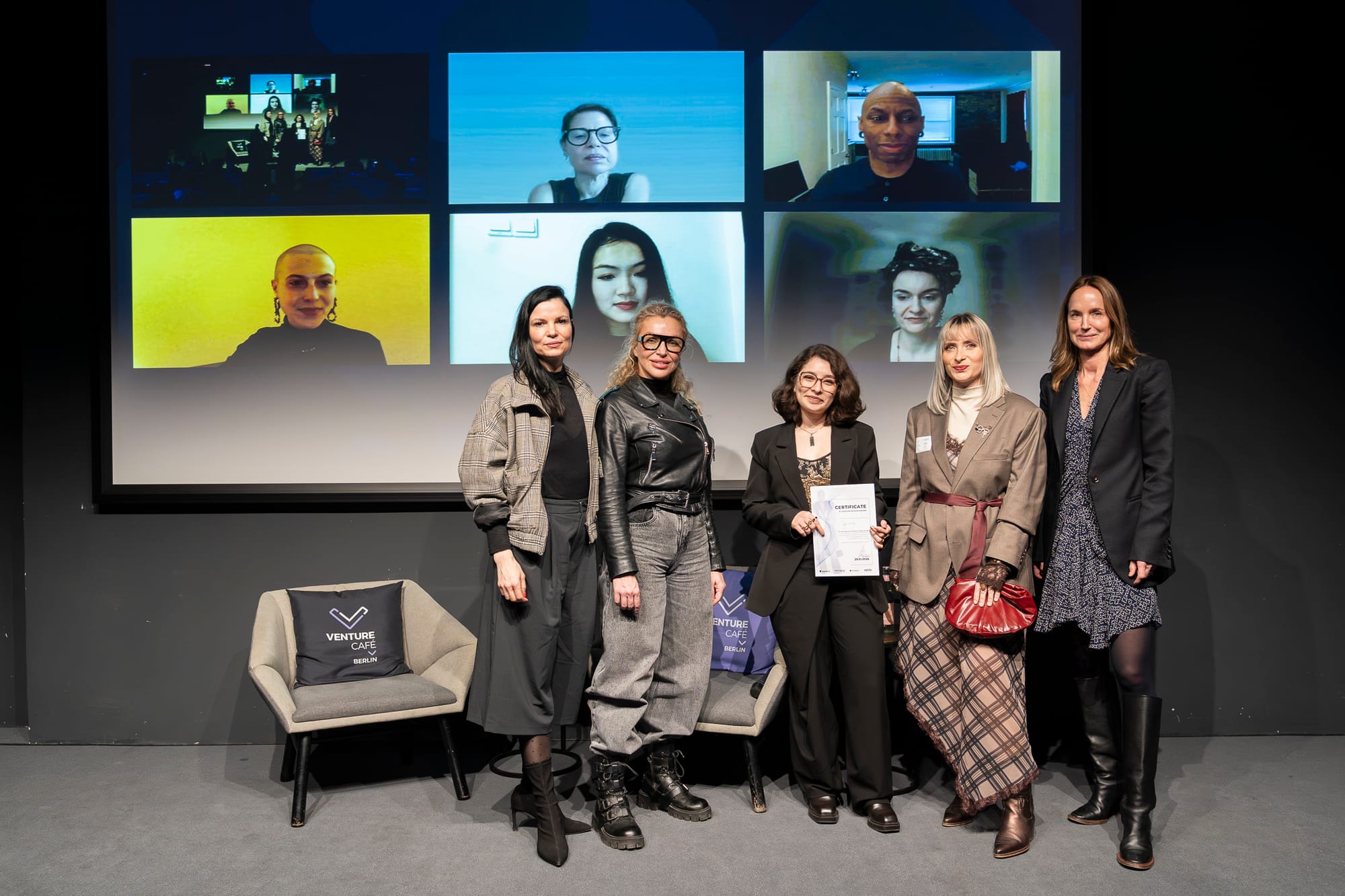
The yoona.ai AI Fashion Design Award was created to look beyond the noise and examine how AI is actually entering creative practice. Developed in collaboration with Berlin Fashion Week, the open global call invited designers to show not just what AI can generate, but how it enters their creative process.
More than 120 designers applied from across the world, spanning students, independent practitioners, and hybrid creatives working across fashion, digital craft, and emerging technology. Together, the submissions showed that AI tools are widely accessible, but what separates the strongest designers is knowing when not to use them.
Story, Structure, Intention
From the outset, Yoona’s CEO and Founder Anna Franziska Michel was clear about the motivation behind the award. AI had become omnipresent in fashion discourse, yet tangible, credible creative workflows were still hard to find.
“Everyone is talking about AI in fashion, but I never really see real outcomes, even during fashion weeks,” she explains.
As submissions arrived, that gap became more visible in practice. Interest in AI was widespread, but what varied dramatically was how designers framed their ideas before AI entered the process.
The brief was intentionally open; there were no aesthetic constraints, no prescribed workflows, and no instructions on how AI should be used. This was not an oversight. It was a way to reveal whether AI would be treated as a shortcut, or as part of a considered creative process.
What surprised Anna most was not polish or technical cleverness, but intent.
“The difference was having a story first, and then showing how AI played a role,” she says. “That’s where the work became interesting.”
Constraint, Material, Irreversibility
The winning entry, created by Öykü Ece Uza, stood out not because it leaned hardest into AI, but because it extended a practice that already existed long before the challenge. 'A Call from Roots' builds on work she had been developing through delights, her menswear brand, shaped by years of travel, sourcing, and material research across Türkiye.
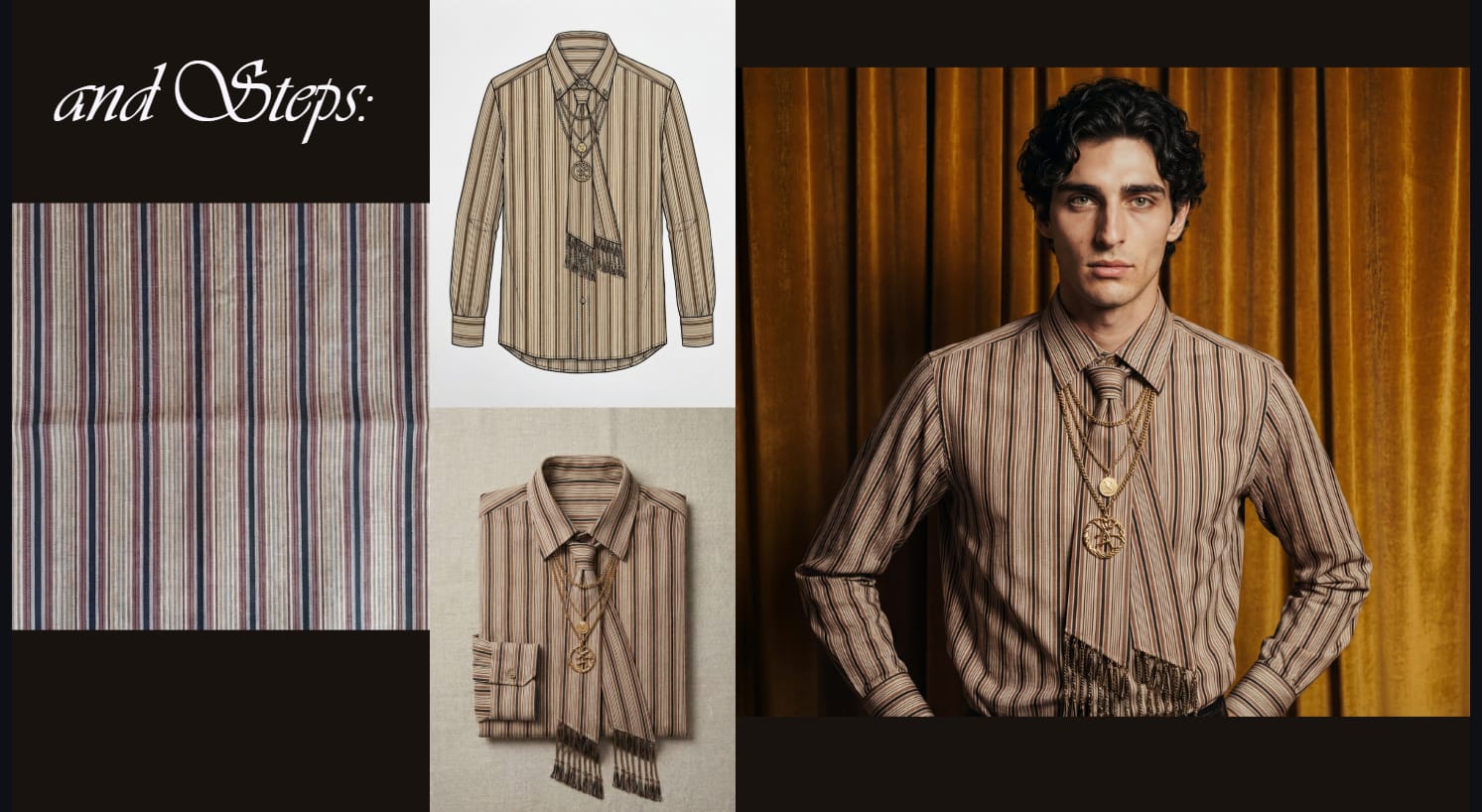
Rooted in rare Anatolian kutnu weaving, a traditional handwoven fabric produced in limited quantities in the Gaziantep region, the project was governed by constraint from the outset. Each garment was conceived as a one-of-one or small-edition piece, where the fabric set the rules and could not be wasted, replaced, or reworked once cut.
“If the idea is unclear,” she notes, “AI will only amplify confusion.”
AI entered her workflow as a translator rather than an author. Working with a custom AI model developed at FirstSight, where she also works as an AI Creative Director, Öykü used AI to explore silhouette, proportion, and narrative worlds digitally before committing rare materials to physical production. In this context, AI extended experimentation without waste and supported decisions that could not be reversed once made.
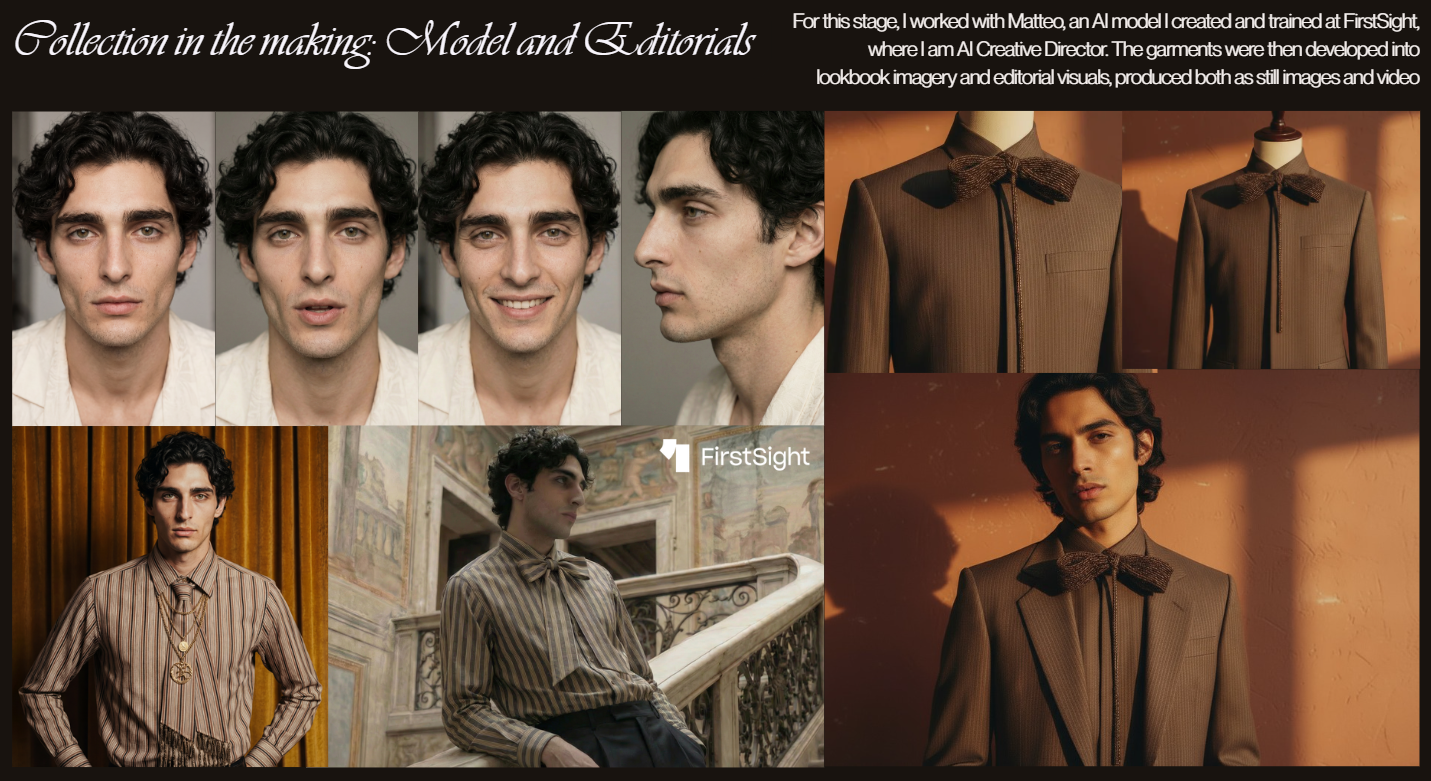
This was not AI layered onto a traditional process for effect. It was AI embedded into an existing, material-led creative practice, where authorship remained unmistakably human.
Öykü’s work revealed that AI-native design is not about generation, but about direction.
Language, Speculation, Negotiation
For Chengyin (Angela) Xu, a challenge finalist, AI functions less as a visual engine and more as a thinking partner.
Her practice begins not with prompts, but with writing, emotional mapping, and cultural reference points rooted in transformation, identity, and the body in digital space.
“I don’t let it decide for me,” she explains. “It’s more like a collaborator, expanding a conversation.”
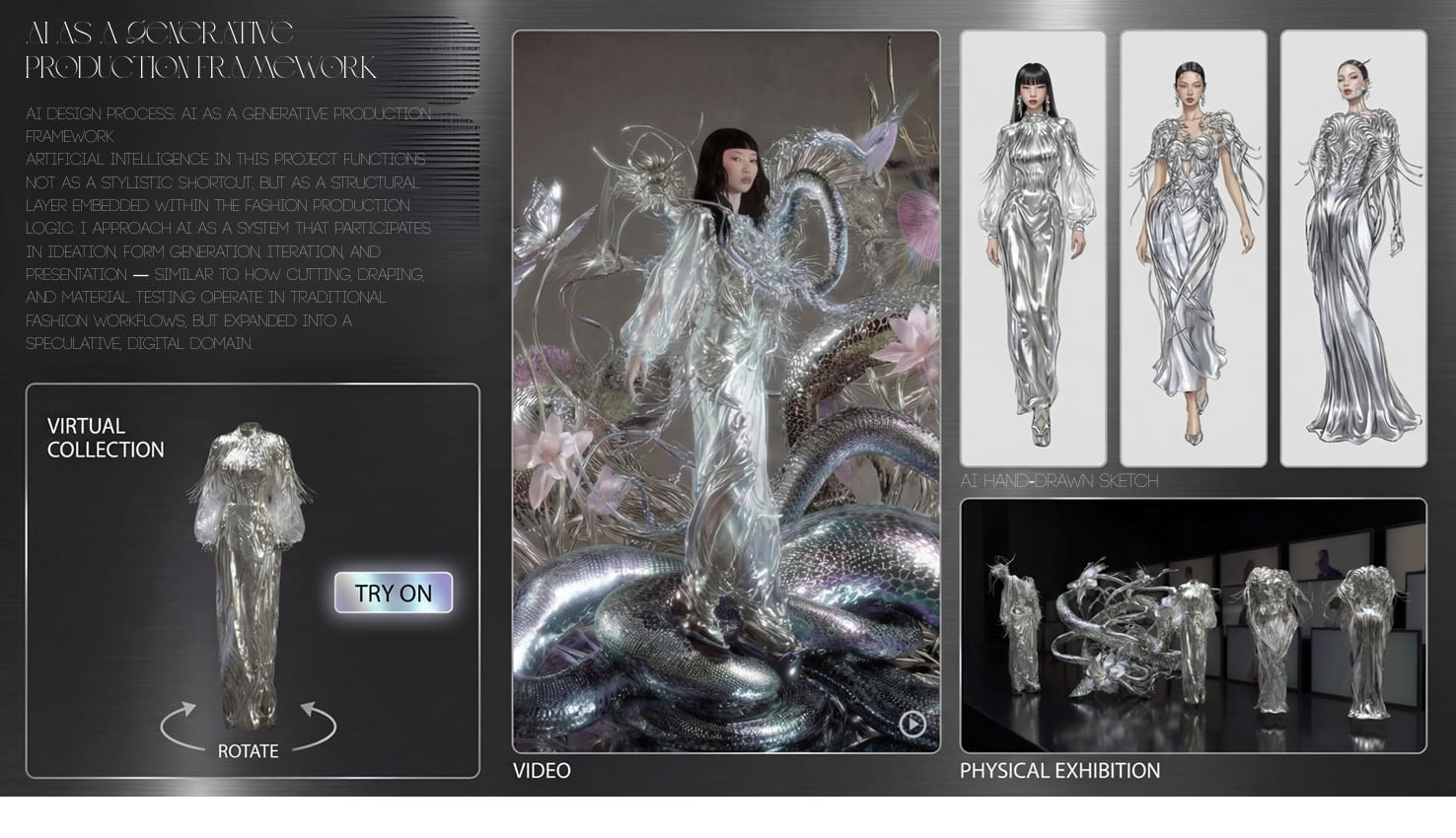
Only once those foundations are clear does she invite AI into the dialogue. Rather than aiming for finished outputs, she uses AI to explore unexpected silhouettes, structural tensions, and possibilities she might not have imagined alone.
Crucially, breakdowns and distortions are not treated as failures. They become signals.
“Sometimes the mistake points somewhere new,” she says. “I try to negotiate with the system rather than fight it.”
In her project Ecdysis: Five States of a Body in Transformation, this negotiation becomes visible. Garments morph, shed, and reform across digital bodies, reflecting philosophical ideas of gradual change, thresholds, and becoming. AI accelerates exploration and introduces friction, but judgement, coherence, and authorship remain human responsibilities.
Here, AI is a space for questioning. Possibility expands, but restraint defines what remains.
Precision, Sequence, Expertise
For Ellen Judith Mueller, also a challenge finalist, AI is most useful once the product is already defined. Her workflow is technically explicit and arguably the most revealing for industry teams looking for practical application.
Her process begins deliberately and without AI. Knit structures, yarn logic, garment construction, and 3D visualisation are developed first using specialist knitwear and 3D tools. Only once the garments are resolved does AI enter the picture, not to design the product, but to explore how it is presented.
“I didn’t want AI to design the garments,” she explains. “I wanted it to help me develop how the work is presented.”
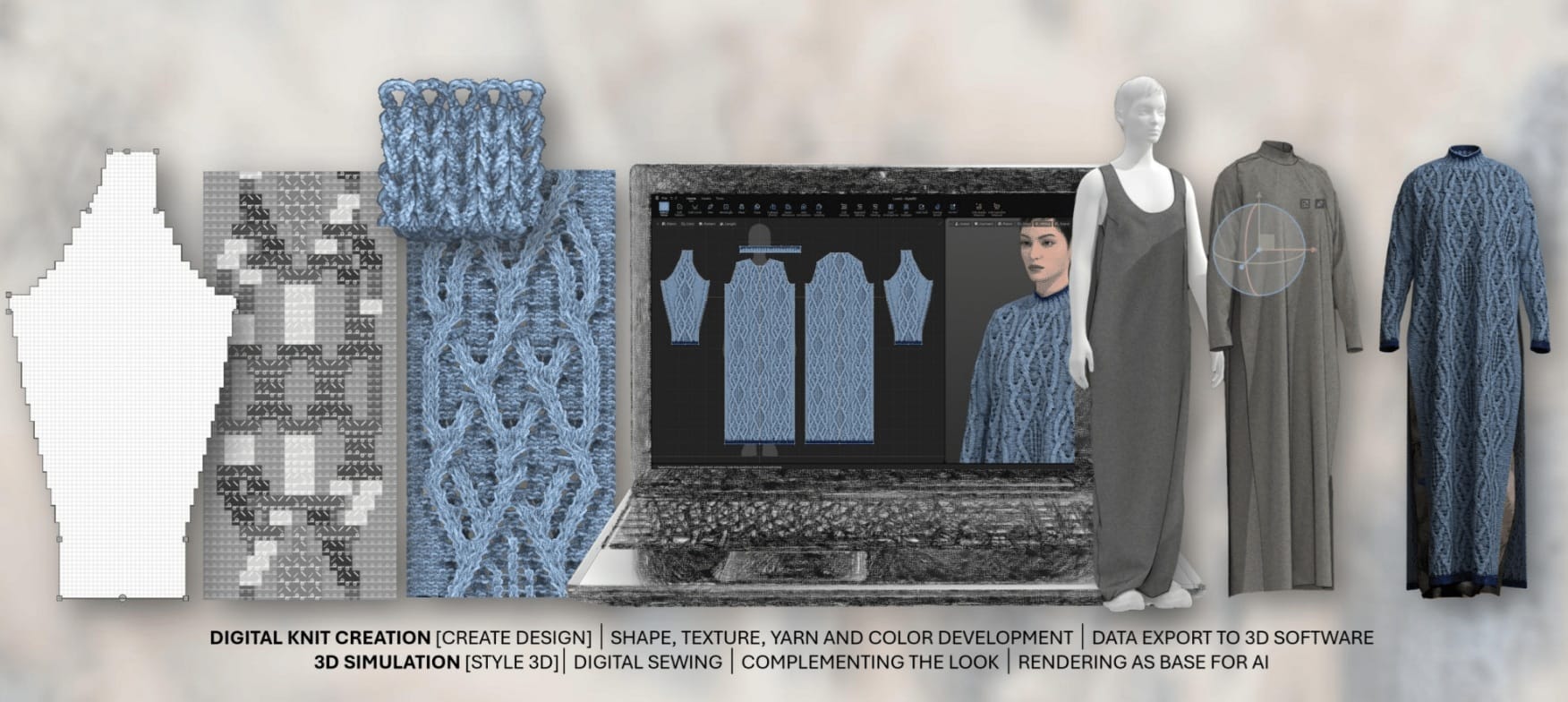
In her submission, AI is used to shape shooting concepts, environments, and visual mood, extending the design process into storytelling rather than replacing core decision-making. This distinction is central to her approach.
Ellen is also clear-eyed about limitations. AI still struggles with knitwear fidelity, material nuance, and technical realism. These weaknesses, she notes, are only obvious if a designer already understands those domains deeply.
“You need to know what ‘good’ looks like,” she reflects, “otherwise you can’t judge the output.”
AI accelerates iteration and expands visual exploration, but it does not remove the need for expertise. In many ways, it exposes it.
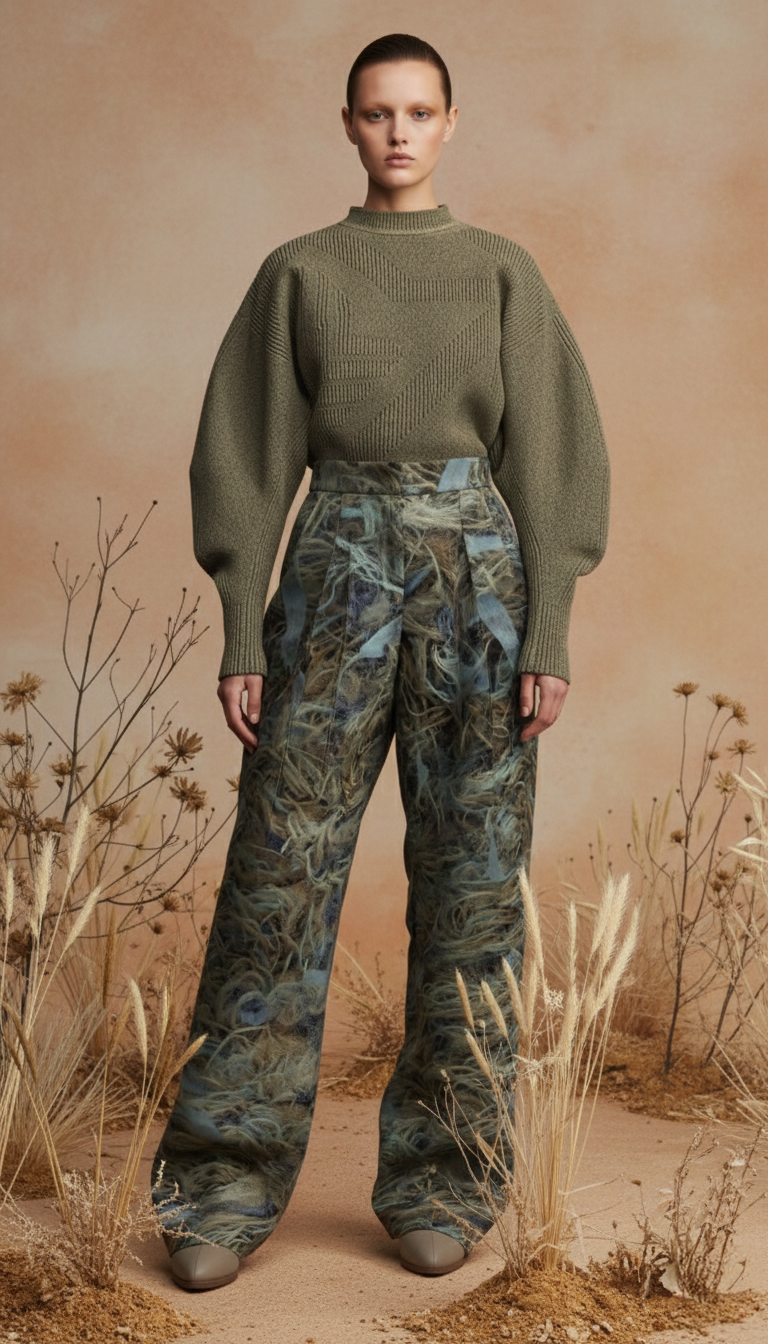
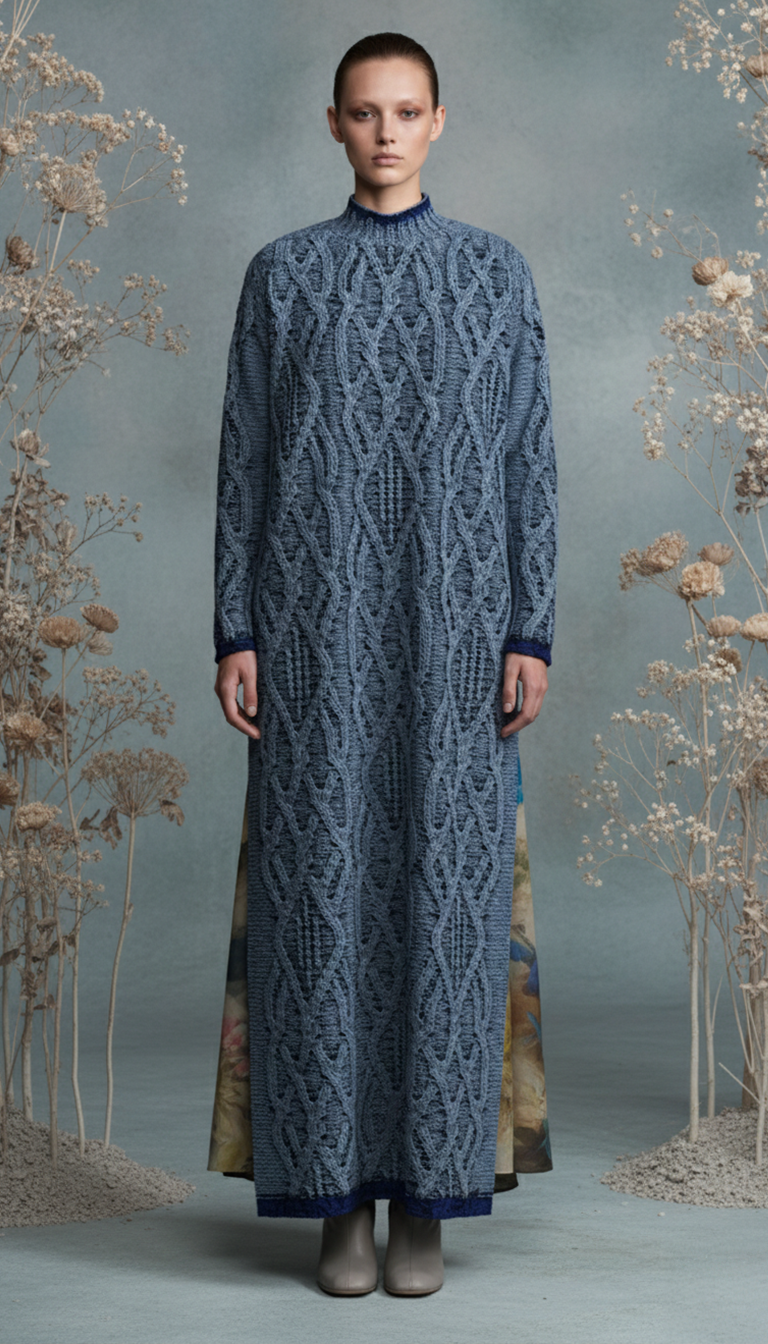
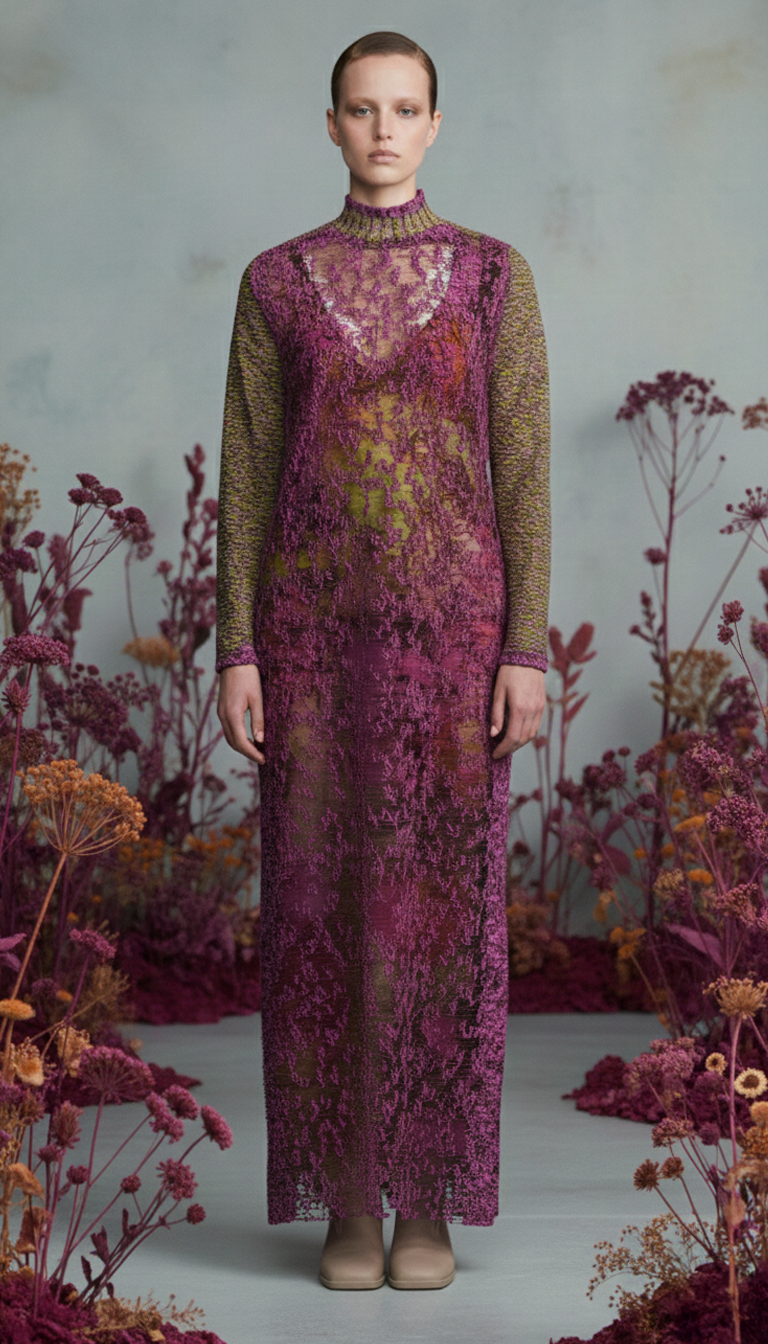
Three of Ellen's final generated looks
Authorship, Judgement, Limitations
From a judging standpoint, the evaluation process quickly cut through much of the prevailing AI hype. With more than 120 global submissions to assess, the focus shifted away from technical novelty toward authorship, coherence, and judgement.
For Julian Guthrie, instructor at Parsons School of Design, the distinction was less about which tools were used and more about how clearly the design proposition held together.
“Some of the strongest submissions felt like complete design presentations, period,” he reflected.
Cohesive entries demonstrated a clear thesis, consistent visual language, and a sense that the garments could exist beyond the screen. Weaker ones often revealed familiar AI signatures: interchangeable sketch styles, repeated bodies, and aesthetics that felt recognisable rather than authored.
At a certain point, the question became: was this a design proposal, or simply AI enjoying itself?
Julian pointed to a related gap between ideation and execution: “It’s great that we can ideate faster with AI tools. But at some point it becomes: how does this translate into making?”
That bridge between concept and execution became a recurring theme across the jury. As fashion photographer and AI Design Award judge Nikka Lorak noted, the most meaningful submissions demonstrated clarity of problem-solving. Why was AI used? What constraint did it address? How did it improve efficiency, sustainability, customisation, or decision-making?
Production-relevant work showed an understanding of real-world constraints: materials, timelines, costing, fit, and brand positioning.
“The difference,” Nikka observed, “was integration versus decoration. AI was strongest when embedded into thinking and workflow, not simply layered onto final visuals.”
From a systems and manufacturing perspective, fashion-tech strategist Sylvia Heisel framed the divide slightly differently. The work that stood out combined emotional clarity with functional logic.
“AI tends to make things that are very pretty, but often without a solid underpinning,” Sylvia noted. “The strongest workflows showed constant human oversight and refinement.”
There was also shared concern around homogenisation. As access to similar tools and datasets expands, visual language can begin to converge. Without strong direction, distinct voices risk being flattened.
Across all three judges, taste and restraint remained the differentiators. AI can mimic established aesthetics with increasing fluency, but it struggles to build a distinct design language without strong human direction.
“It’s not easy to prompt your way to building a brand identity that doesn’t just mimic something that already exists,” Heisel commented.
Their perspectives reinforced a consistent pattern: AI does not diminish the role of the designer. It makes authorship visible.
Recognition, Restraint, Responsibility
The winning and finalist projects do not point to a single AI workflow or aesthetic direction. They point to something more demanding: clarity of intent under technological pressure.
Where intent was clear, AI amplified it. Where thinking was thin, the results felt generic, no matter how polished the visuals. The differentiator was never the platform. It was clarity, discipline, and the ability to translate ideas into decisions that could extend beyond the screen.
As Julian Guthrie observed: ''The gap now lies not in generating options, but in translating them into making.''
The bigger risk for the industry is not technical limitation, but false confidence. AI can produce convincing imagery with growing sophistication. It cannot replace judgement, material understanding, or responsibility.
As Anna Franziska Michel notes, “The next generation won’t question using AI. The bigger challenge is mindset and process.”
This award did not signal a future where AI designs for us. It clarified the conditions under which designers remain in control.
Whether cautiously or confidently, AI is already being used.
What matters now is whether the industry learns to recognise and reward authorship, restraint, and intent before everything starts to look the same.


