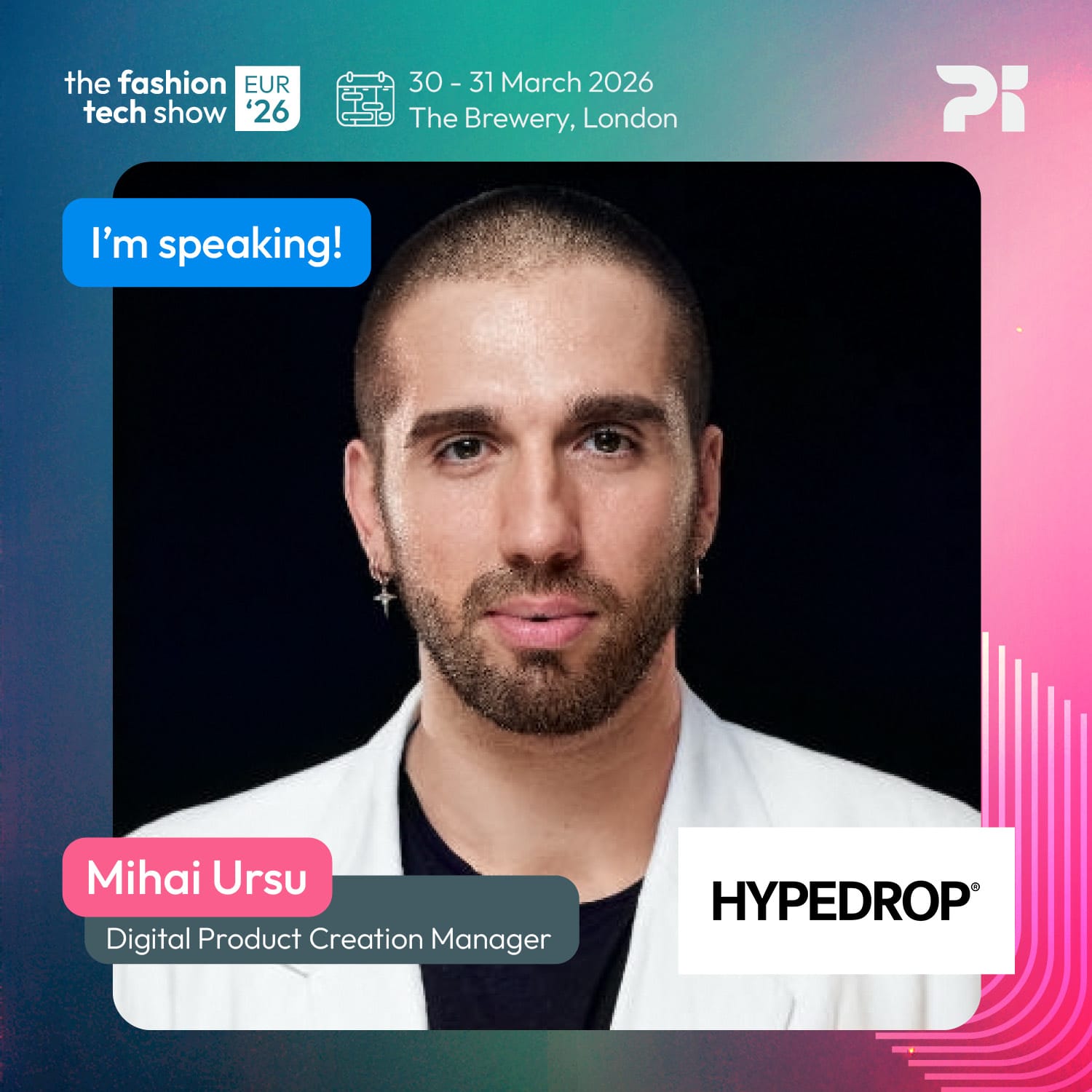

Speakers’ Corner gives you a preview of the voices you’ll hear at upcoming PI events, straight from the people shaping fashion and footwear.
In this edition, Mihai Ursu, Digital Product Creation Manager at HYPEDROP/Bestseller, shares his perspective on scaling DPC beyond pilots; from why alignment across teams still slows progress more than tools, to how digital transformation succeeds when it’s treated as a belief-driven shift, not just a software rollout.
1) What’s the most meaningful shift you’ve seen in digital product creation this past year?
For me, the biggest shift is that digital product creation is no longer being treated as an experiment. There’s much more focus on what it actually delivers (speed, clarity, and better decisions) rather than just adopting new tools. Teams are moving from “let’s try 3D” to “how do we build this into how we work every day?” That change in expectation is what really matters.
2) What’s the biggest friction point still slowing down digital workflows?
The biggest friction point is alignment, not technology. Many teams still work digitally in silos: design here, development there, business decisions somewhere else. There is a lack of full, convinced commitment, which cause workflows to slow down. The tools are often ready; the organisation around them isn’t always there yet.
3) What new skills or mindsets do you think teams need to build today?
Confidence and ownership. Digital tools give faster feedback, but they also require people to make decisions earlier and stand by them. Teams need to feel comfortable working with incomplete information, iterating quickly, and letting go of the idea that everything has to be “perfect” before moving forward. That mindset shift is just as important as learning new software.
4) What does truly seamless collaboration between design, tech, and manufacturing look like to you?
To me, seamless collaboration means everyone working from the same digital product reality. Design intent, technical details, and production constraints are visible early and clearly. When manufacturing is brought into the conversation sooner and through shared digital assets, there’s less rework, fewer misunderstandings, and much better flow across teams.
5) What’s one lesson about digital transformation you wish you’d learned earlier?
That digital transformation should be treated as a sales pitch. You might not need to have everyone on board from day one, but it needs to look attractive and advantageous to everyone, even if they don’t understand it. Progress does happens when you focus on real use cases, show results, and build trust step by step, but longevity and commitment is based on belief throughout teams and organizations.
6) What’s currently overhyped in the digital fashion technology space? The belief that tools alone will fix complex problems. Technology is an enabler, not a shortcut. Without clear ownership, realistic expectations, and strong leadership support, even the best tools struggle to create lasting impact. Sustainable progress comes from combining technology with structure and people.
7) Finish this sentence: In 2026, digital product creation will…
...feel less like a transformation initiative and more like a natural part of how fashion businesses operate.
Mihai will be leading the Focus Group, 'How Can Brands Scale DPC from Pilots to Adoption?' and sitting on the 'Connecting Fashion’s Digital Ecosystem' panel at The Fashion Tech Show in London, taking place on the 30-31 March. Click below to find out more.