

Speakers’ Corner gives you a preview of the voices you’ll hear at upcoming PI events, straight from the people shaping fashion and footwear.
In this edition, Miranda Morrison, VP of Design & Sustainability at Steve Madden, shares her perspective on the future of footwear materials — from the promise of next-generation bio-polymers to the hard conversations the industry must have about cost, responsibility, and long-term impact.
1) What innovation do you think will define the next five years of footwear?
I like to think it will be the evolution of bio-polymers. So many smart people are involved in formulating alternatives to fossil-fuel plastics and coatings.
Looking for healthier substitutes for my favorite molding materials was my entry point into exploring more sustainable solutions for shoes. It’s my dream to see the widespread adoption of next-generation polymers within my career lifetime.
2) If you could wave a magic wand and fix one industry bottleneck, what would it be?
I would want to see the “green tax” spoken about honestly. Refusing to pass the cost of saving our planet on to the consumer is hollowing out efforts to adopt preferable materials.
It’s like saying, “We have something here that might save your life one day, but I’m assuming you don’t want to pay for it.”
The drive to compete brand against brand is preventing us from discussing the “toxic tax” we will all be paying in years to come. We are, quite literally, just kicking a can of poison further down the road.
3) What does great collaboration between design, development and manufacturing look like to you?
It’s founded in respect, kindness, and appreciation.
When I design something, I always think about the implications for the developer and, ultimately, the manufacturer. If I’m asking for something difficult, I know why — and I admit that. If I need help figuring out how to achieve something, I bow to the experience of others and prepare for a spirited discussion.
It’s the joy of a lifetime to collaborate on advancing a shared approach. I always offer examples — from shoes, jewelry, industrial design, or handicraft — that clarify what I’m aiming for or spark collective problem-solving.
I draw on my experience in factories to understand what it takes to produce something at scale. I don’t expect that to be exclusively their problem. That said, I do push back when I feel corners are being cut. I aim for doable over easy. And if the concept has to change, I want to understand the justification before I agree.
4) Is the future of product creation more human-led or data-driven?
Data is not a creator. Data tells you what we have today and what we might need tomorrow — but data is not ideas.
Looking at data from informed angles should help us make associations and craft solutions to real problems. For example, AI can match millions of potential medicines to a rare disease and steer scientists toward possible treatments — but only a human can sensitively and imaginatively treat a sick patient with complex symptoms.
In my opinion, great products need a soul that speaks to the consumer’s hopes and needs. That requires a narrative thread from me to you — or from you to me.
5) What’s the best example you’ve seen of digital tools actually improving creativity, not killing it?
I’ve had great success interpreting 3D graphic models alongside blueprints when developing componentry. I started using this approach about five years ago, and it’s been nothing but helpful.
Poring over vast “picnic blankets” of lines, cross-sections, and measurements is slow and difficult. Being able to spin a solid model on screen gives you immediate, visceral evidence of what looks off-balance or wonky. Then you can return to the blueprint to sketch adjustments.
I’ve also had extremely high-grade 3D-printed prototypes made in China for molded products. Those truly blew my mind. Being able to see a molded product — in transparent, glossy TPU — without creating a metal mold saved time and showed me exactly how I wanted to refine the final mold design.
6) Favorite shoe of all time — and why?
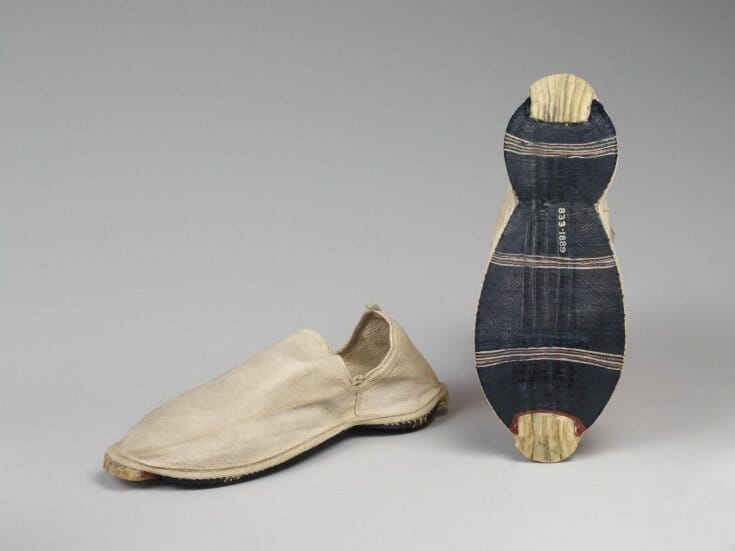
My GOAT shoe is a giveh from Iran. It has a handwoven cotton upper in a delicately contoured structure, set on an outsole of tightly pleated indigo cotton, held together with rawhide strings.
It’s traditional footwear designed for walking on hot sand. Every problem has been solved in a way that is as ingenious as it is beautiful. And they only work on sand — because the underside structure is designed specifically for that surface.
7) The most inspiring project or person you’ve worked with recently?
I’m especially excited about our ongoing project with AirCarbon. The possibility of safely sequestering carbon into consumer products is incredibly intriguing to me.
While we wait for better outsole materials to become scalable or more affordable, it has been a real adventure navigating this new science. I’ve been involved in every stage of the project — from discussions with the founder to shaping the visual and verbal language that explains the science to our customers.
I’m very much looking forward to launching our first AirCarbon-inclusive boots this summer.
Miranda will be bringing her perspectives to the stage at Stride USA 2026 (Portland, 9-10th March) in the deep dive session 'Circularity Under Pressure – Designing for Impact When Margins Are Tight', as well as sitting on the panel 'Footwear’s Next-Gen Talent: Bridging Industry, Education, and Emerging Voices'.