


Most of what I write on Seamless is about fashion technology; AI, planning, product creation, the digital thread. But spend enough time in this industry and you recognise technology has never really been the story. It has always just been the means to something bigger.
I wasn't expecting to be reminded of that on a day off in a museum.
Last week, while visiting Montreal, I spent an afternoon at the McCord Stewart Museum with no particular agenda beyond switching off. After three exhibitions with three seemingly completely different subjects, I walked out into the sunshine in full work mode, convinced they were all actually making the same argument: that the best fashion has never begun with aesthetics.
It begins with a purpose, a problem, a person.
Fashion Solves Survival
The museum's permanent exhibition, Indigenous Voices of Today, presents more than one hundred objects alongside personal testimonies from members of eleven Indigenous nations in Quebec. It opens not with a single dramatic object but with a statement: that Indigenous communities developed a comprehensive scientific understanding of the natural materials around them and the complex techniques required to transform them. What unfolded was a showcase of applied materials science, ergonomics, and functional design, developed across generations, without institutions, without peer review, and without the vocabulary that would later be invented to describe exactly what was being done.
The objects make the point better than any label could.
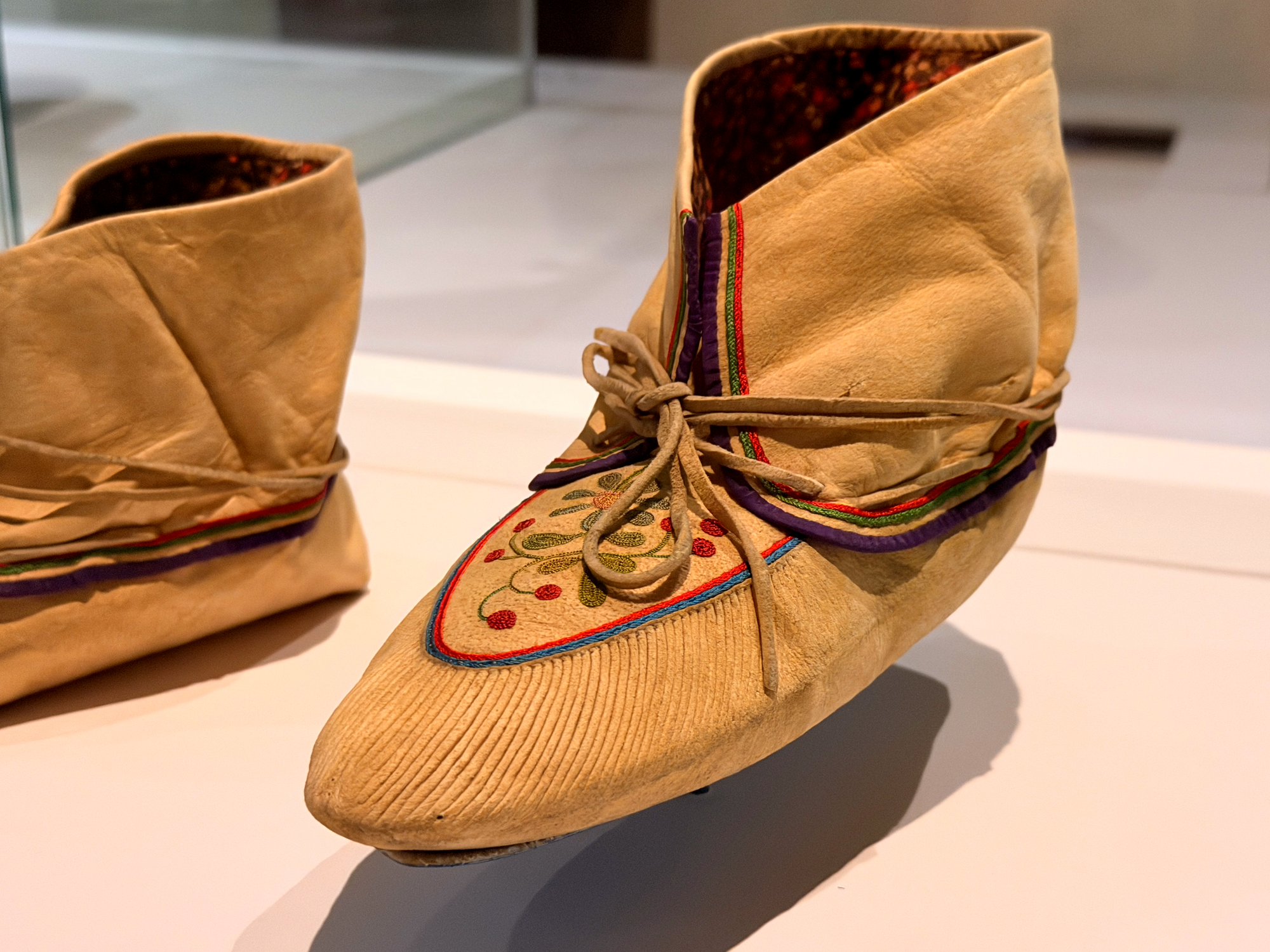
A pair of Innu moccasins, made of tanned and smoked hide, cotton cloth, embroidery floss, silk ribbon and cotton thread. The smoking process waterproofed the hide and kept it supple through repeated wetting and drying; a chemical transformation achieved through accumulated knowledge of how that specific material behaved under specific conditions. The embroidery on the upper was structural as well as ornamental, reinforcing the areas most subject to stress in wear.
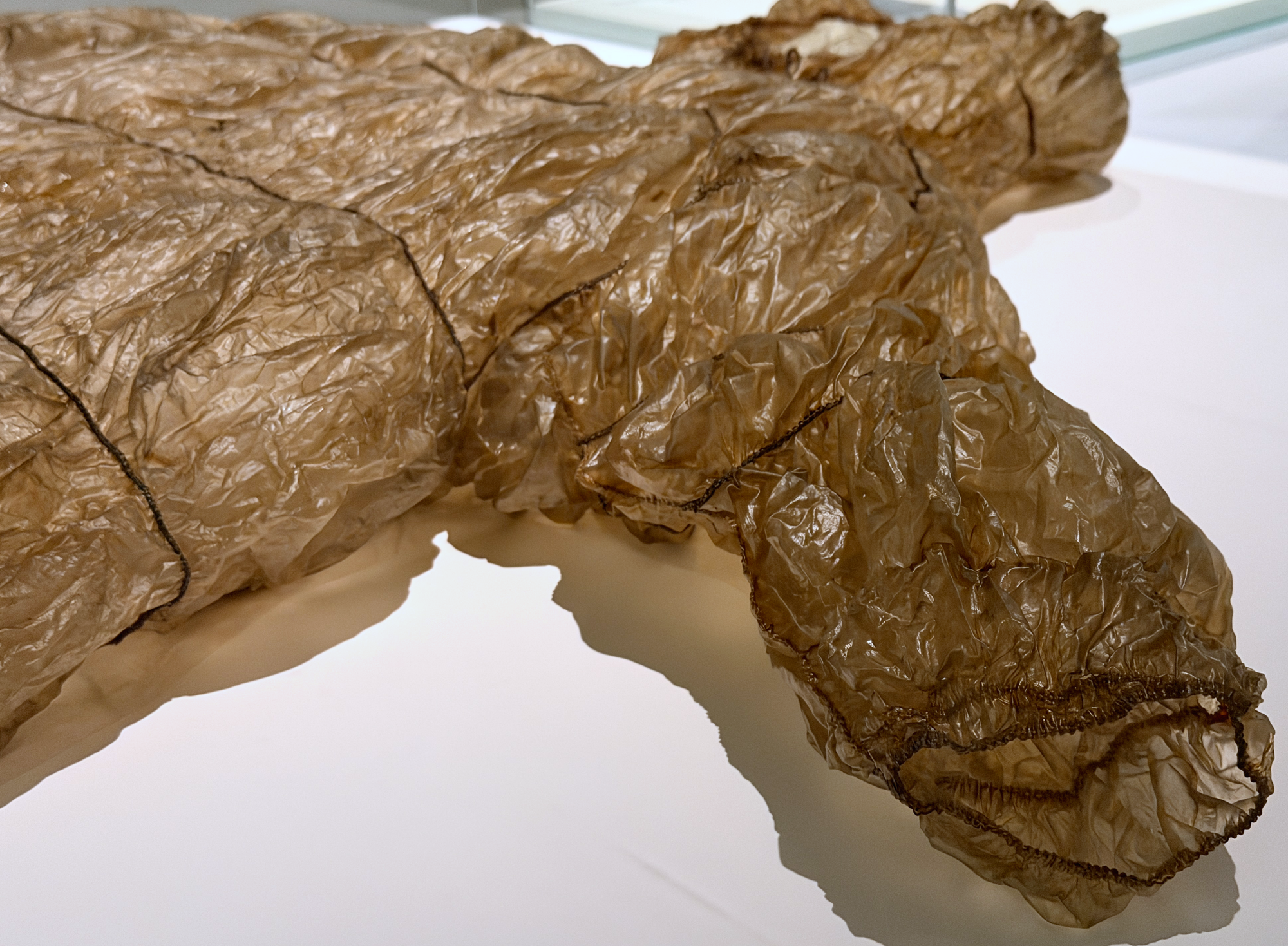
A parka dated to 1919, constructed in part from seal intestine, described as highly protective and near-plastic in its waterproof performance. The intestine was split, dried, and sewn in horizontal strips with a stitch so fine and close that the seams themselves became water-resistant. This wasn't meaningfully improved upon until the development of modern synthetic waterproofing.
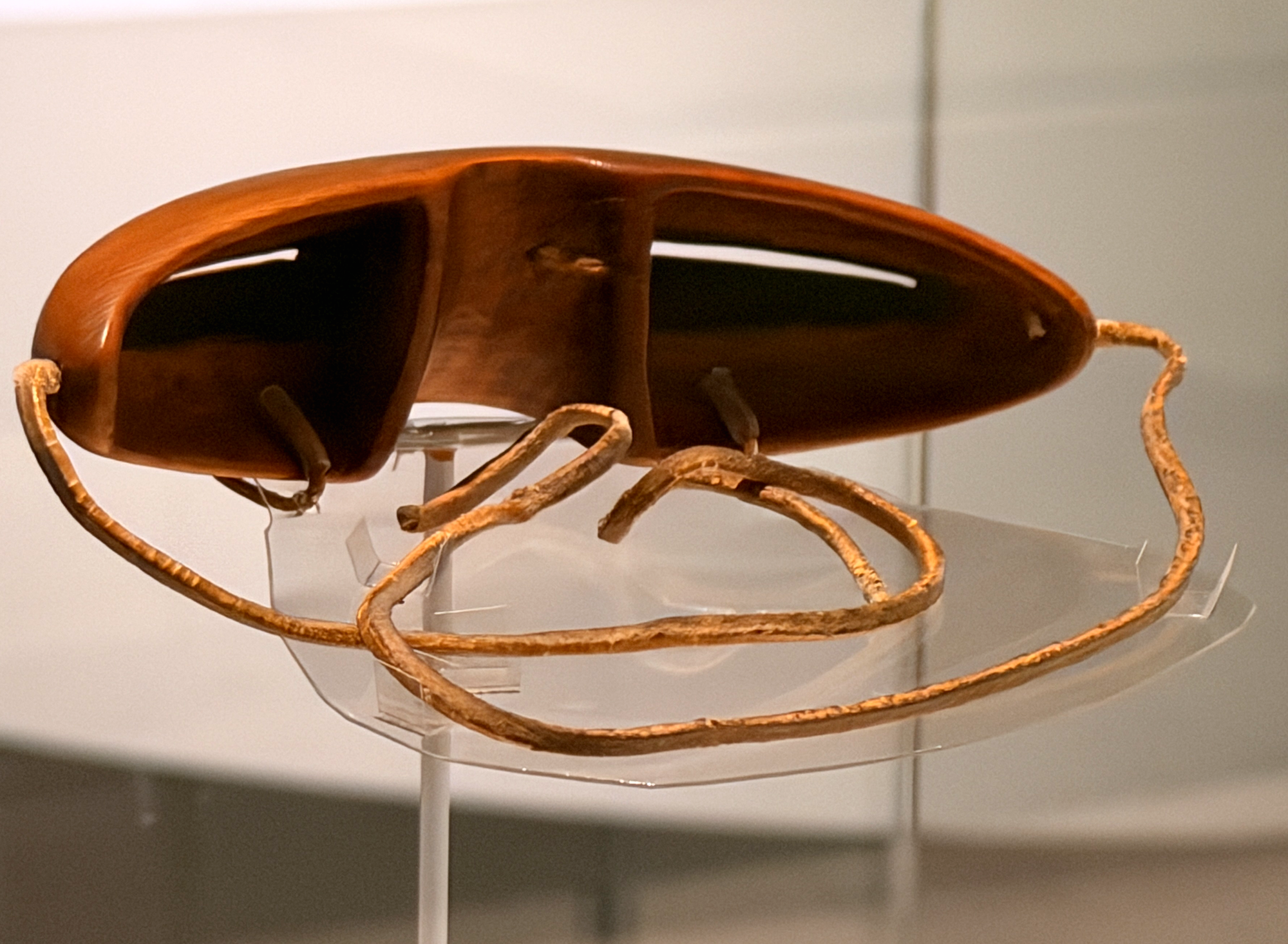
Inuit snow goggles, carved from wood, with a narrow horizontal slit across the lens. The reduction in peripheral vision enforced by the slit reduces the amount of light reaching the eye and makes it easier to focus, which was essential when hunting on dazzling white ice floes. The material is wood, hide, pigment, and sinew. The underlying principle isn't so different from the performance eyewear we still design today. The form arrived essentially perfect, and has not needed to change.
Across all objects, beauty resided in the balance between the components and the way they were put together. The harmony of the whole. It describes good product design just as well today as it did then.
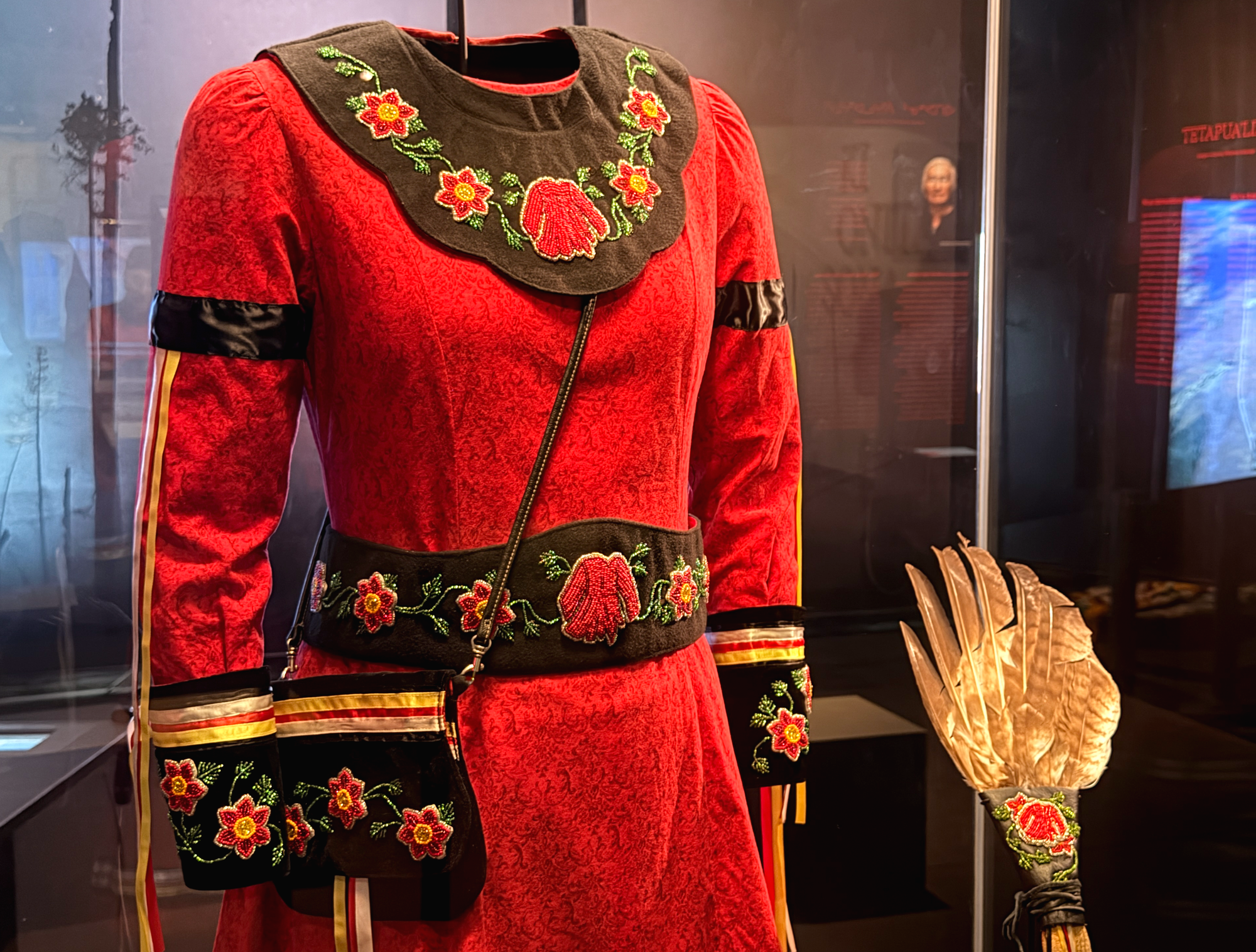
Then, deeper into the room, a red dress stands alone in a glass case. Made in 2018 by Kanien'kehá:ka designer Cheryl McDonald, it is part of a movement that uses the image of a red dress to represent Canada's missing and murdered Indigenous women. The label notes approximately 30,000 such cases and asks a question it leaves unanswered: is it even thinkable that nothing has been done to find them?
The red dress is the statement. And it exists because the function, the science, and the culture that produced it were taken, not lost.
Fashion Solves Communication
In the museum's celebration of the Montreal 1976 Olympic Games, another design problem arose: how do you make tens of thousands of people instantly readable across dozens of venues during one of the world's largest sporting events?
The answer wasn't signage. It was clothing.
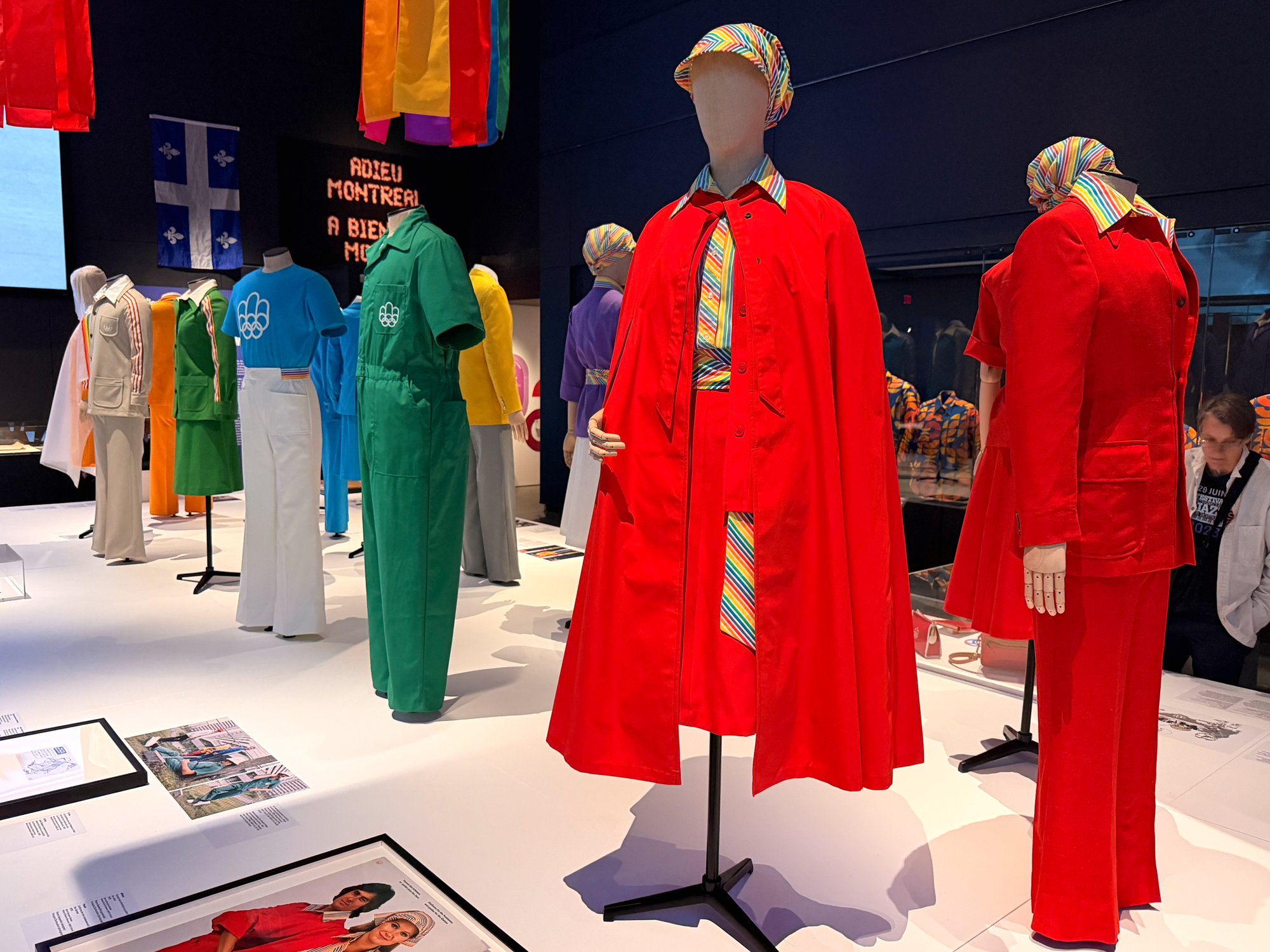
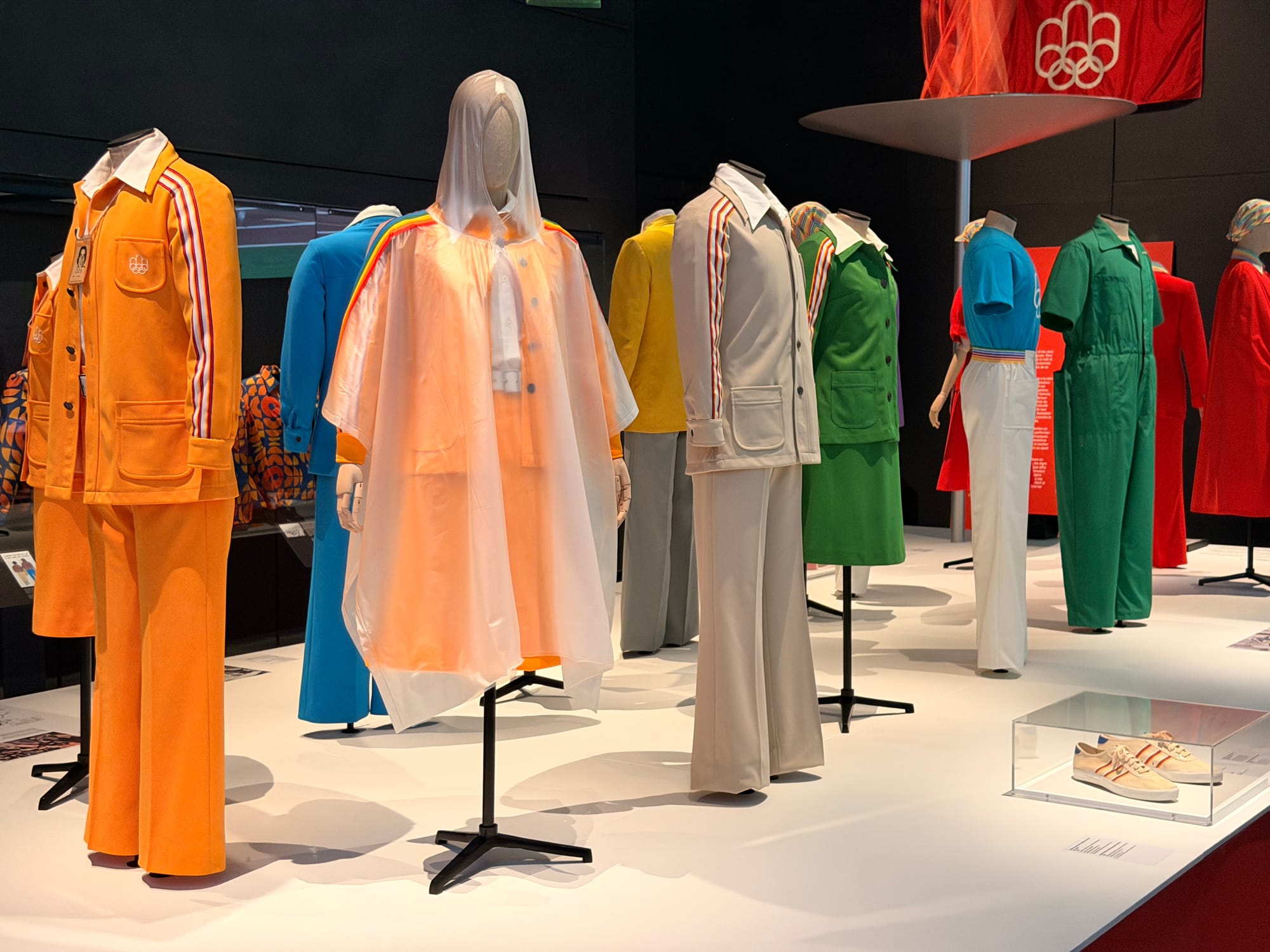
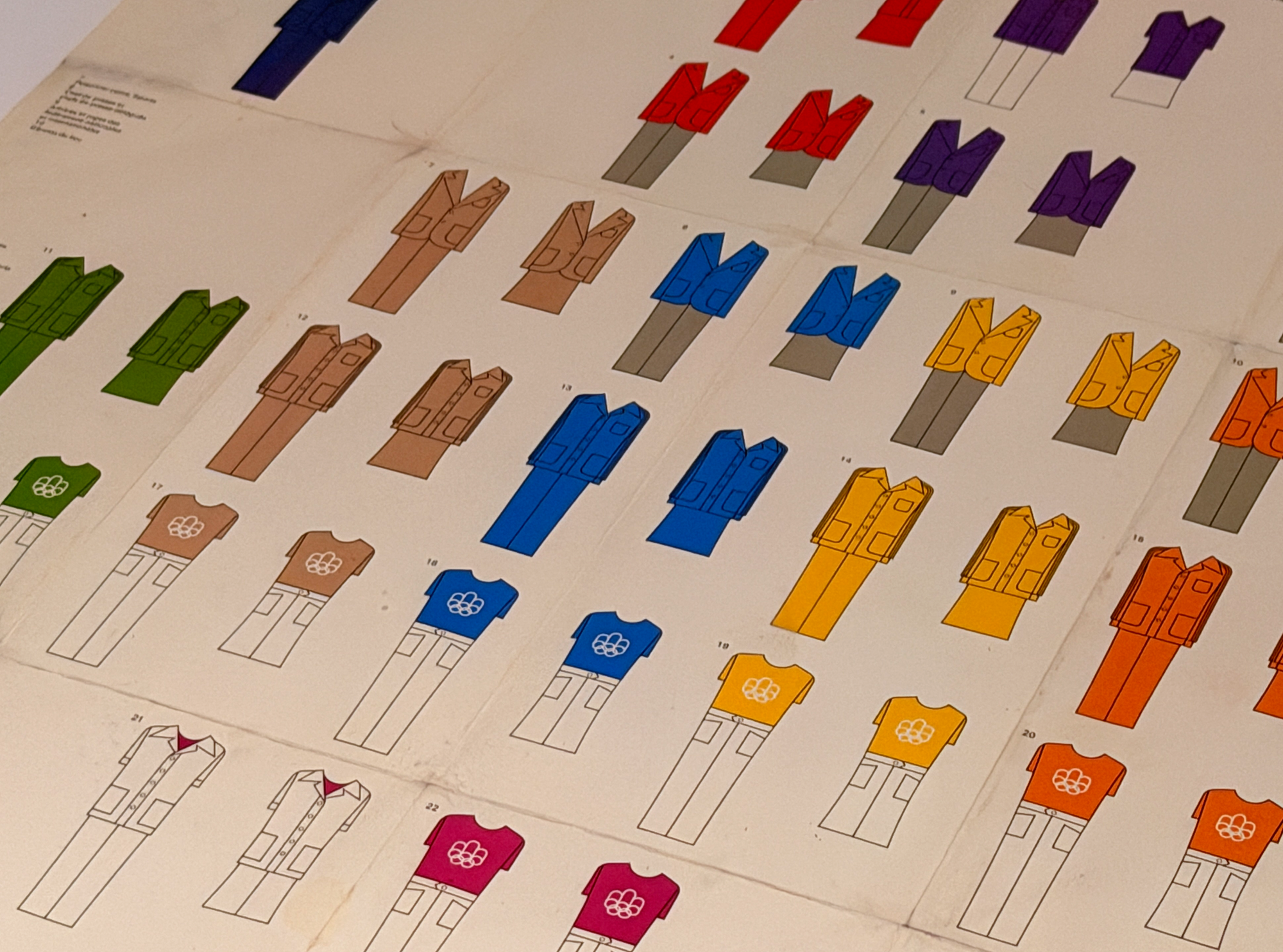
The exhibition features fifteen official uniforms, whose primary aim was strong visual communication. Six distinct colour families, each assigned to a specific staff category. Cleaners, officials, medical staff, venue coordinators, each identifiable at a glance, from a distance, in a crowd. The planning document on the wall, showing rows of coloured silhouettes mapped against role categories, reads less like a costume archive and more like a functional specification.
When fashion works, you don't have to explain it.
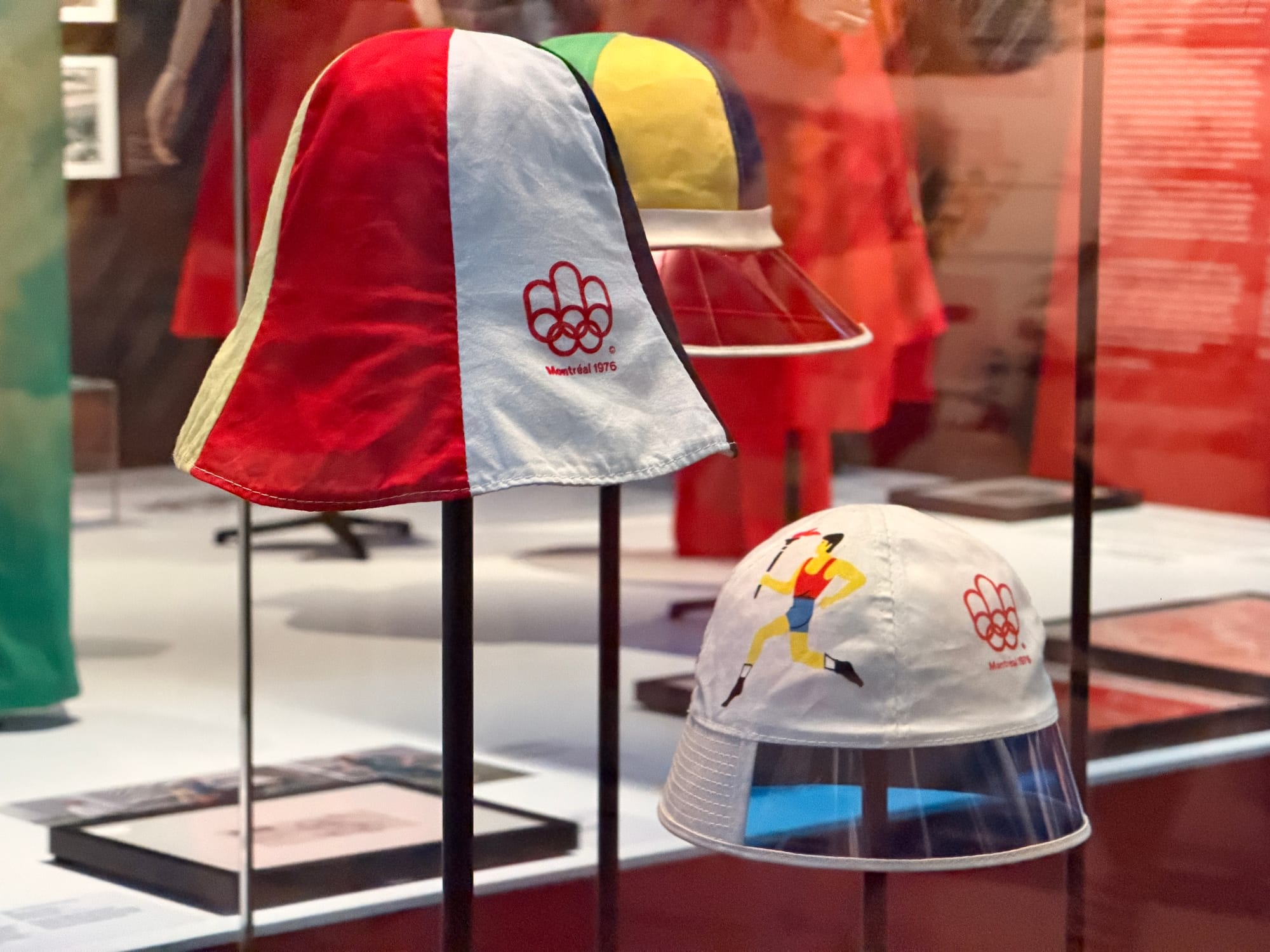
What is also striking is how seriously the programme took its own ambition as fashion, not just function. Several weeks before the Games opened, models were photographed wearing the rainbow-coloured outfits as part of COJO's Olympic fashion programme, treated not as workwear to be revealed on the day but as a collection to be presented, previewed, and discussed in advance. The hats alone tell that story: the exhibition displays multiple versions, in different colourways, bucket-brimmed and visored, each carrying the Montreal 1976 logo and the Olympic rings. A programme thinking about the full dressed experience, head to toe, across every role.
Fifty thousand people, six colours, one language - readable at a glance, across every venue, for sixteen days.
That is what visual language looks like when it works.
Fashion Solves Moments
The museum's final exhibition centres on a single object: the Dior gown Céline Dion wore at the opening ceremony of the Paris 2024 Olympic Games. Created especially for her by Maria Grazia Chiuri, Dior's Artistic Director from 2016 to 2025, it required more than 1,000 hours of work.
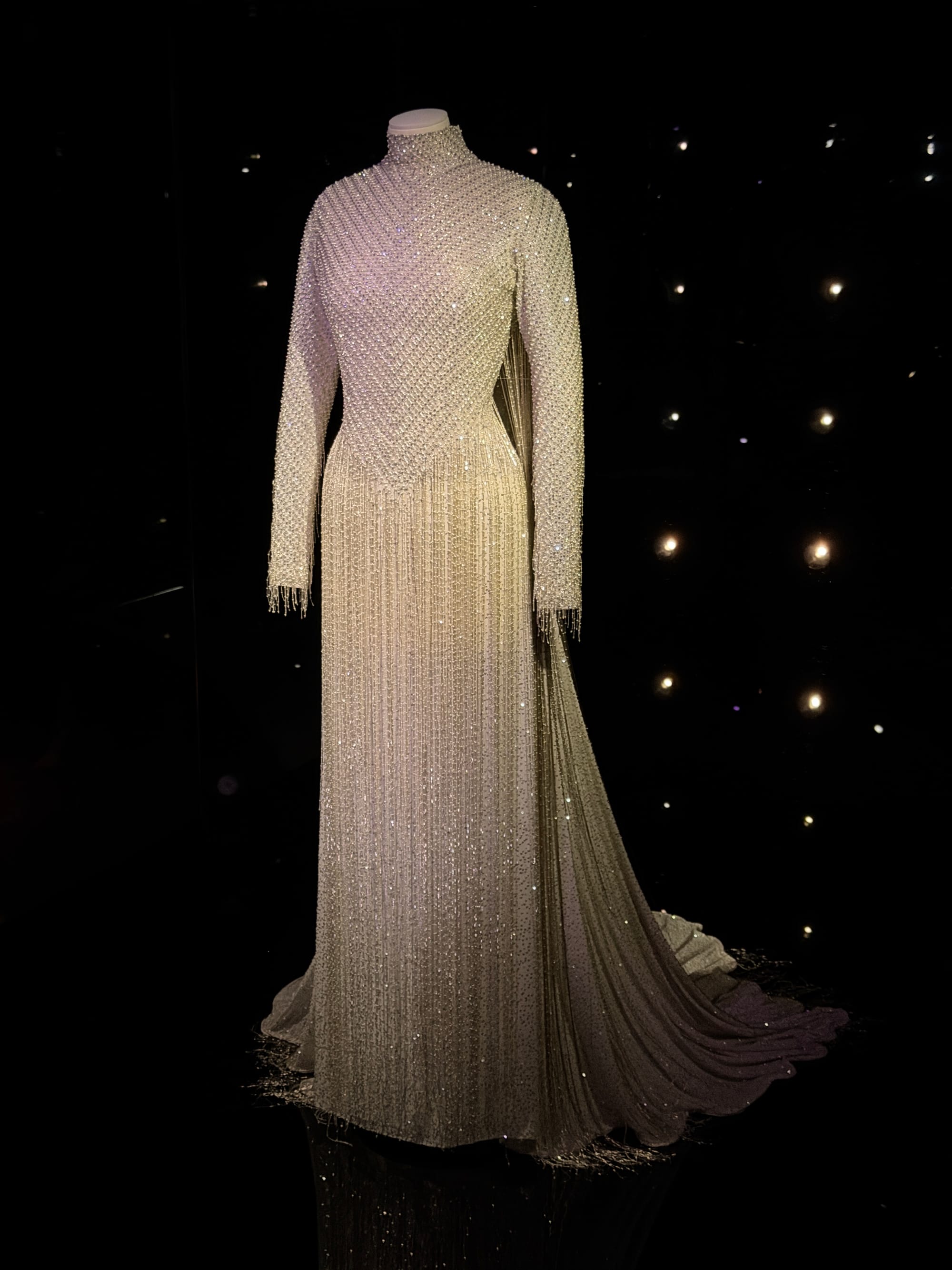
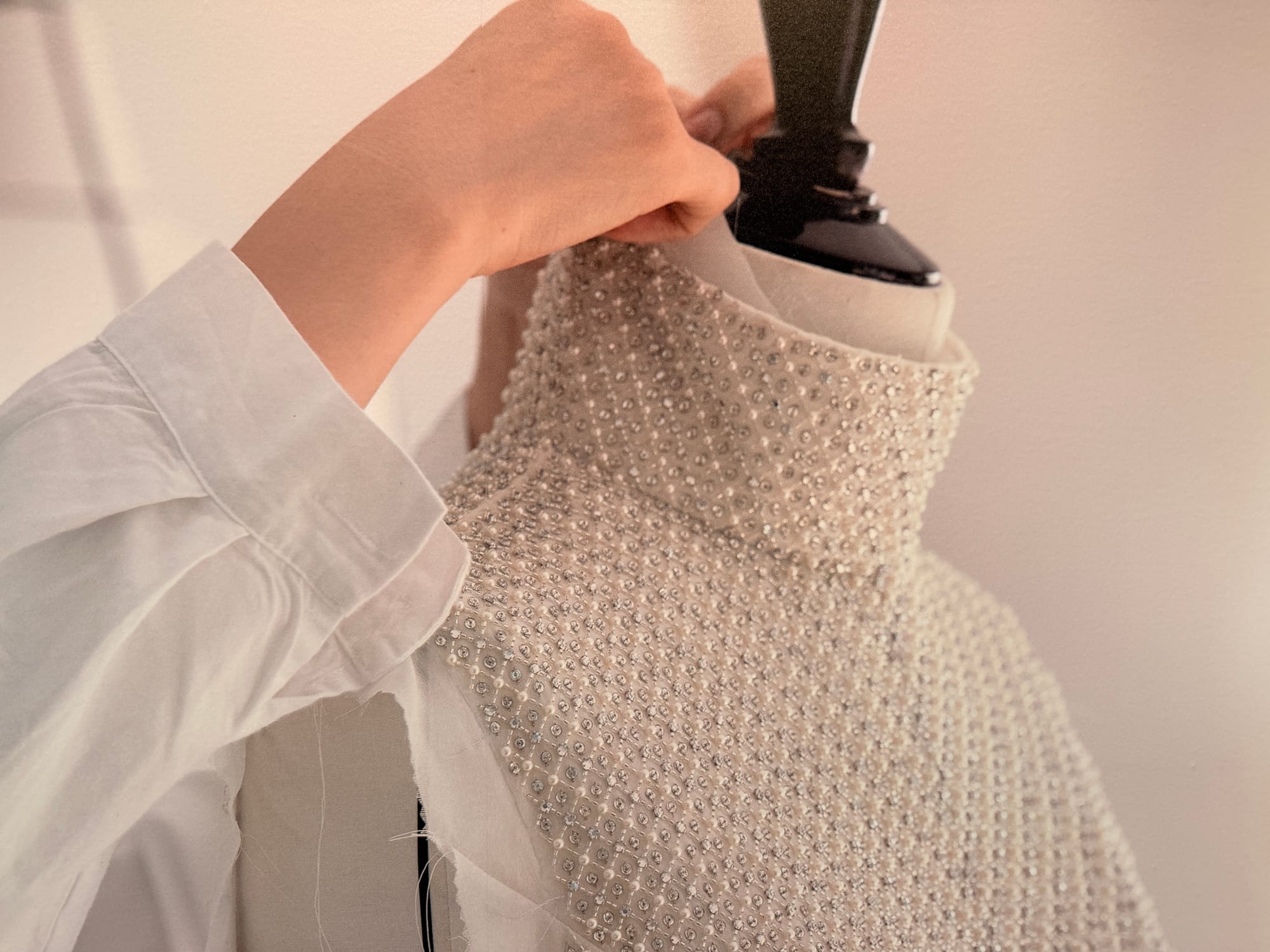
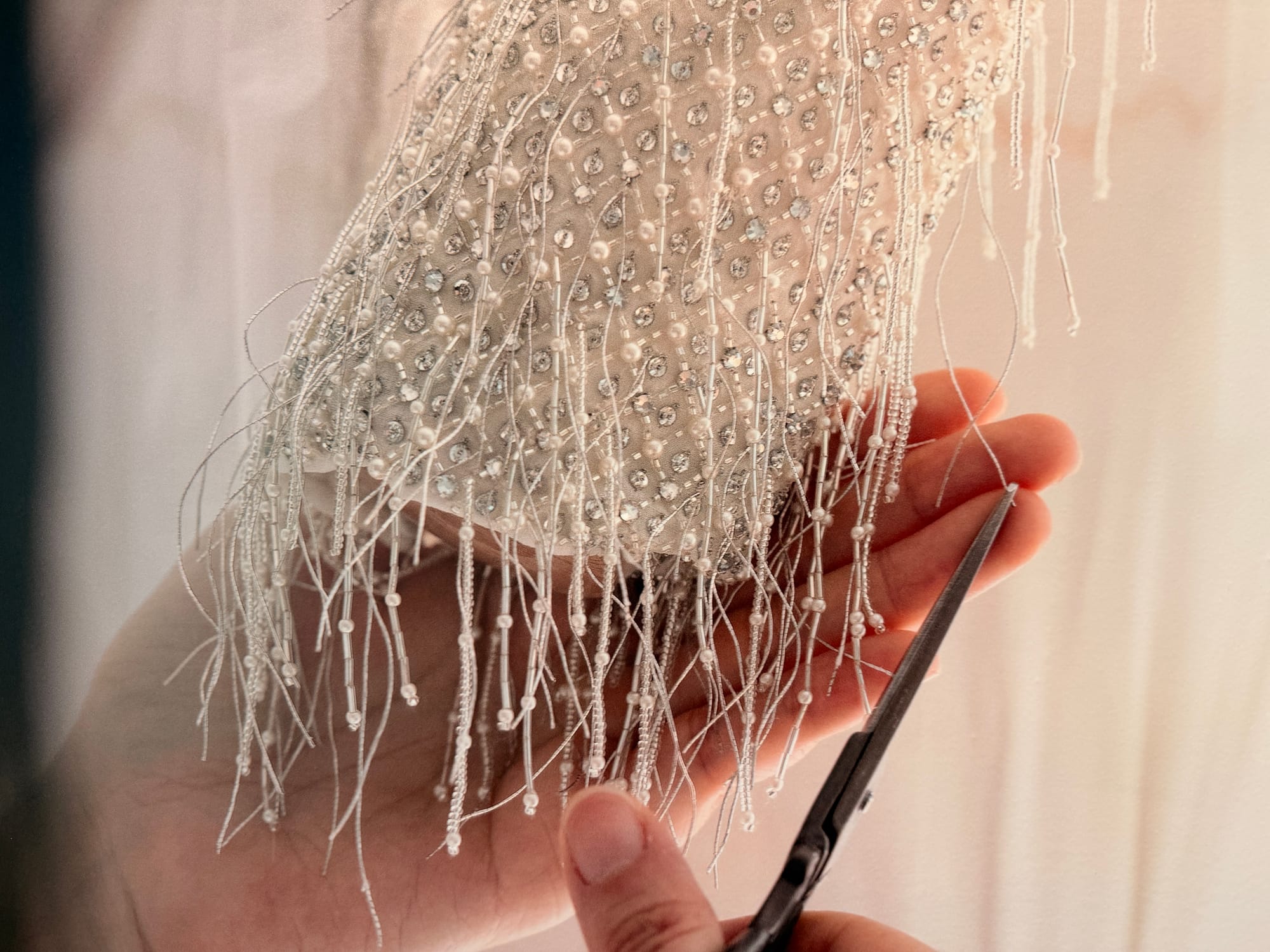
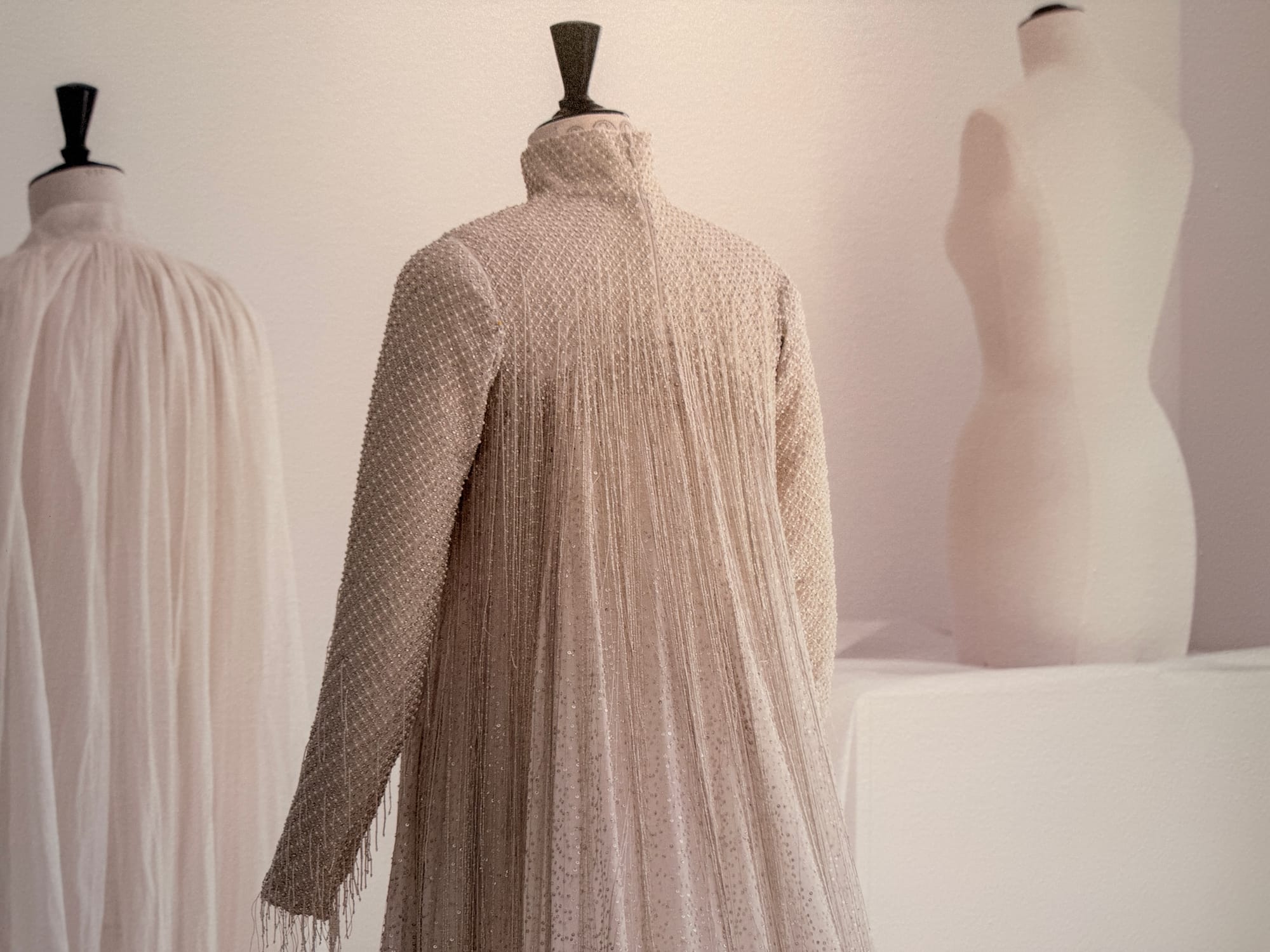
Standing close to it, that number begins to make sense. The dress is white silk georgette, embroidered with sequins and magnified by over 500 metres of fringe studded with thousands of silver beads. The bodice, high collar and sleeves were each embroidered separately before being assembled for a final fitting on her specific body. The fringe was placed with the shortest strands at the lower sleeve, deliberately, to accentuate the characteristic arm gestures of the performer.
Every decision, across material, construction, proportion and placement, was made in service of one body, one song, one night. The brief was astonishingly specific: dress a French-Canadian singer, managing a serious illness, making her first performance in four years, singing Édith Piaf on the Eiffel Tower, at the Olympic Games, in front of a billion people.
That is what couture is for. Not extravagance, but precision; the application of extraordinary craft to an extraordinarily specific human moment.
On the surface, none of the three exhibitions appear remotely connected beyond a generic interest in fashion. Yet they all arrived at the same place: start with the human need, and everything else follows.
For those of us working in fashion technology, that feels worth remembering. We spend a great deal of time talking about better tools, better data, and better workflows. And yes, they all matter.
But the tools have never been the innovation. The design thinking has, and the tools are simply the means by which we bring it to life.
The exhibitions Montreal 1976: An Olympic Feat and Céline in Dior: A Dazzling Moment are both on at the McCord Stewart Museum in Montreal until September 2026. Indigenous Voices of Today is a permanent exhibition. If you are in the city this summer, it is worth an afternoon.


