


It started with a project about fabric.
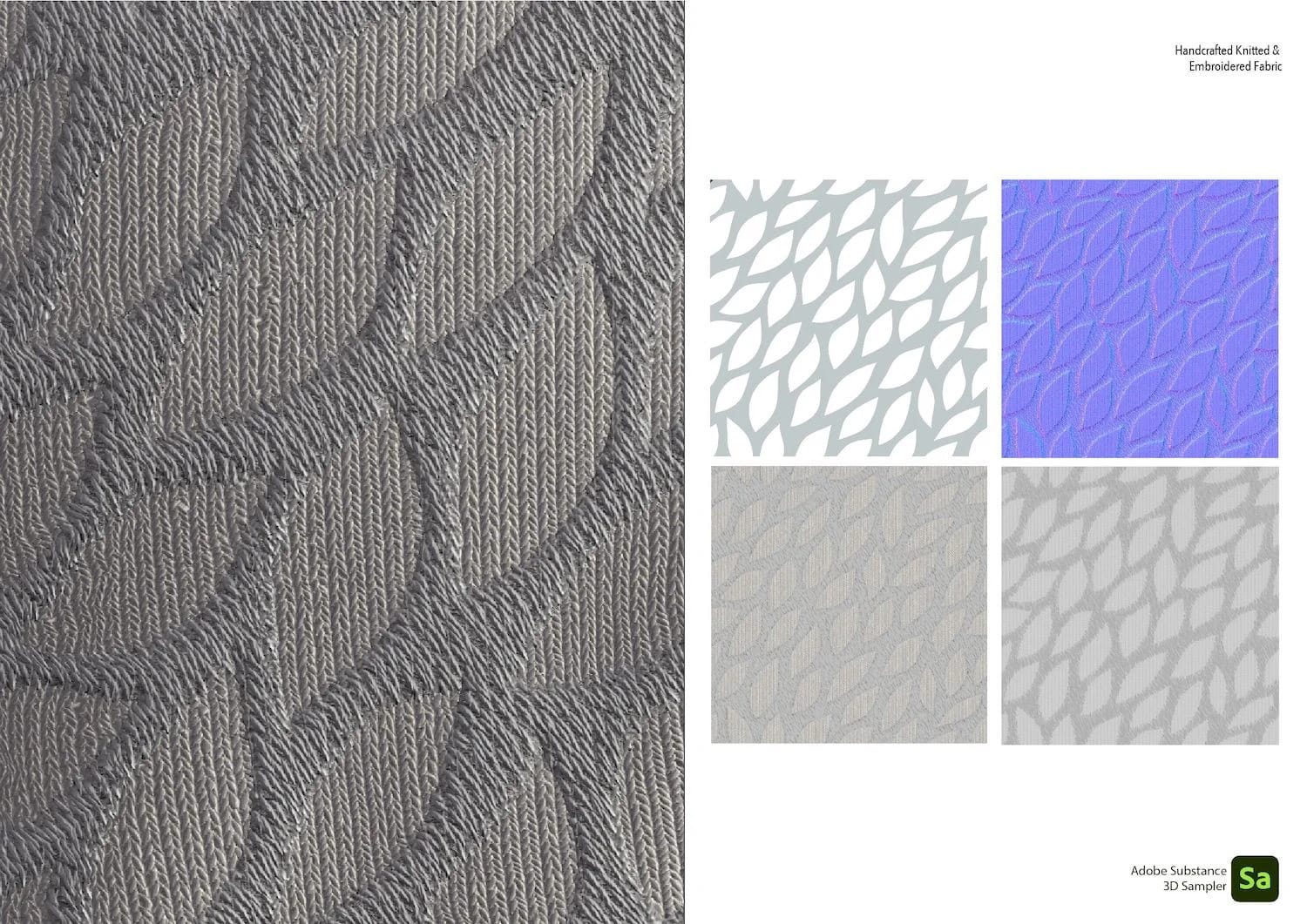
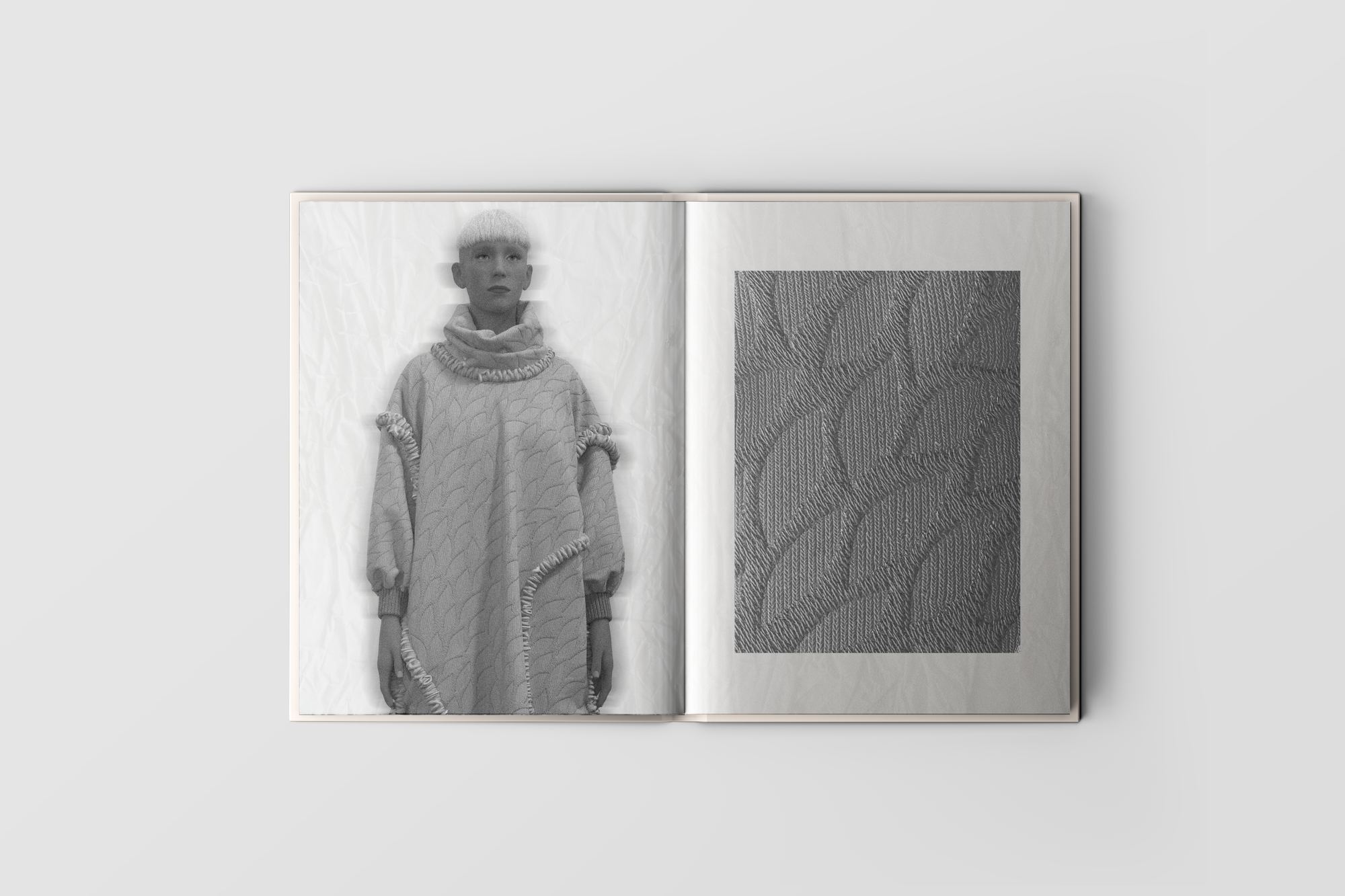
Gina Fonticelli, a fashion designer and textile artist based in Italy, submitted a visualisation piece to The Rookies, one of the world's most respected platforms for emerging creative talent. She was exploring how digital tools could communicate material qualities: the weight of a textile, the way light moves through it, the behaviour of fabric in motion.
The challenge she set herself was specific: how do you represent texture, weight, and fabric behaviour within a digital environment without relying on processes too slow or complex to be viable in a professional context?
It was a question she hadn't resolved and wasn't pretending to. That intellectual honesty caught the attention of Alwyn Hunt, co-founder of The Rookies and Head of Education Partnerships at Adobe's 3D and Immersive division. He connected her with Iain Finch, who leads Digital Product Visualization at Patagonia.
What followed was a structured mentorship that none of them had quite anticipated.
We reached out to all three to understand what they learned about each other, about the industry, and about the widening gap between the kind of talent the fashion world says it needs and what it actually does with it when it arrives.
The industries are converging, but the workflows haven't caught up
Alwyn Hunt has spent over two decades in VFX, with credits across Harry Potter, The Hobbit, Game of Thrones, and Wētā FX, before co-founding The Rookies and eventually joining Adobe. His vantage point sits at the intersection of two worlds that are colliding faster than most people in either of them realise.
The boundary between industries like film, VFX, and apparel is collapsing. Apparel is no longer just physical product. It's becoming a digital asset class – Alwyn Hunt
Iain Finch sees the same thing from inside a brand. At Patagonia, his work sits deliberately at the intersection of craft, systems, and responsibility, ensuring that digital tools genuinely serve product integrity and decision-making, rather than just adding a layer of visual polish on top of existing processes.
The challenge, as he sees it, is that VFX pipelines were built for teams with months or years to resolve an asset, where the outcome only needs to be visually believable. Apparel is now expected to use those same tools inside much tighter timelines, with fewer handoffs, and with an added constraint VFX never had: what's created digitally must represent a product that will actually be produced, worn, and manufactured.
What VFX thinking brings to apparel, both agree, is pipeline discipline under constraint; versioning, simulation accuracy, material logic, and asset reuse. What apparel brings back is something VFX consistently underestimates: the complexity of fit, manufacturing constraints, and commercial timelines.
One world is deeply technical, the other deeply contextual.
The future, as Alwyn puts it, requires both.
How the mentorship actually worked
This wasn't an informal arrangement. Iain designed it to be deliberately thought-provoking, not just at the level of a single product or concept, but at the level of systems and scale. Touchpoints were structured, briefs were clear, and feedback loops were tied to outcomes rather than conversations. The deeper goal was to challenge how Gina's approaches would hold up when applied across multiple product categories, teams, and departments, in an environment where decisions are made by hundreds of people, not one individual.
His responsibility, as he saw it, was to make the brand context visible: the constraints, trade-offs, and system dependencies that rarely surface in education or portfolios, but define success inside a large apparel organisation.
Gina's commitment matched the structure. Each week she returned not just with work but with questions; thinking critically about the decisions made, how they were reached, and how they fed into the next iteration.
For Gina, the shift in framing was immediate.
The feedback that had the greatest impact was the one that pushed me to question my own decisions. Rather than focusing only on the visual, it encouraged me to think about why I was choosing a certain direction, what problem I was solving, and what information I actually needed to communicate – Gina Fonticelli
A beautiful piece is a moment.
Industry readiness is consistency under pressure.
Gina came into the mentorship with strong instincts and a clear artistic sensibility. What she didn't have, and what most emerging talent doesn't have, was exposure to the decisions that happen before and after the image.
"I used to think more in terms of building a highly refined final image," she reflects. "During the mentorship, I understood that rapid iteration is essential. Sometimes a simple version is more valuable because it enables decision-making and progress."
This is the portfolio illusion, the gap between work that looks resolved and work that actually functions inside a production environment.
Alwyn is direct about where education systems still get this wrong. Students are taught to present outcomes, but not to expose the decisions, constraints, or trade-offs behind them. "That creates a false signal of readiness," he says. What he looks for instead is evidence of systems thinking; clear workflow breakdowns, versioning over time, and multi-context thinking. "That tells me they understand ecosystems, not just execution."
Iain's version of the same argument is about accountability. Good decision-making inside a brand isn't about strong visuals. It's about choices that are consistent, repeatable, and accountable across teams. The goal is often to stop short of visual perfection in favour of clarity, providing just enough fidelity to move the product forward.
Gina eventually felt this shift in her own work.
I realised that the visual outcome is only one part of the work. Being able to explain the decisions behind it, why a material is represented in a certain way, or why a scene is resolved in a particular manner, is just as important as the final image – Gina Fonticelli
On AI: Amplify taste, don't replace it
No conversation about digital craft in 2026 gets far without touching AI. All three have views, and they're more nuanced than the usual poles of excitement and anxiety.
Alwyn is clear that AI earns its place in early-stage ideation, iteration, and reducing friction in repetitive tasks. But the risk is equally clear.
If creators rely on AI before they understand form, material, lighting, or construction, they lose the ability to judge quality. AI should amplify taste, not replace it – Alwyn Hunt
For Gina, AI is useful for visual exploration and reference generation, but dangerous as a substitute for the creative or technical process.
If one relies too heavily on it to produce images without developing a broader understanding of the product, the work loses identity and, most importantly, viability at a larger scale – Gina Fonticelli
Minimum viable fidelity: the concept that changed everything
The phrase that surfaced most powerfully across all three conversations was 'minimum viable fidelity', one that Iain uses regularly at Patagonia. It refers to the ability to calibrate effort to intent, understanding what question needs to be answered at a given moment, who needs that information, and how resolved something needs to be in order to move forward responsibly.
Anything beyond that threshold isn't added value. It's friction.
– Iain Finch
For Gina, encountering this concept was genuinely transformative. "As a designer, I tended to aim for a high level of detail from the beginning. Learning to work with minimum viable fidelity helped me separate stages of the process and understand that many decisions can be made with simpler representations."
At scale, when hundreds of people rely on the same digital information across multiple product categories and seasons, this skill stops being about individual efficiency and becomes about shared decision-making.
The strongest practitioners, Iain argues, are those who can deliver just enough accuracy and intent for teams to align, enabling better choices earlier in the lifecycle, when impact is highest and waste is easiest to avoid.

What the system doesn't tell you
Minimum viable fidelity is a concept you can be taught. What's harder to prepare for is everything the system doesn't surface until you're inside it.
For Gina, the most disorienting part of the mentorship wasn't technical. "I was surprised by how much systems, processes, cultural adaptation within a company, and organisational structures influence what is actually possible to achieve." The constraints shaping her work weren't coming from the brief or the tools — they were coming from somewhere less visible: the way a large organisation moves, decides, and resists.
What shifted wasn't her ambition, but her relationship to limitation. Rather than treating operational reality as something to work around, she started treating it as part of the creative problem itself. Finding solutions within constraints, not despite them, is a different kind of craft.
Iain recognises this as one of the hardest things to transfer.
When juniors enter a brand, they often underestimate how much of the work is shaped by systems they can't immediately see. Handoffs, governance, asset lifecycles, approvals, and cost realities all influence what's possible long before a visual ever reaches a screen – Iain Finch
The gap isn't capability, it's context.
And context, almost by definition, can only be learned from inside.
The absorption problem, and why it's industry's fault too
I still haven't fully figured out what it takes to break in — Gina Fonticelli
She says this not with resignation, but with the kind of honesty that shifts the question entirely. The issue isn't what she's missing, but what the industry hasn't built.
Both Alwyn and Iain are candid that the problem isn't only that emerging talent isn't ready, but that brands aren't set up to use them well when they arrive.
Industry talks about innovation, but hires for familiarity. They want hybrid talent — people who understand 3D, real-time, and storytelling — but still hire into siloed roles that don't allow those skills to be used.
— Alwyn Hunt
Iain sees it from inside. Digital-native talent is frequently placed into narrowly defined visualisation or support roles, evaluated on output quality rather than on how their work informs decisions. Timing compounds the problem. Digital talent is often introduced late in the lifecycle, once key product decisions have already been made, leaving even strong digital work able only to document outcomes rather than shape them.
Part of the resistance is structural rather than intentional. Established brands are built to minimise risk, and new tools or workflows are often perceived as threats to reliability. The more damaging pattern, is treating digital capability as additive rather than transformative; layering new tools onto legacy processes without rethinking how decisions are made.
In those cases, digital craft is judged by the standards of the old system instead of being allowed to reshape it — Iain Finch
The fix is structural, by embedding digital craft closer to decision-making moments, creating hybrid roles rather than forcing new capabilities into old org charts, and committing to at least one live pipeline experiment rather than running perpetual pilots. "That creates learning at the system level," Iain says.
But until that shift happens, emerging talents, like Gina, will keep doing everything right, but still find the door only partially open.
What industry-ready actually means in 2026
Asked what capabilities they'd prioritise if they could redesign how talent is prepared for DPC and visualisation roles, all three converge on the same territory. None of it is tool-specific.
Alwyn names pipeline literacy, real-time thinking, and decision-making under constraint.
These are what make someone deployable, not just impressive.
– Alwyn Hunt
Iain points to cross-disciplinary grounding; a genuine understanding of how apparel is designed, developed, and manufactured, alongside digital curiosity and what he calls exploration with purpose. Too often, he says, people chase new outputs without staying anchored to the problems that actually matter.
Exploration has to be framed through context; mission, impact, and value, and evaluated by whether it meaningfully replaces or augments existing ways of working – Iain Finch
Gina, perhaps most honestly, reflects on what the mentorship revealed about her own assumptions. "A portfolio should not only showcase highly polished pieces. In a professional environment, what truly matters is demonstrating how you think, how you structure a process, and how you make decisions when facing a problem."
Doing all of this in a second language, in an industry conversation she was new to, added another layer. "Week by week, I gained more confidence, which allowed me to enjoy the mentorship process. What helped me most was preparing for each session and focusing on the ideas I wanted to discuss, finding ways to synthesise, being as clear as possible, and above all, listening in order to reflect on each session."
But something else happened that she hadn't anticipated. The discipline she was developing to communicate clearly across a language gap — the preparation, the synthesis, the precision — turned out not to be a workaround.
I realised that the methods I was developing to communicate as clearly as possible in another language were also adding value to the conversation
– Gina Fonticelli
Constraint, again, becoming contribution. The limitation that could have held her back was quietly sharpening exactly the skills the industry most needs: clarity of intent, structured thinking, and the ability to make decisions legible to others.
A call to action
Initiatives like this one that are structured, outcome-focused, and grounded in real production context, are rare. They shouldn't be.
The Rookies exists precisely to create these connections at scale, providing a global platform where emerging creative talent can be seen, assessed, and matched with the mentors and opportunities that can genuinely move their careers forward.
Platforms like The Rookies are only as strong as the participation behind them. If you care about the future of the industry, this is one of the most direct ways to shape it — Alwyn Hunt
For mentors: the value you bring is in how you think, not just what you've made. Engage with process, not just outcomes.
For brands: the talent is there. The question is whether your structures are ready to absorb it.
And for those trying to find their way in:
Cultivate both a sensitivity toward craft and physical materials, and an understanding of digital systems. The intersection between fashion and VFX is not only about mastering software, but about understanding how materials, imagery, and production processes can coexist within the same language – Gina Fonticelli
To find out more about The Rookies and the Rookie Awards, visit therookies.co. To find out more from Gina, Alwyn or Iain, connect with them directly via LinkedIn.


