

"Convenience is slow death," says Tom Evans. He's spent over 20 years in footwear design, working across outdoor, industrial, performance, fashion and casual categories. He now runs the innovation team at Dr. Martens, in the space where craft and technology meet, focused on enhancing the brand's shoemaking heritage rather than simply preserving it. At Stride Europe earlier this year, he led a closed-door session on exactly that tension, balancing craft, digital tools and sustainability inside a heritage brand.
Here, he goes further: on the dyspraxia that shaped his relationship with craft, the tools he's adopted and the ones he's abandoned, where digital sampling has genuinely paid off versus where it hasn't, and whether Dr. Martens could ever be made entirely digitally without losing what makes it iconic.
You've spent over 20 years in footwear across outdoor, industrial, performance and fashion. What does that breadth of experience teach you that someone who's only worked in one category wouldn't know?
I think with my background in industrial design and my breadth of experience in performance and outdoor footwear, the questions I ask are: what's it supposed to do, and does it work? That balances out the different points of view when we look at wearers, cultural relevance, colour, materials, trend and aesthetics. I bring some functional balance to the fashion orientated folks.
Dr. Martens is one of the most culturally loaded brands in footwear, and a brand people feel strongly about. What does it actually feel like to work inside that? Does the weight of the heritage change how you approach your job?
Throughout my career I've been lucky enough to work in places I've been connected to. With Dr. Martens that comes both from my outsider creativity stance on our unique way of making footwear, and the brand's deep-rooted connection to music, artists and sub-culture. Dr. Martens is very much on the inside as you see on the outside. From the offices to the production line, you'll meet people full of passion with their own expressive style who stand up for what they believe in.
The weight of the heritage brings purpose to what we do. It grounds us, I embrace it.
Until recently your title spanned innovation, sustainability, energy and design, which is an unusual combination to find in a single role. What did that actually entail day to day, and why does Dr. Martens believe those things belong together rather than in separate functions?
They are all the same thing! My team is here to provoke and excite through concepts that explore the future of Dr. Martens product. We need to innovate to create a sustainable future and the brand needs energy and desirability to fund that progress and stay relevant. My team has a condensed set-up compared to the mainline function so we can act with speed and agency on complex projects that don't fit standard processes or timelines to put products on the table.
You talk about craft in a way that feels personal, not just professional. Where does that come from?
I have a slightly chaotic problem-solving mind, and I need newness and creative output to stay sane. In my early days I had undiagnosed dyspraxia at school and was in trouble a fair bit, until I found grounding in art, design and making. I spent a lot of time sat in corridors in one school. Same with the school I was moved to but this time they gave me lolly sticks, string and a glue gun - the rest is history. When you make stuff by hand you get an appreciation of how hard it is to produce quality, especially with natural materials like wood or leather. So, I have a lot of love for skilled craftspeople.
There's a line in your thinking that stuck with me: that the goal isn't to preserve craft but to enhance it. What's the difference in practice?
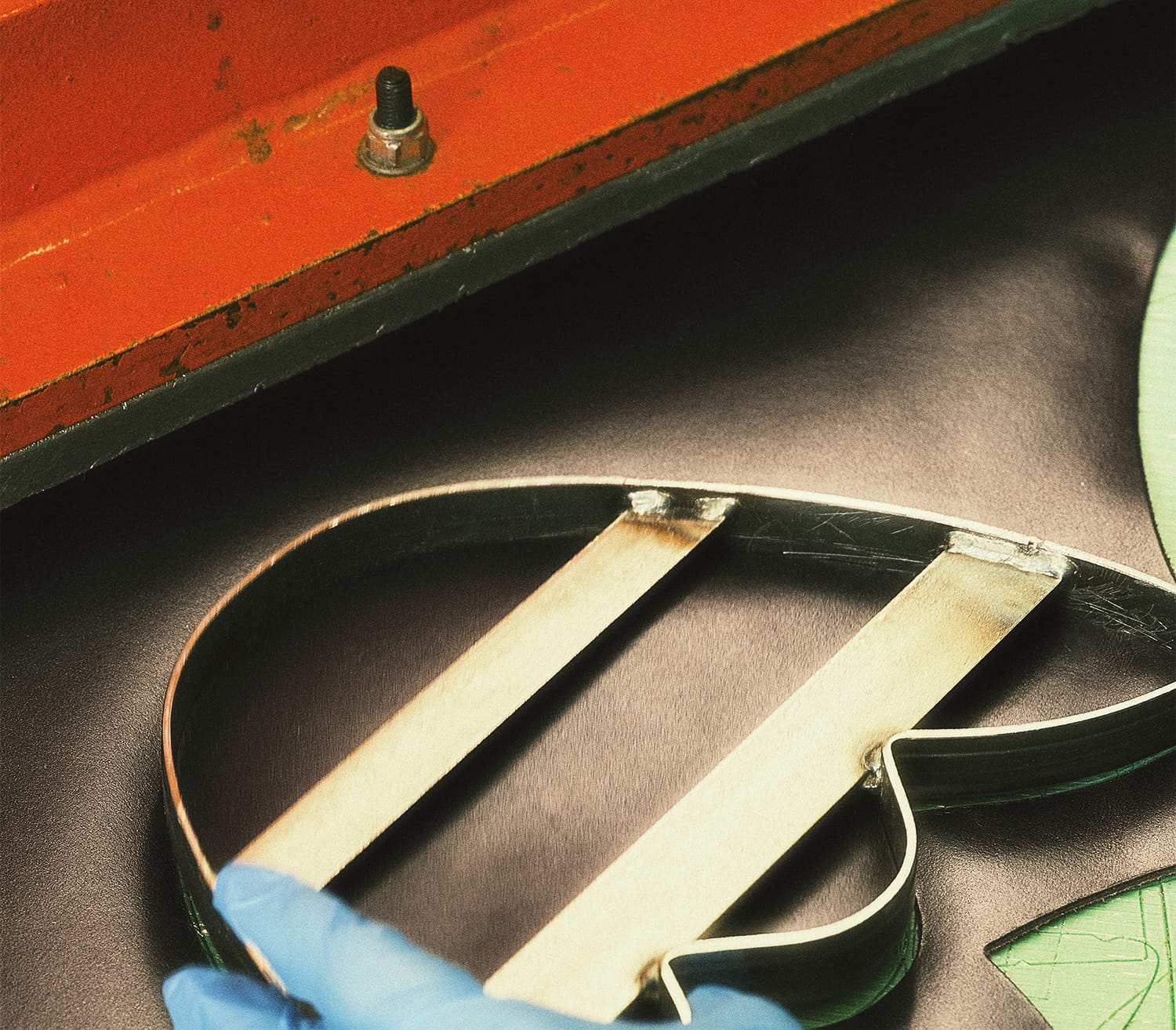
I don't want to live in a museum. The context of the world is always changing so craft needs to adapt. There's a reason crafts die out, but by preserving their essence and modernising with innovation we can keep them alive and relevant. In one sense crafts have to learn to compete with modernisation but it's the authenticity, heritage and storytelling that brings the balance.
When you walk the factory floor at Cobbs Lane, what do you see that you couldn't see anywhere else? What does it tell you that no digital tool could?
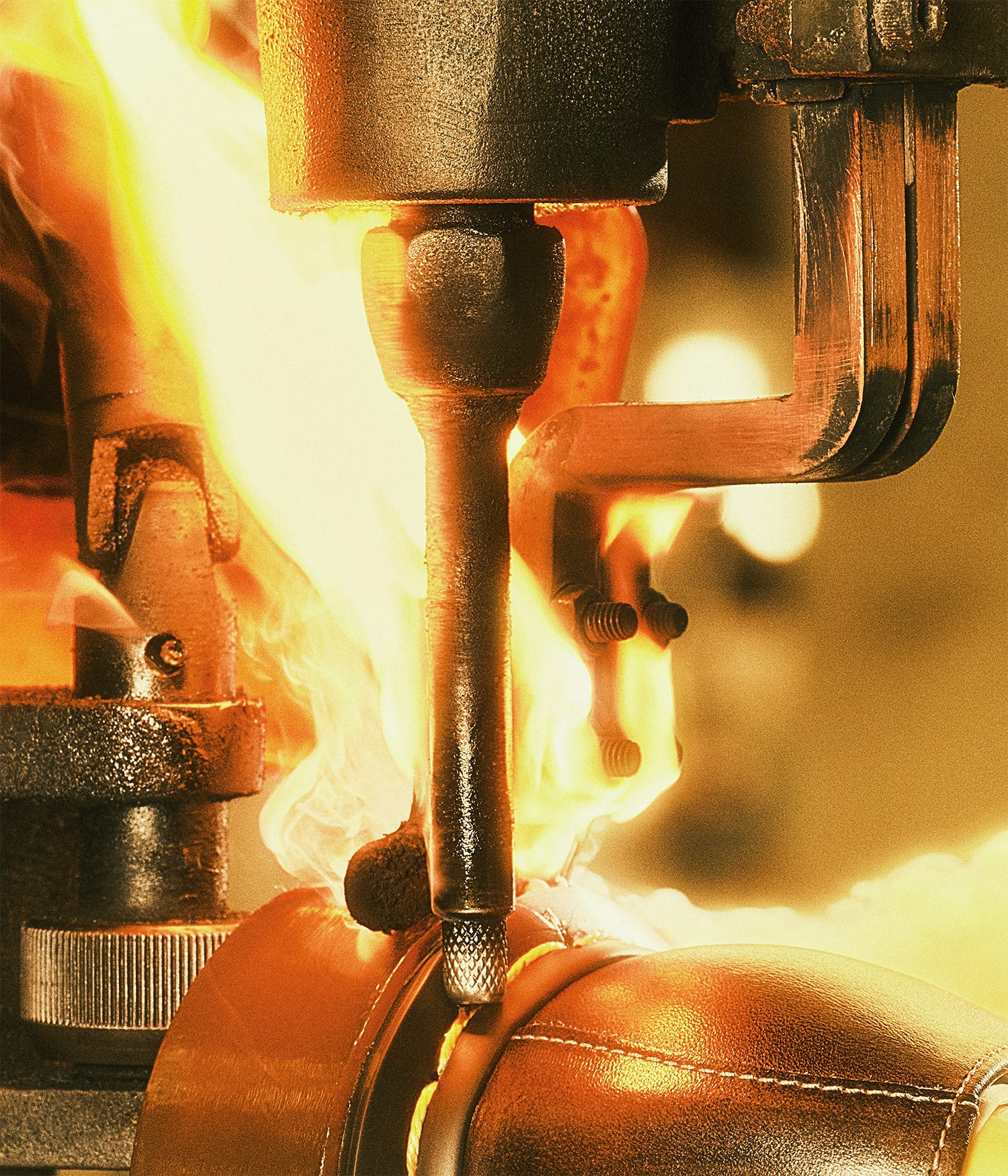
We use some unique processes and machinery to make Dr. Martens boots, wherever they are made in the world. Watching a sole get heat-sealed on with a knife and flame never gets old. But the main thing is the people and their passion and skills. My job is to really understand each process in depth to see how we can respect it or push it in new directions. One way is to observe, the better way is to have a conversation with the people that are actually making day in day out.
You recently visited the Brompton factory, which on the surface might seem like an odd field trip for a footwear innovation team. What made you want to go, what were you hoping to find, and what did you actually take away that was useful?
To have good ideas and execute them I need to stay inspired. I get out and see as many things as possible, especially stuff outside of 'shoe land'. I don't know where inspiration will strike but one thing I learnt over lockdown is that my brain needs input for the outputs to flow!
Brompton is another British design icon being made in the UK. For that to work you know it's got to be special. When I'm not designing shoes, I'm building and riding bikes, so the Brompton tour ticked a lot of boxes for me. I'm looking forward to showing the Brompton folk around the Dr. Martens factory. Very different worlds but all built with the same passion and pride by skilled humans alongside manufacturing innovations to keep the brands viable.
Dr. Martens uses a fairly specific set of digital tools for fairly specific purposes. Can you walk us through what you actually use, what for, and, perhaps most crucially, what you've tried and decided isn't for you?
Adobe Illustrator is still important in footwear design. I use Photoshop a fair bit for presentation imagery and my team do a lot of digital sketch and concepting work in ProCreate. Rhino is my go-to tool mainly for 3D on outsoles and internal 3D printing of prototypes. I use the 2D drafting features to export into Illustrator too as they are so good to get decent smooth curves.
We use Blender for uppers 3D occasionally as it is better with organic forms and did a bit of rendering with Keyshot. Although we now go straight from a 3D screenshot to a render using AI. We've used Gravity Sketch a little and while I still find VR mind blowing, the geometry is a little limited for the forms and accuracy we need (I'd love the depth of Rhino in a VR space) at Dr. Martens.
AI tools are definitely doing some very cool things around visualisation but they are not perfect and the better your input, the better your output. Accurate line art is still key and there aren't really any shortcuts here yet.
Where have digital tools genuinely made your work better? Not the marketing answer, the real one.
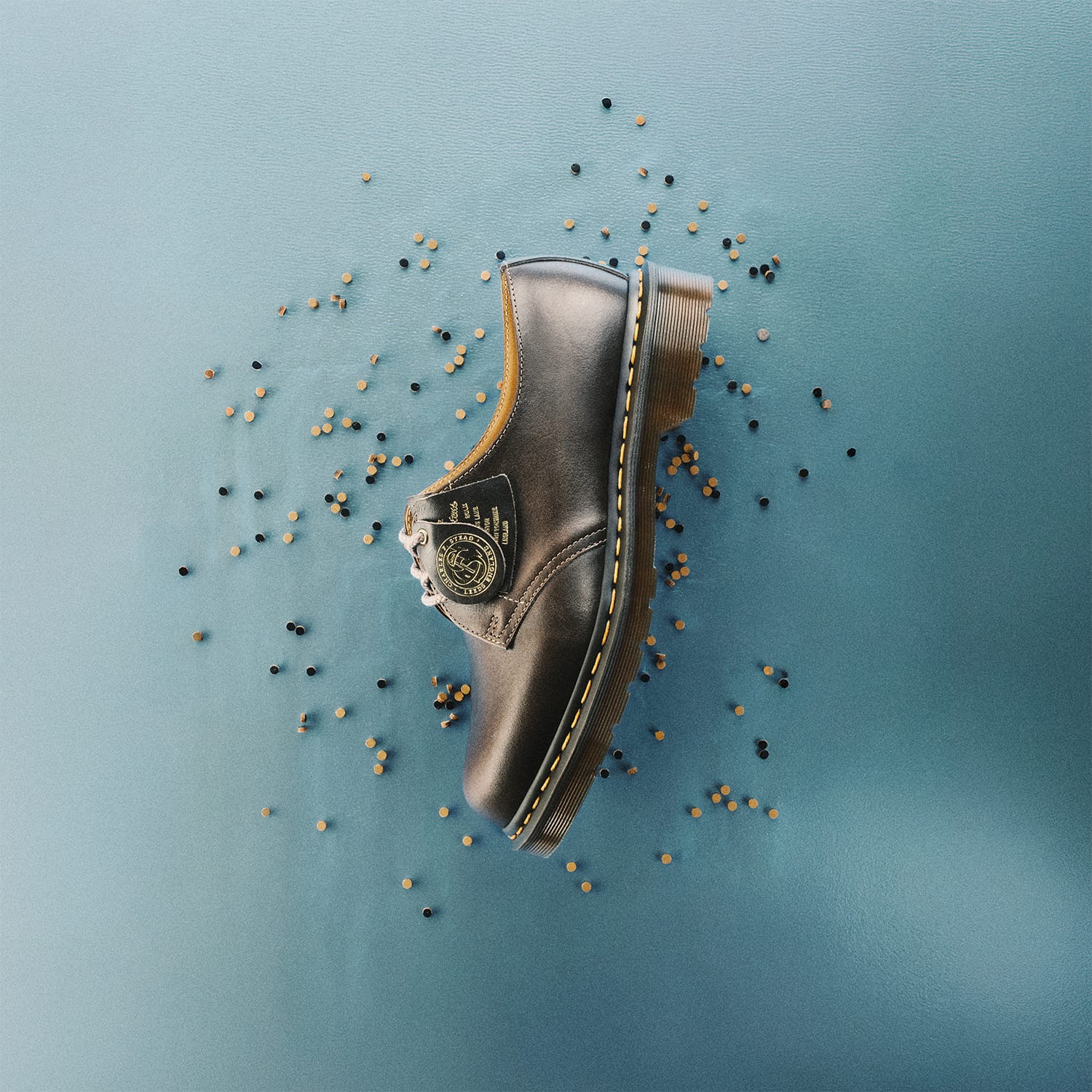
The digital tools that have genuinely made my life better are the ones that go from a 3D model screenshot to a decent render. Or from a quick photo of a sample to something I can use in a presentation. Less about design, more about presenting your ideas in better ways.
And where have they disappointed you, or created problems you didn't anticipate?
We've not had any real problems; we don't have a fully integrated digital workflow so we're not relying on any one tool to deliver, just support and add to our traditional shoe development process. Most of our digital design tool usage is on innovation projects so less risk for time critical seasonal developments to go wrong. Things not working is very much part of the normal R&D process.
3D printing has been one of the best tools we've adopted and probably the most frustrating early on. When we were getting going on this, printing shoes was super niche. Just finding a printer that had the build volume and was affordable was a challenge. We'd come in after a weekend running a 50-hour print to find a plate of plastic spaghetti waiting for us. We had a foray into daylight resin printers, buying into a first-generation machine, and every print was a sticky disaster.
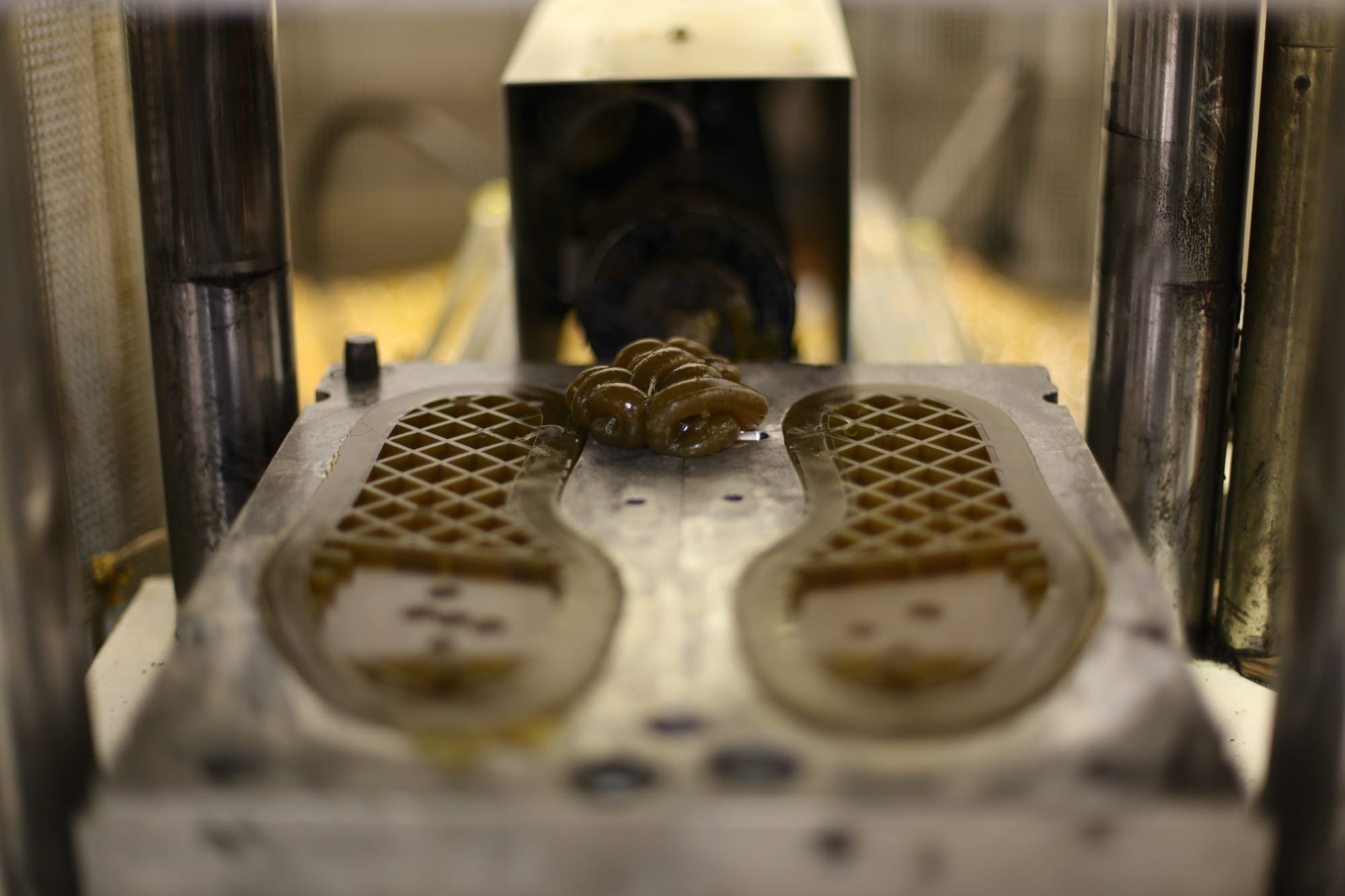
The tech and materials have moved on so much. We can produce an outsole prototype in a flexible material now in 8 hours. The emerging footwear additive manufacturing sector is driving some really useful material developments and printer evolutions.
Is generative AI one of those tools that just doesn't fit how you actually work? Where's the disconnect?
Personally, I want a tool that does exactly what I ask with a high level of accuracy. We need tools that speed up execution, not go off on random tangents. We deal with very specific technical challenges within tight construction and aesthetic constraints. The basic principle is it's easier to explain something visual by drawing rather than speaking, so writing text prompts for generative AI doesn't always fit in the process.
AI is everywhere in the conversation right now. You've been pretty direct about the "sea of sameness" risk. But you also clearly don't think AI is the enemy. Where exactly do you draw the line, and how do you hold it when the pressure to adopt is constant?
I am interested in the contextual side of the generative digital tools. Once we have a human created design, how can we show it in a way to improve levels of understanding to gather insights from internal teams, customers and wearers. Generating a photorealistic render on a wearers foot in a specified environment is one of the best uses I've seen of AI. We will see genuine business efficiencies and sustainability benefits here, taking some of the guesswork out of new product launches.
I think that AI is useful in conjunction with good human minds on a lot of things, but it can often feel like society is on a bit of a slippery slope, where AI dominates and replaces critical and creative thinking rather than supports it.
How do you make the case internally for experimentation inside a brand that is so proud of its heritage? Where does the resistance come from, and how do you bring people with you?
Dr. Martens as a business is very open to experimentation. We were founded on the concept of entrepreneurial innovation, from Dr. Funck's and Dr. Maertens' early comfort experiments inventing an Air Cushion Sole that could be heat-sealed to a shoe upper. Then to the Griggs shoemaking family innovations, driving the art of industrial manufacture that brought Doc's to the masses.
We always want to make sure we stay true to who we are from a product and consumer point of view, but our minds are open as to how we get there.
Sticking with digital tools for a second, digital sampling was supposed to reduce waste. Has it? What's the honest answer?
So much of Dr. Martens value is in the aesthetic and tactile depth of the materials we make from. It was obvious very early on, and still is, you can't replicate real-world craft in digital. Our biggest sustainability attribute is longevity and that comes from the balance of timeless design, functionality, durable build and considered materials selection. All factors that require human adaptability and skill to execute.
Where digital sampling has really helped is in the outsole space. Outsole toolings are our biggest investment in a new product line. 3D models and 3D prints allow us to iterate quickly and cheaply internally. An outsole 3D printed in TPU really helps stakeholders understand the project whereas a 3D print of a leather boot isn't exactly going to tell the story of a beautiful material.
Digital tools definitely help in speed of resolution for us on outsoles, but the digital sampling of uppers doesn't necessarily increase speed to market.
You were at Fashion for Good's cross-brand circularity workshop. What did it tell you about the sustainability conversation happening now, and what did you take away?
One of the best things for me about the FGG workshops is the coming together of brands and experts. The usual mentality in the industry is to see each other as competitors, fighting for shelf space. But in the sustainability world we really need to collaborate to progress. It was rare to have so much talent from so many cool brands sharing so much! There are some really great innovations happening in the circularity space, especially out of France where early adoption of extended producer responsibility legislation is driving progress.
You run an apprenticeship programme. In 2026, with AI accelerating fast, why does a 15-month hands-on shoemaking apprenticeship still matter? Has it changed what the apprenticeship looks like?
Dr. Martens runs an apprenticeship programme to ensure we have the people with the skills needed to make our shoes. We're an outlier in the UK as a manufacturer and our products are made like no other, so it's essential we bring new people into our world and keep the shoemaking crafts alive through succession planning. We make real shoes for real people in the real world – human skill and adaptability is needed to craft materials with disparate natural properties into high quality footwear.
This is very much the opposite of the digital world where AI lives and thrives on homogeny and repetition.
The apprenticeship programme also feeds talent into the business. We've got colleagues in all sorts of global roles who cut their teeth on the factory floor through the Dr. Martens' apprenticeship and that depth of understanding and authenticity shows up in their day to day.
What do you look for in the people you hire? What's the quality that separates someone who will thrive in the space where craft and technology meet from someone who won't?
I look for people that are excited about what they do and have the drive to make difficult things happen. People that get out there and have lived and built resilience. You can hone skills and learn shoemaking but you can't fabricate passion and tenacity. And sketching! Show me how your mind works through your drawing skills.
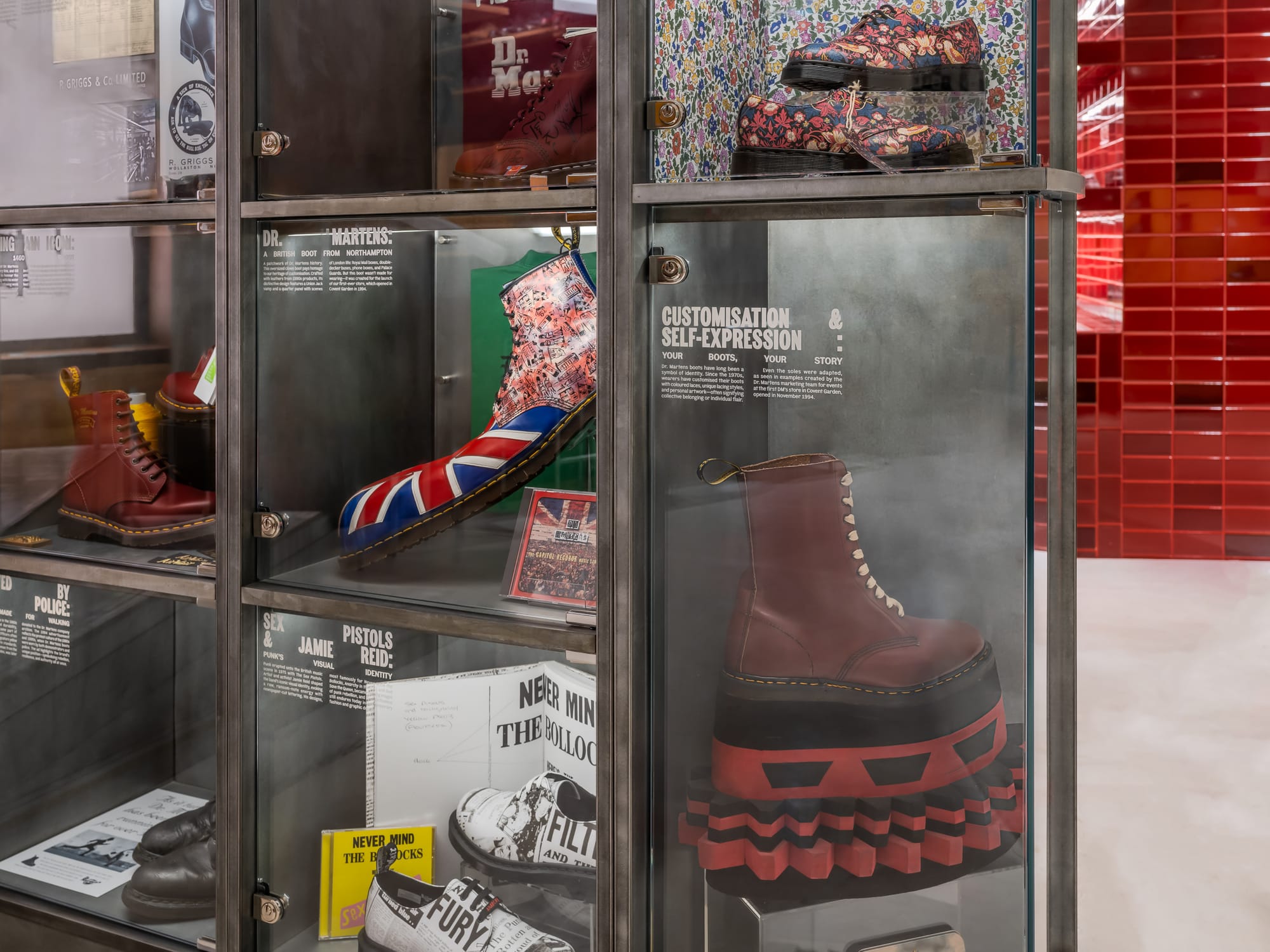
The new Brewer Street flagship, with its restoration bar and crafters in residence, feels like a physical version of everything you talk about: craft, community, authenticity over sameness. What does it tell you about where the brand's heading, and is that reflected in how the innovation team thinks about product too?
They've done a great job on the Brewer Street beacon store! It's definitely a more refined representation of Dr. Martens shoemaking heritage. The store design isn't driving product innovation, they're two ends of the consumer centred strategy of premium craft execution.
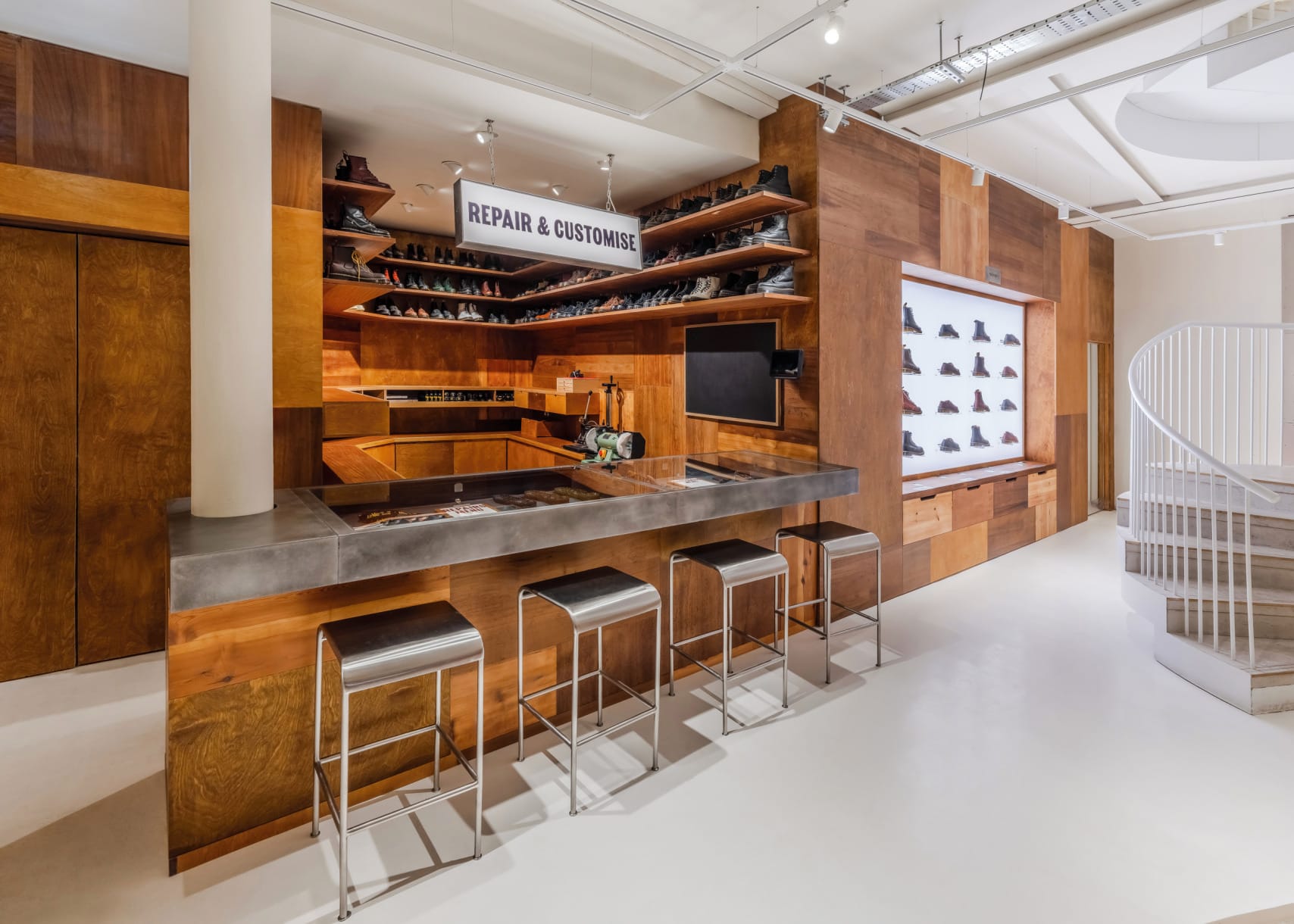
We've had fresh eyes in the business and its been great to see their discovery of 'visual treasure' as they explore elements from our archive, factories, machinery, materials libraries and footwear line, then bring them to life in a multifunctional store and third space. The breadth of events we've already hosted from new collabs and music launches, to repair and customisation really showcases the unique Dr. Martens wearer culture that's evolved organically over the last seven decades. Loads of interesting people show up and I've had some great conversations there.
Here's a deliberately provocative one: is there a version of Dr. Martens that could be made entirely digitally and still be Dr. Martens?
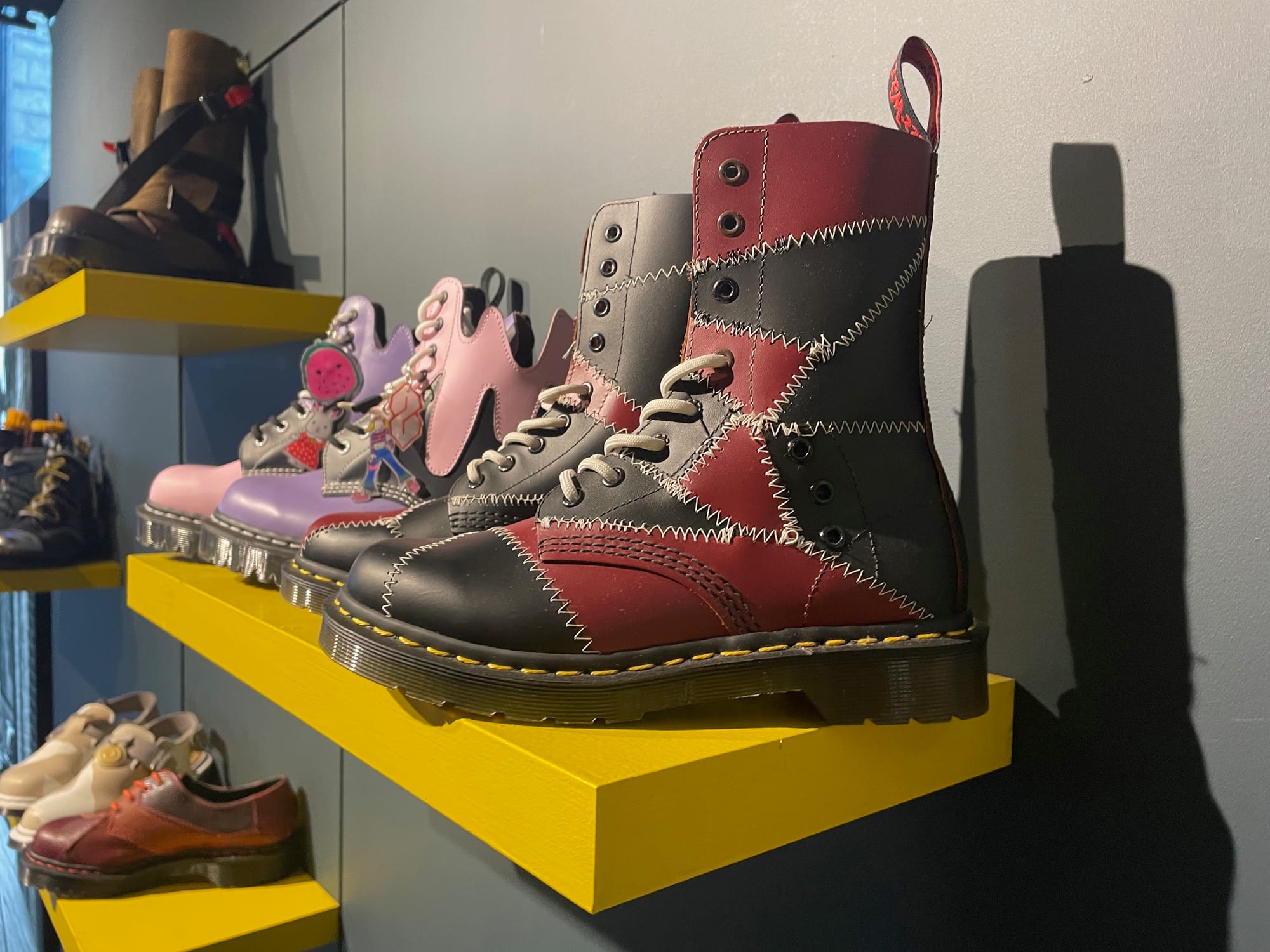
Dr. Martens has some pretty versatile visual design elements. I love spinning our design DNA into new forms and new product while staying true to who we are. So I think it could exist aesthetically, but, would we want it to? A major thing that keeps Dr. Martens relevant is the emotional connection our wearers have with our footwear. Emotion through real life lived experiences.
And if the industry gets this balance wrong, i.e. if digital wins completely and craft loses, what actually disappears? Not abstractly. Specifically. What's gone?
It's not as simple as digital winning over craft. Digital tools are just that, tools. They make nice pictures and perform some useful functions. You've still got to make the shoes. Footwear is highly complex and human adaptability is needed to balance all the often competing factors in its creation. You can either retain the shoemaking knowledge through craft succession planning or you can ship it out to a supplier. But if all your designs are recycled AI slop and they're all made the same way with big global suppliers by their preferred convenient construction methods and easy to process materials, what disappears is the meaningfully unique product you need to stay special and desirable. You lose authenticity in your process, you lose greatness in your footwear.
Alongside the practice of doing, the biggest part of personal skill development comes from working with talented people. Hands-on shoe development, breaking stuff, fixing it, solving problems and putting cool stuff on the table as a team.
It's those brands that will suffer, not the industry, from overuse of generative digital tools.
The last 6 or so years have been tough on footwear creation. But like with many things, when it gets too easy people get lazy.
Convenience is slow death. Making good boots is hard and we love it.
A huge thank you to Tom for taking the time to speak with me about the inner workings of craft and innovation at Dr. Martens. Tom was an excellent addition to our Stride Europe event earlier this year, and we look forward to continuing our work together.
Stride Europe will return in Spring 2027.