


The night before PI's own Fashion Tech Show NYC last week, we gathered at Sourcing Journal's inaugural 'Visions of Tomorrow' celebration, honouring five leaders the publication named as its 2026 Visionaries in AI, data, design, and supply chain innovation.
Sourcing Journal framed the evening around the simple premise that fashion and retail's biggest structural problems - from overproduction to post-consumer waste to unsold inventory - are being addressed not by any single technology, but by leaders willing to rebuild the processes underneath it.

You don't deploy AI, you build toward it.
Meg Ball, Senior Director of Creative Technology & AI Enablement, didn't arrive at Centric Brands with a rollout plan. She spent her early months sitting with design and product teams, mapping actual tool stacks and workflow bottlenecks before introducing any new technology.
You can't put an AI workflow onto a broken process. That just creates a faster broken process.
And the results speak for themselves. Roughly 150 creative users have been onboarded onto new tools, with product visualisation and speed-to-market as the clearest early wins. Ball described the shift as compressing what used to be a slow, multi-stakeholder approval chain, "I have to go show this to 16 different people," into something closer to instantaneous. Sample budgets, photoshoots, and studio time are all trending toward zero as a result.
Ball, who spent 20 years in product development and art direction before moving into transformation work, also tackled a concern she hears constantly from creative teams: that AI flattens their work. Her answer is that it raises the value of trained judgment rather than replacing it. Teams can now generate far more variations, far faster, but still need the eye to know which one is right.
They could create 400 different variations of something before their coffee even gets cold. But they still need to understand how to go back in and really look at what they're developing. That judgment layer becomes even more prevalent now.
That approach started with how she introduced the tools in the first place. Given her background, Ball said she understood the discomfort teams would feel, so she gave them explicit permission to experiment rather than a mandate to adopt.
I sat in the seat and I just encourage them to go in, have fun and play. Honestly, give them permission to play and just start from scratch.
She also argued that if every brand is using the same off-the-shelf AI tools, nobody's output actually looks different. The real advantage comes from applying a team's specific expertise to train and shape those systems.
That's the piece I've really seen shine, when people can take their expertise and apply it on top of really powerful systems. If everybody just uses the same stuff, it doesn't bring in their own special sauce.
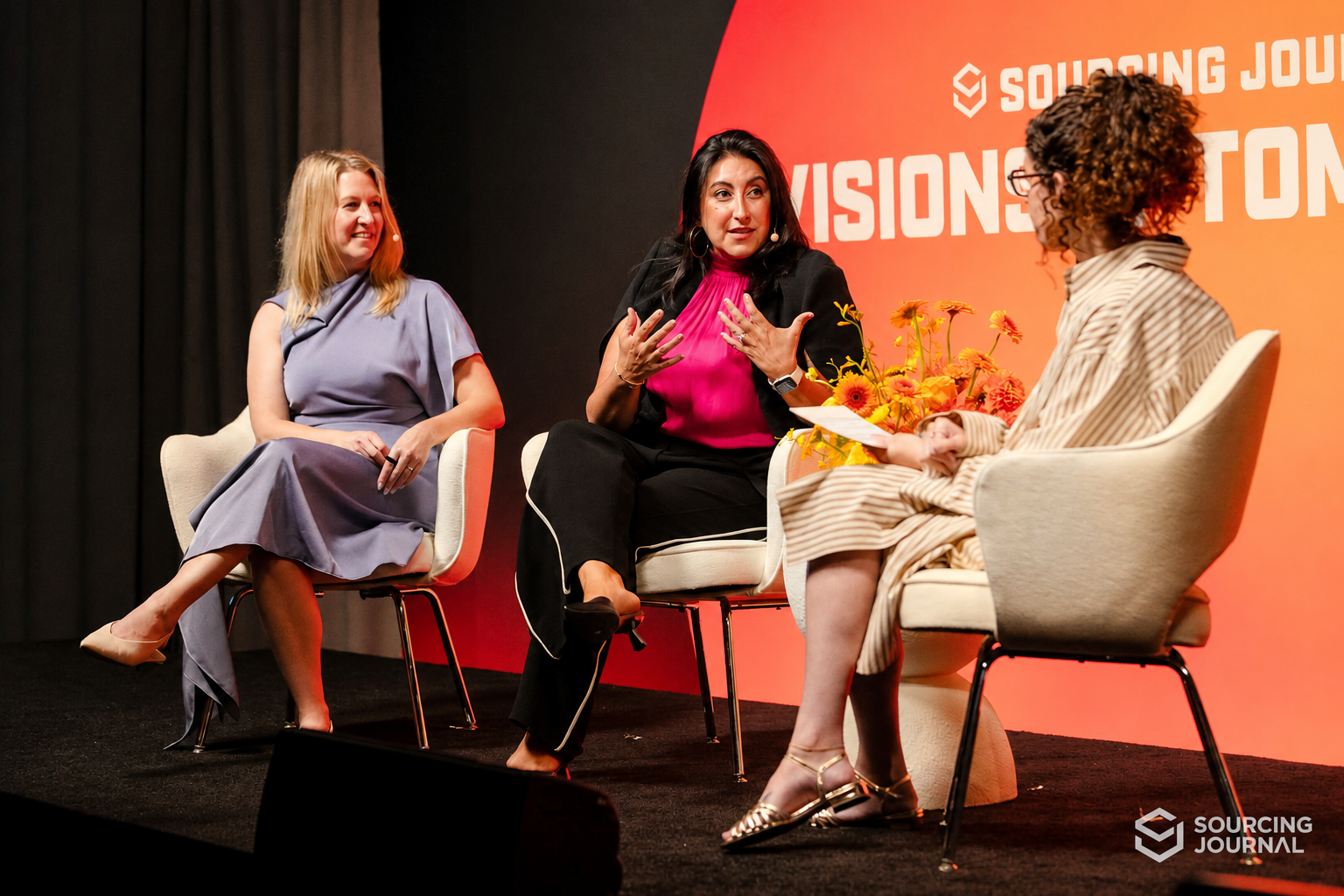
The Real Bottleneck is Data.
Jessica Murphy, Co-founder and CEO of True Fit, made the case that most companies are underestimating what actually stands between them and useful AI: not the technology itself, but the state of their own data. Retail, she argued, has some of the most disparate data of any industry, and no amount of well-built AI tooling can compensate for a broken source of truth.
The fancy tools are not going to be valuable if we can't organise the data underneath them. What's the source of truth? How do I not have a million different systems trying to talk to each other?
Her point reaches beyond any single company's tech stack. Unstructured, inconsistent data doesn't just limit an organisation's own AI efforts, it locks that organisation out of the broader ecosystem, from adtech to marketing platforms, that increasingly runs on machine-readable information.
If machines can't read it, the world can't see it.
Murphy backed the argument with True Fit's own experience testing it. About two years ago, with 20 years of legacy systems behind the company, she and her team chose to rebuild rather than patch, "blow everything up," in her words, on the belief that structural change has to come before new technology, not after. What was projected to take a year took two, but replaced roughly what she estimated would otherwise have been 18 years of incremental progress.
Twenty years in tech is old. Twenty years when you're developing technology is really old.
Manufacturing lessons from nature
Beth Esponnette, Co-founder and Chief Product Officer of unspun, traced her company's approach back to a basic question: why doesn't nature overproduce or generate waste? unspun's proprietary weaving software, used for on-demand 3D-woven apparel, was built around the same growth-and-decay logic, producing garments in response to real signals rather than 18-month forecasts.
Esponnette was candid that the go-to-market process required patience. unspun's business model sells machines to factories, but factories serve brands, and brands serve consumers, so the company built trust from the consumer side first, running DTC body-scanning pop-ups before ever pitching a manufacturer.
As an industry, we're not set up for success. You have to guess what someone's going to buy 18 months in advance, the colour, the size, the fit, the silhouette, and get it all right.
She was careful to note that on-demand manufacturing isn't meant to replace everything. Basic, evergreen products can stay conventional; the case for on-demand is strongest for the higher-differentiation, made-for-you tier of a brand's line.
It doesn't need to be everything. You can go to the grocery store and get what you need. There are some things you want to just always be the same. But the product that has more differentiation, that's made for you, that's what will be on-demand.
She referenced the analogy of cavemen dragging a cart with square wheels, too busy to stop and put on the round ones someone's offering them.
That's what it feels like right now. We're stuck in a system that doesn't quite work, and we've got these square wheels we're dragging along.
That analogy stuck. Other speakers referenced it over and over, a sign it landed as shorthand for the industry's broader resistance to change.
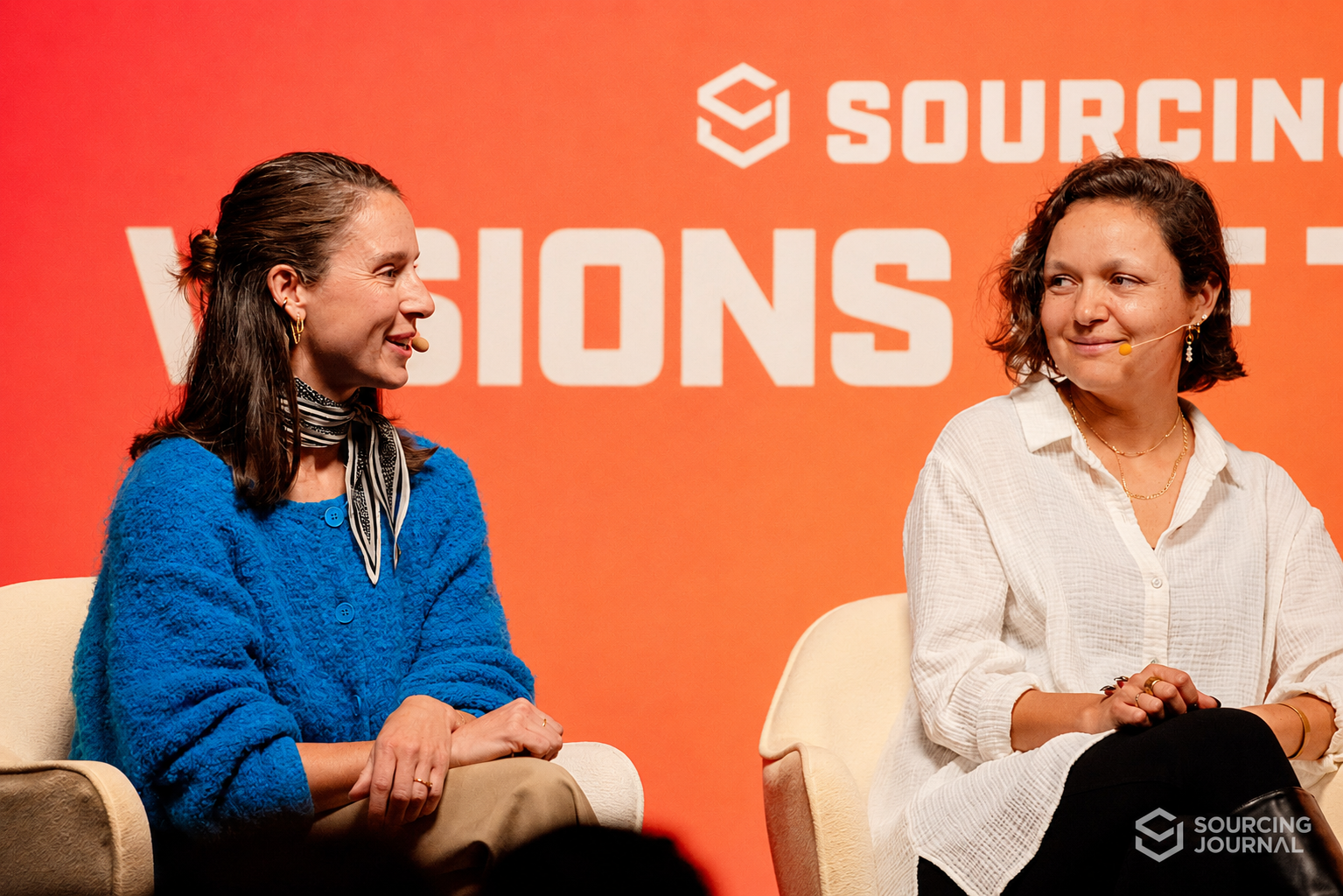
Circularity as inheritance, not pivot
Carmen Gama, Director of Circular Design at Eileen Fisher, talked the room through the brand's sustainability credibility as a long-term strategy versus a recent add-on. It's downstream of design values that predate the current circularity conversation by decades.
Core design values have always been there, almost 40 years ago, high-quality materials, a focus on natural fibres. A lot of these values already reflect the principles of circularity. We didn't have to shift how we decide.
What has changed is the infrastructure behind Eileen Fisher's Renew take-back programme, which now processes roughly 28,000 garments a month and has recovered 3 million garments since launching 17 years ago. Gama traced the programme's evolution from something entirely manual to something closer to a real data system. It started, as she put it, on a single Excel sheet tracking every garment coming in and out by hand, with all the human error that implies: inconsistent data, hard-to-track fibre types and categories, difficult projections. Last year, the team integrated a system with longtime commerce partner Trove, which now tags and catalogues every garment as it arrives at the warehouse, identifying category and material automatically.
Now, every garment that comes to our warehouse is tagged and identified. This is a category, this is the material. And now we have real touchpoints at every part of these garments' journey, so we can divert them to the highest-value outcome.
That diversion depends on a sorting process Gama described as the actual foundation of the whole operation. Every returned garment is first sorted by material, category, and condition, then routed down one of several paths, resale, donation, repair, or recycling, with the software tracking it through whichever path it takes.
You cannot make any decision or process if you don't know what you have. So the most important step of the full operation is our sorting process.
That data has also started functioning as a feedback loop for the design team itself. With 3 million garments returned over 17 years, Gama's team can see which fibres and constructions actually hold up, including 40-year-old garments that are, in her words, "still so relevant," and use that pattern to inform what gets designed next.
Gama was equally honest about the programme's current limits: some garments still end up "downcycled" into insulation material rather than finding a higher-value second life, and closing that gap remains an active challenge for both the design and materials teams.
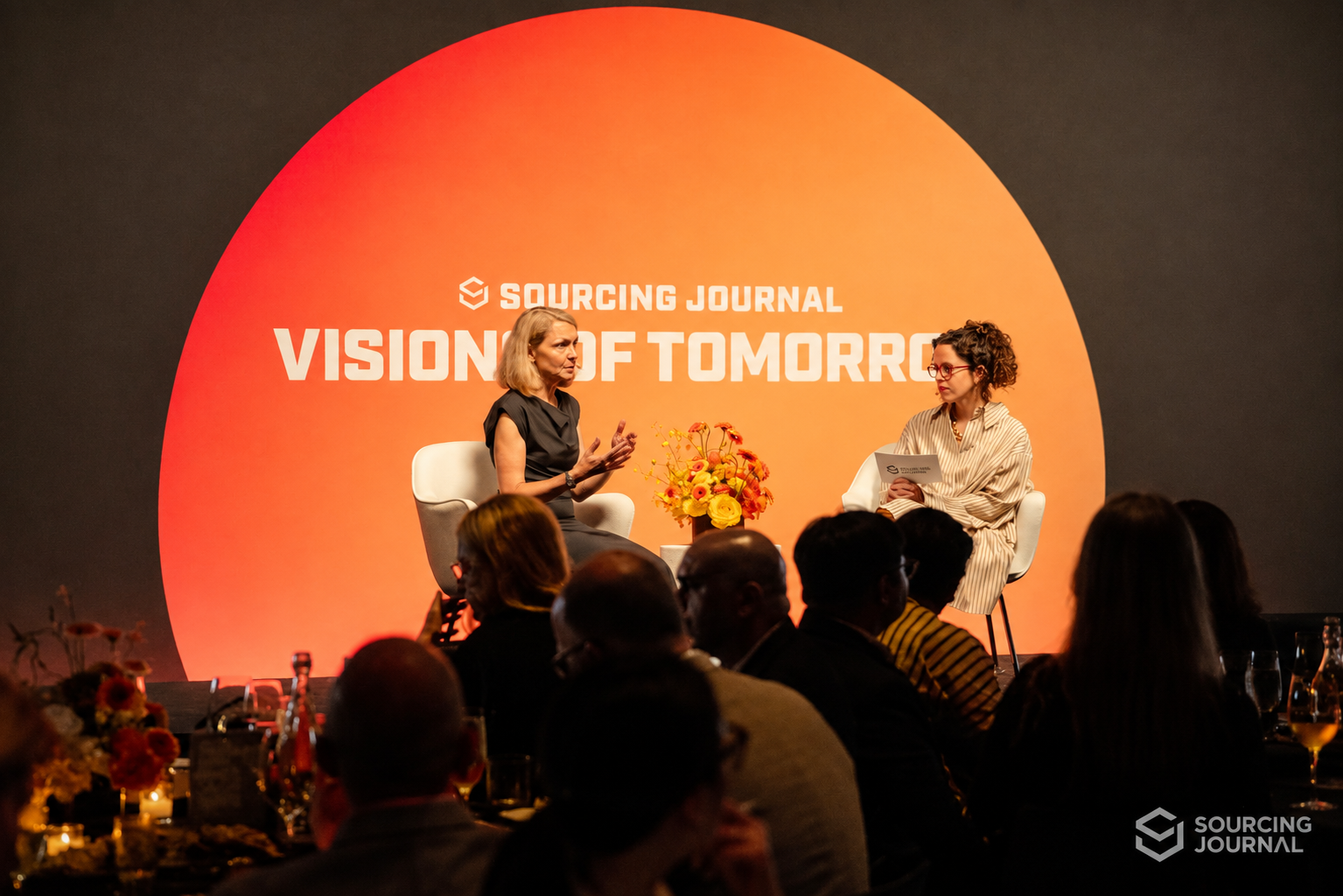
AI & 3D is "a 1+1=3 moment"
Sandra Gagnon, Senior Director of 3D Digital Product Creation at Target and co-founder of the 3D Retail Coalition, framed AI and 3D as complementary rather than competing technologies.
AI is all about content generation, new ideas, iteration. 3D is about the practicality of it: can we actually make this? Together, the two are a '1+1=3' kind of moment.
The strongest case she made for 3D wasn't about the design process at all, it was about return on a single asset once it exists. A well-built digital asset doesn't have to stay in design; the same file can move through marketing, merchandising, sourcing, and e-commerce before it ever reaches a customer.
Once you have that asset, it can be for marketing, merchandising, sourcing, e-commerce, and ultimately your customer. That's where Target has had its biggest success, when we've unlocked that entire value chain.
She pointed to digital materials as the clearest example of 3D moving from a design nice-to-have to real infrastructure. A beautiful digital asset isn't useful on its own, she noted; it has to be accurate and scalable, which meant going directly to suppliers and mills to build a shared, trustworthy data foundation rather than recreating materials from scratch at the end of the process.
We said, let's really collaborate with our suppliers and our mills, and let's start to do this together. Being able to have accuracy, make decisions faster, drive the product forward, and they were usually all in.
Gagnon also offered some practical advice for any organisation stalled in their digital transformation. Before investing in more technology, audit three things: foundations (standards, libraries, materials data), relationships (getting the right cross-functional and supplier voices in the room early), and decision-making speed (using digital assets to actually change what gets decided, not just to generate more content).
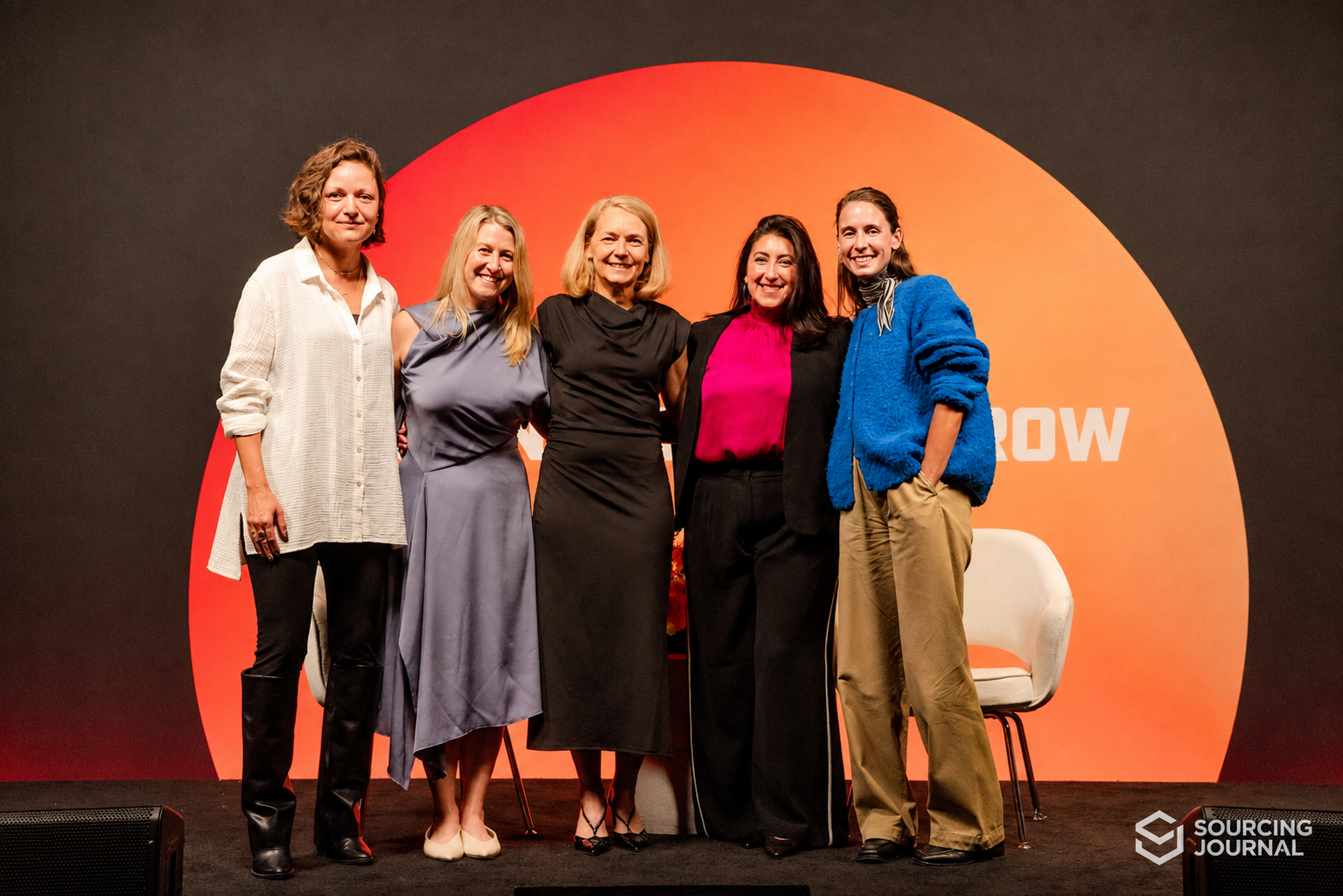
All five visionaries shared a refusal to treat technology as something you bolt onto an existing process. They described some version of the same discipline: fix the foundation, build trust with the people who have to use the tool, and let the technology follow the process rather than the other way around.
It was a fitting warm-up to the conversations we'd go on to have at Fashion Tech Show NYC over the following two days, and a reminder that the leaders shaping this industry's next decade aren't waiting for permission to rebuild it.
An official write-up of the Fashion Tech Show NYC 2026 will be coming to Seamless soon. Watch this space.


