


The Fashion Tech Show New York 2026 opened with Bhargava Ram Kummamuru, Head of Digital Product Creation at H&M, reading out loud the industry's decade of broken promises. Seamless 3D design from concept to product. A unified digital twin and digital thread across the entire value chain. Plug-and-play interoperability between tools. Real-time collaboration with suppliers. Lower total cost of ownership.
None of it, he said flatly, has actually happened.
There is a major differentiation gap between what we assume things to be versus what reality started coming towards.
— Bhargava Ram Kummamuru, H&M
It was, perhaps, a strange way to open an event built around the promise of transformation. But that candour was exactly what set the tone for what followed.
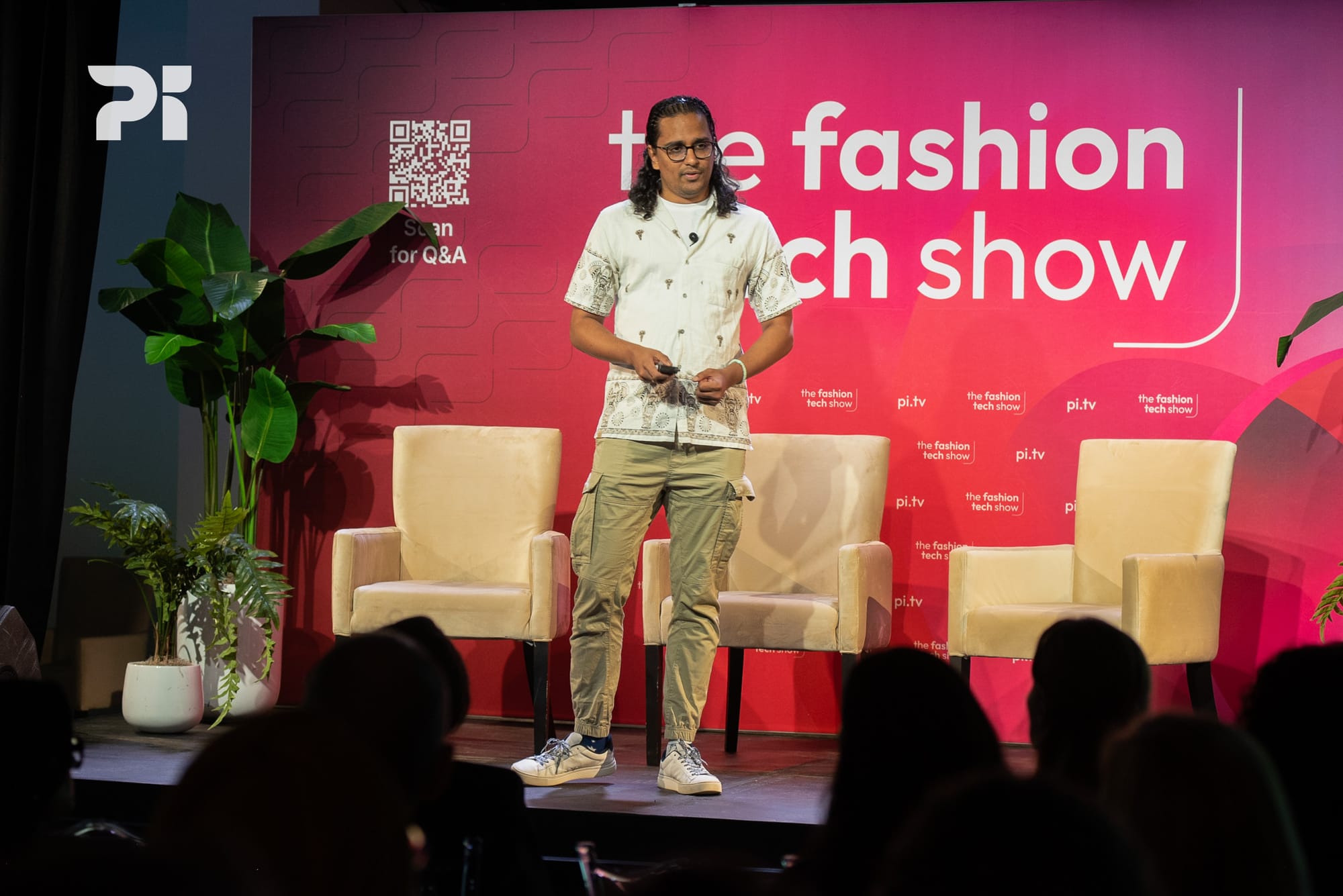
I. The Speed Myth
William Wilcox, founder and CEO of Clothing Tech, opened his session with an uncomfortable statistic. When brands were asked why they started their DPC work, roughly 90% said speed. Go faster. Asked five years later how much their calendar had actually compressed, and only around 15% reported a change of more than 10%.
The reason, according to Wilcox, is structural and not technological. Digital transformation mostly accelerates one link in a linear chain, typically the ideation stage, while the rest of the sequence remains as expert-gated and sequential as ever. Compress one step and you still wait as long for the next nine.
His proposed fix wasn’t a faster tool, but a rearranged process: break a garment down into a reusable “product definition,” with parametric patterns, standardised collar and seam components, and pre-agreed construction logic. This way, pattern-making, costing and tech-pack generation can run in parallel instead of each waiting on the last person to finish.
Monika Balach-Kinsella, 3D Product Development Lead at JD Sports, also touched on speed. Having inherited a fully manual, PLM-and-email development process, she rebuilt it around a shared 3D and digital fabric library. Development time went from roughly three months to three or four weeks. She got rid of the old process entirely, rather than just adding AI to a process that wasn't serving their needs.
AI is to help us develop the skills rather than replacing people. Since I joined, we've hired more people and they all love it. We don't replace people with AI. We're actually hiring more.
— Monika Balach-Kinsella, JD Sports
Elicia Wiltschko, Director of 3D CAD Technical Design at Varsity Spirit, told the same story in terms of physical fit rounds. Before 3D, her team would order five, six, sometimes seven rounds of samples to get a fit right. Now it's one or two.
Speed is available. It just isn't automatic, and it isn't a function of which tool you bought.
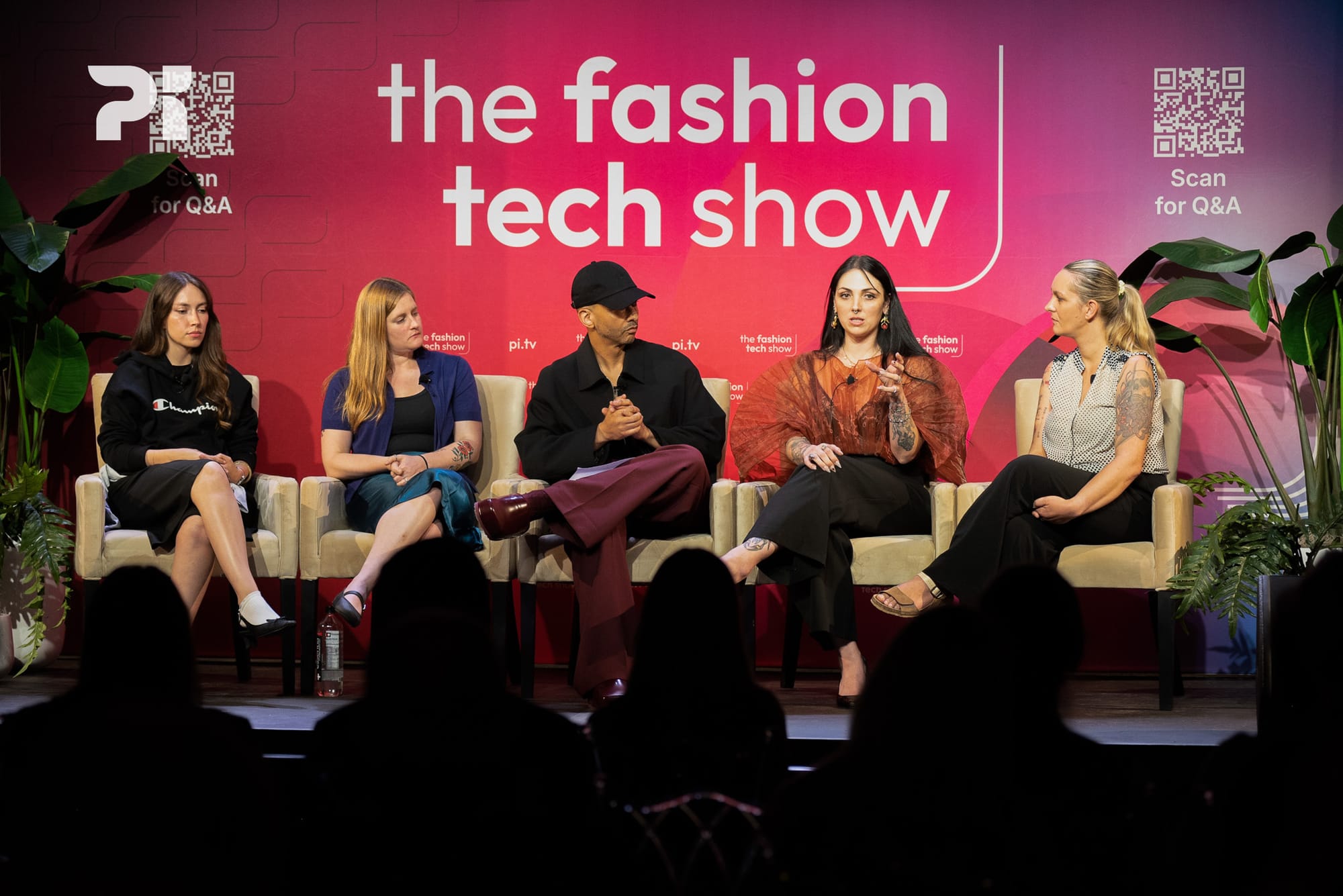
II. Redistributed, Not Removed
In the panel titled "AI Has Landed and It's Messy", nobody disputed that outputs now arrive faster. But what nearly everyone flagged was that checking and correcting an output, proving it's right, now sits behind the work instead of in front of it.
It's really easy to just take what AI puts out for face value and say, that was five hours of my life and I just did it in 20 minutes. What I'm really finding is that the validation process...is redistributing that work.
— Ashley Heller, Perry Ellis International
On H&M’s side, Ram described a similar shift. While the front end of the pipeline, ideation and visualisation, has been genuinely transformed, the bottleneck hasn't disappeared. It moved into translation: turning a fast AI image into something a factory can pattern, cost, and cut. "It is not about a fancy image," Ram said. "It's about translating the fancy image into manufacturing output."
Some of the strongest wins shared on the stage came from that translation stage. At Perry Ellis International, a technical designer's custom AI assistant diagnosed a 150-page coat tech pack down to a single over-pressed seam causing lining shrinkage. Another brand generated a tech pack from an embroidery patch so detailed the factory called it more detailed than anything they'd received before.
But these stories also came with the uncomfortable admission that whilst great, these were once part of somebody's job, and those parts are now redundant.
III. Nobody Has Claimed the AI Strategy
Ask a room of practitioners who owns their AI strategy and what you get is a specific kind of silence, then an answer nobody particularly likes.
Rarely are we hiring AI experts. We're adding to other people's jobs. So that's going to add strain. It's not going to give them the space and energy to devote everything to set those standards.
— Ashley Heller, Perry Ellis International
Sylwia Szymczyk, CEO of FashionINSTA, added her experience on the same problem. Every company builds its AI plan differently. Sometimes it's handed down from a VP who liked a demo. Sometimes it's pushed up by pattern makers and technical designers who found value and had to lobby for budget. Neither route is wrong, but what's consistently missing is a person whose actual, core job is to own the decision, not someone squeezing it in around an existing one.
Meg Ball, AI Innovation and Creative Leader at Centric Brands, put it more bluntly in her own keynote later in the show: "We no longer have to worry about the access of tools because they are everywhere. The gap is the actual ownership, who connects the tool to the workflow, the workflow to the people, and the pilot to the actual production."
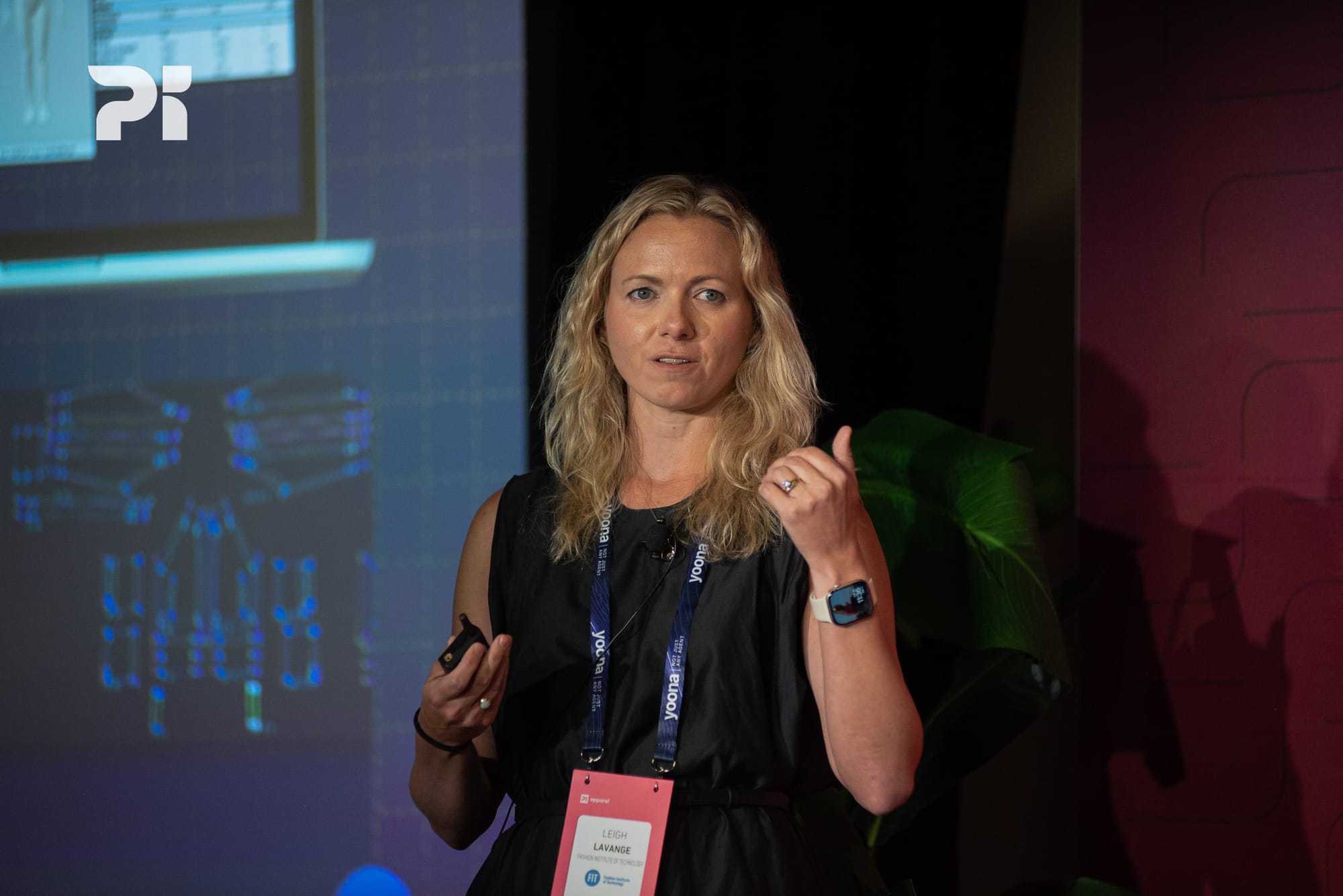
IV. Fit Is the Problem Nobody's AI Plan Is Solving
Leigh LaVange, Assistant Professor of Technical Design at the Fashion Institute of Technology and 2025 Academic Winner of the 3DRC Grand Challenge, spent her session on something far less glamorous but no less important.
In this world where there are bright shiny AI goals like sketch-to-pattern, why am I focusing on sizing? What is the number one reason for returns today? Fit and size. Our sizing today is not representative of our population.
— Leigh LaVange, Fashion Institute of Technology
Eoin Cambay, founder and CEO of Swan Vision, backed Leigh's argument with numbers on the startup stage. A third to a half of all clothing sold online gets returned, a rate that would be treated as a crisis in almost any other industry, and roughly 70% of those returns come down to size and fit. Standard sizing covers a shrinking share of the population actually buying clothes. Expanding it means more inventory, more risk, more waste.
LaVange built a grading-automation tool made to ingest a pattern and generate accurate graded sizes, and eventually custom sizes from a customer's own body scan, without skipping the fit expertise that makes a pattern trustworthy. Jump straight to flashy sketch-to-pattern automation and skip the unglamorous fit problem underneath it, she argued, and you risk losing exactly the control over fit the industry has spent decades trying to protect.
Erin Milosevich and Alexander Snyder, researchers at Arizona State University, are working the same problem from a different angle. Garments don't fail in a static pose, they fail in motion: a sleeve restricting a reach, a jacket pulling across the back on a turn. That evidence usually vanishes the moment the fitting ends. Using Canon's volumetric capture technology, their team built a system that preserves a real garment fault on a real moving body as a navigable 3D record, then trained an AI reasoning layer to read that evidence against a garment's actual spec.
A fit expert reads a garment and writes down three things: where the problem is, what's happening, and the fix. Any one of those alone is a dead point...that triplet is 20 years of knowledge captured into a single correction.
— Erin Milosevich, Arizona State University
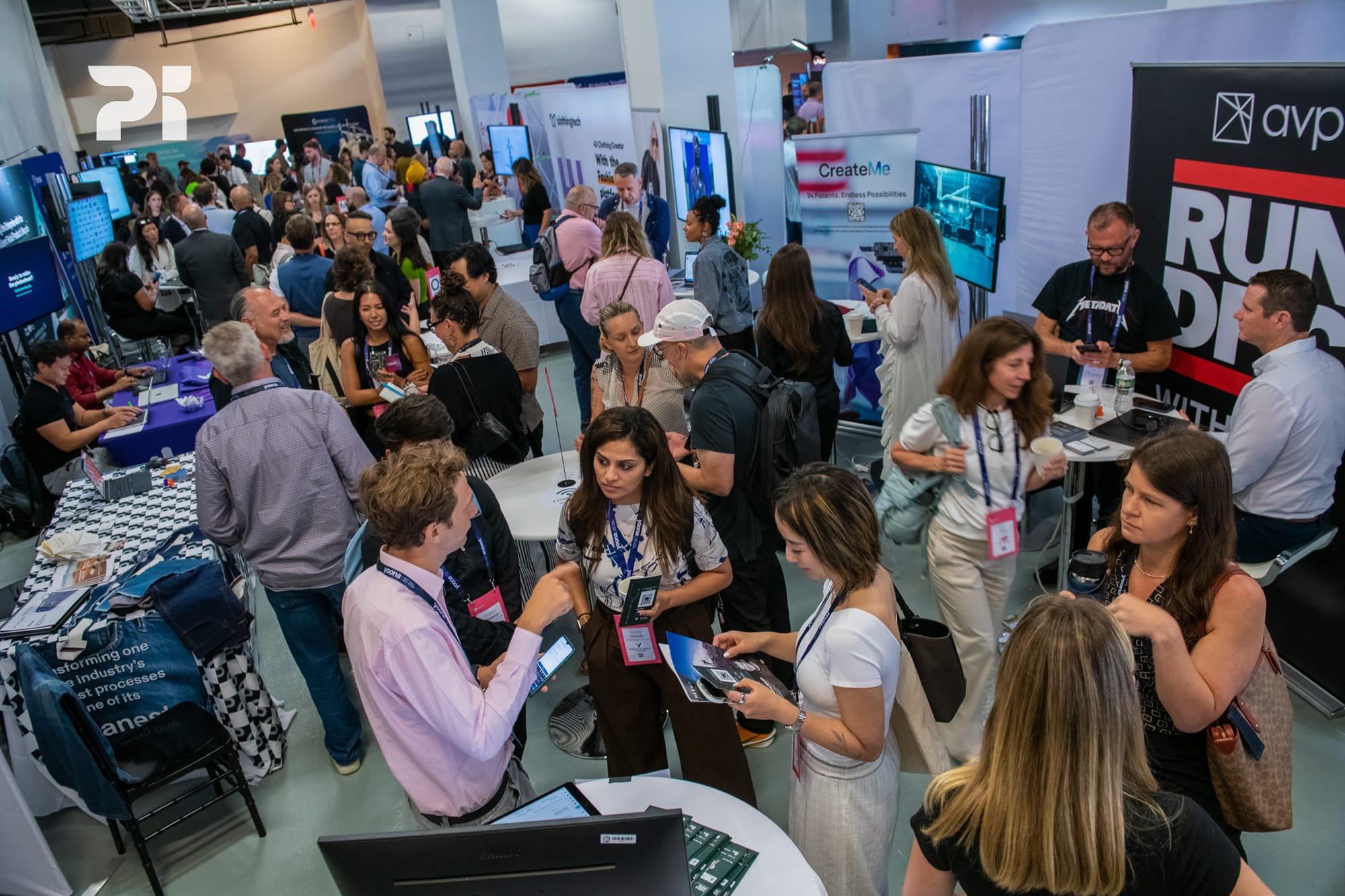
V. If We Don't Have Juniors Now, We Won't Have Seniors Later
When one panel was asked whether junior-level roles are still necessary, every panellist said yes. None of them were being sentimental. Those roles are how craft knowledge gets transmitted in the first place.
If we won't have juniors now, we will not have seniors one day.
— Sylwia Szymczyk, FashionINSTA
Watching an AI output flag exactly why a sleeve drags because of a specific armhole construction, Heller said, teaches a junior technical designer something that used to take years of quiet observation, or being let in on the secret by someone senior enough to bother explaining it. Used well, AI speeds that transmission up. Replace the junior instead of upskilling them through the tool, and an organisation quietly cuts off its own supply of future seniors.
Diane Limbaugh of Oklahoma State University raised a related point. Years of outsourced pattern-making overseas mean a generation of new graduates is entering the industry fluent in 3D, but without direct access to the deep, hands-on pattern knowledge that used to be built through apprenticeship on a factory floor. It's the same erosion Heller and Szymczyk were describing: if the apprenticeship vanishes, so too does the knowledge with it.
VI. The Black Hole After "Ready"
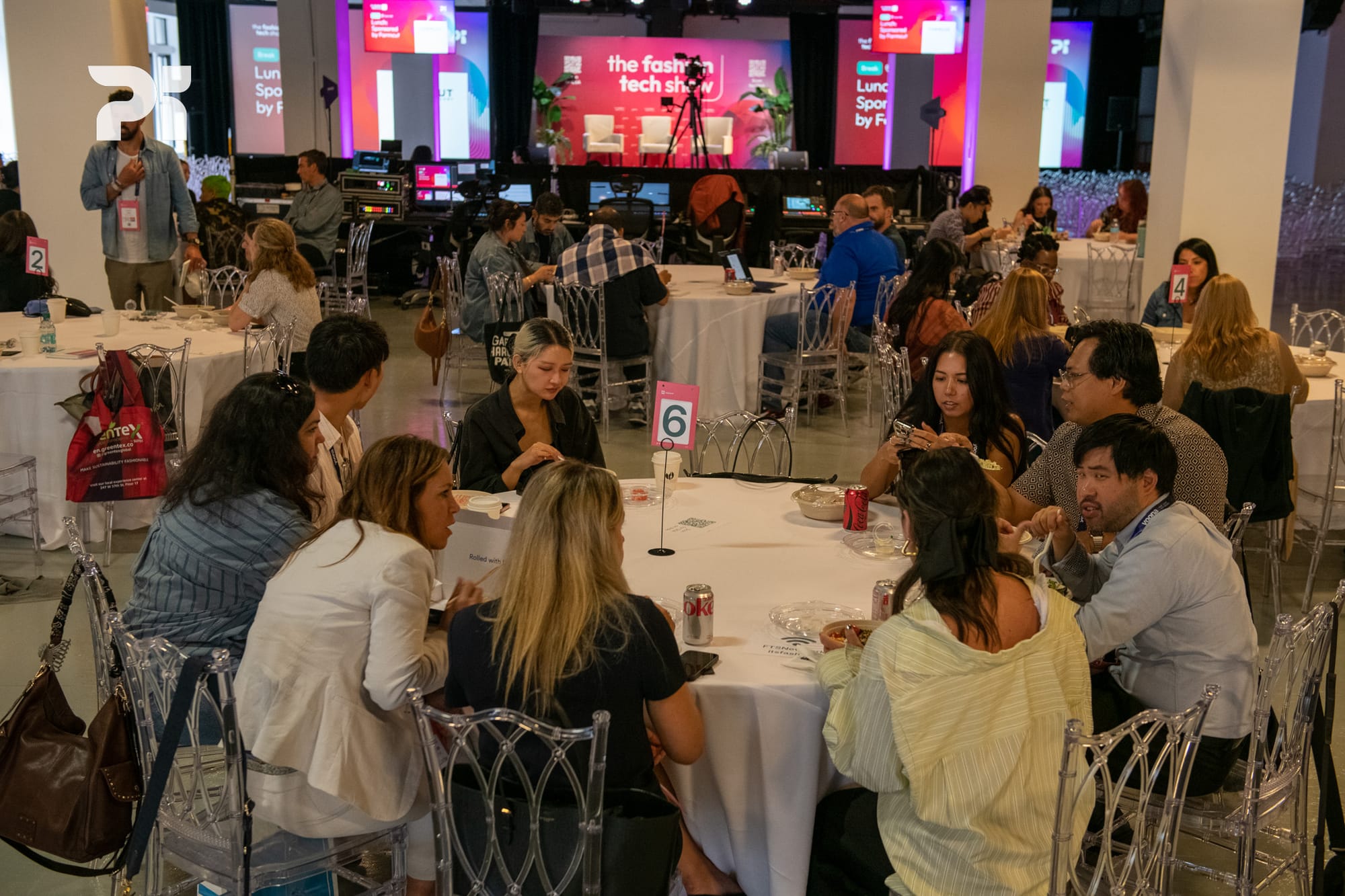
Anne Wong of TRASIX opened her session with the phrase 'the product black hole'. A designer finishes a collection, hands off specs and visuals to the next team, and then, silence. No visibility into whether it sold, whether it's being reordered, whether the story even survived intact to the sales floor.
Merchants track margin. Marketing hunts for a campaign hook. Sales needs a richer story to tell a buyer. Each team is looking at the same product through a different lens, and while the information that would satisfy all three exists somewhere, it's scattered across a spreadsheet, an email thread, a PLM field, and the memory of one senior garment developer who never wrote it down.
Design lost the commercial feedback, sales lost the creative context, and the information already existed out there. It just wasn't moving with the product.
— Anne Wong, TRASIX
Wong cited McKinsey research showing roughly 40% of styles created never make it to the floor at all, with a further 20% loss in full-price sales for every month a launch is delayed by handoff friction. We here at Seamless have made a similar argument about planning handoffs before, but this time it came from the product-development side of the business.
The same black hole shows up one step further down the chain, between the design team and the factory, and not every brand has closed it. On the panel "Scaling DPC Starts with People," the discussion surfaced two completely different realities within about a minute of each other. One brand brings manufacturers into the 3D process from the very start, and it's reshaped the calendar for the better. Another still runs on the old assumption that factories will "just know" what the product needs, so nobody shows them the file early, and it's starting to cost them. Details get missed. Samples get built wrong. "That was a dead sample," came the admission, describing the ones that arrive unusable because nobody looped manufacturing in before it was too late.
VII. Regulation Is Already Here, Quietly
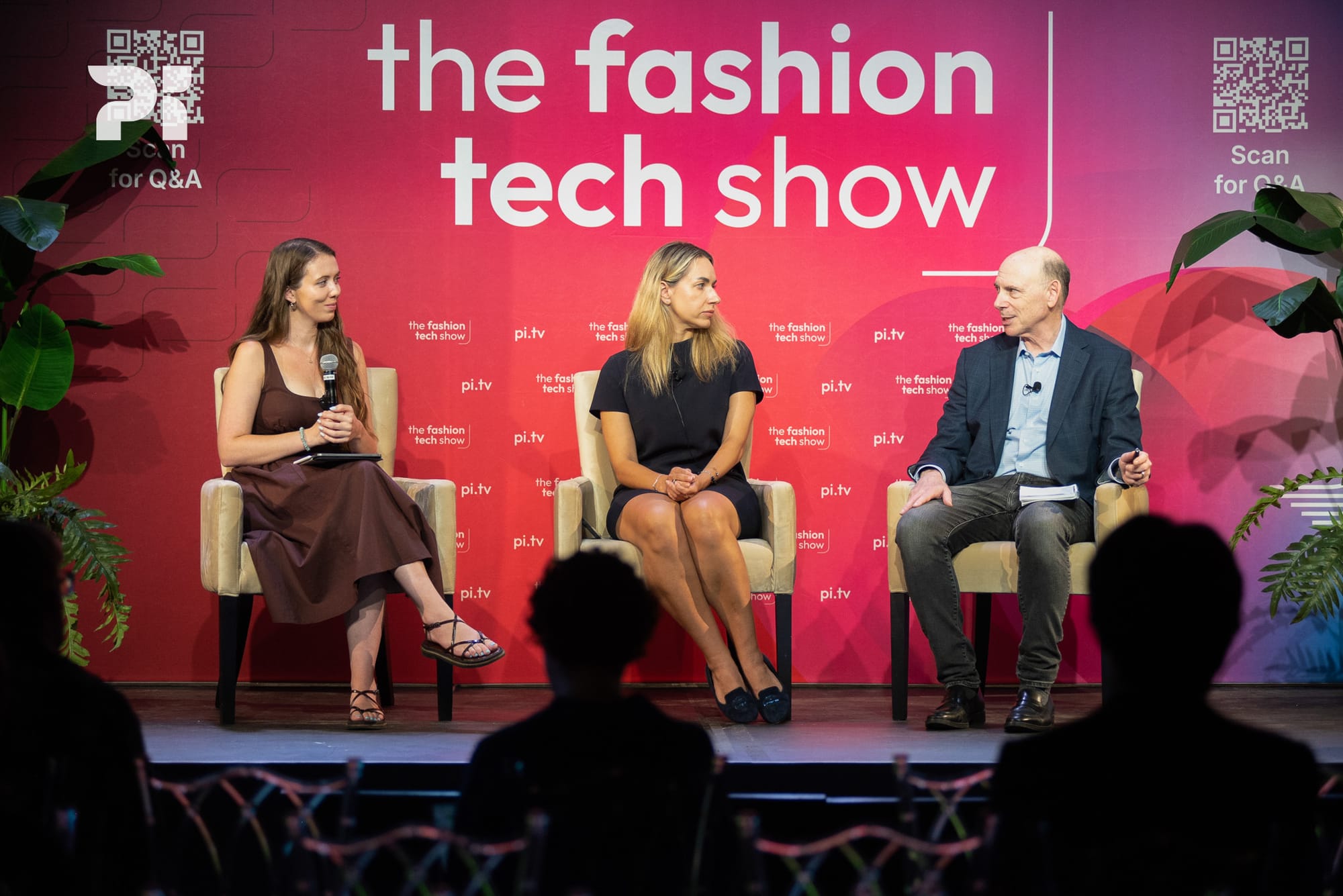
Every other session at the show sidestepped the legal questions. The fashion-law panel didn't.
The US Copyright Office has been explicit that fully AI-generated content is not copyrightable. Protection depends on demonstrable, documented human creative input. Timestamping and recording design decisions is no longer just good practice, it's the actual mechanism by which a brand owns what it makes. There's no fixed percentage threshold. A small human touch that fundamentally redirects a design can qualify for protection, while a heavily human piece with a light AI-assisted adjustment might not need it at all. It depends entirely on the documented proof of human input.
New York State has recently passed two laws that the industry needs to be well aware of. The Synthetic Performers Disclosure Act, enacted in June, requires disclosure whenever a "digital asset" in marketing is intended to be perceived as a real human. An undisclosed AI model in an ad campaign is now, per se, treated as deceptive. The New York Model Act sets out what a modelling contract must stipulate about a model's AI-generated likeness and how they license it. The panel framed this not as a threat to human models but as a potential new income stream, if properly licensed.
Martin Schwimmer, founding partner at intellectual property law boutique Stobbs, described a live case, mid-trial in New York, involving resale platform What Goes Around Comes Around. It emerged during proceedings that Chanel had required its licensed factory to embed covert identifiers, hidden cards with unique codes, to combat counterfeiting. Security footage from a break-in showed the thieves walking straight past a room full of valuable Chanel handbags to steal the card system itself. "That shows you," Schwimmer said, "that the people who are best in the business...invest in brand protection regimes that really require you to know where every single good is at any given moment. But it's also a bit of an arms race."
Eleanor Rockett of the London College of Fashion noted that even the EU's Digital Product Passport, held up as the eventual gold standard, won't have a textiles-specific act until late 2027 at the earliest, with full garment lifecycle data realistically not expected until closer to 2030. Meeting EU requirements doesn't mean a brand is covered everywhere else it trades.
VIII. Community Beats Command
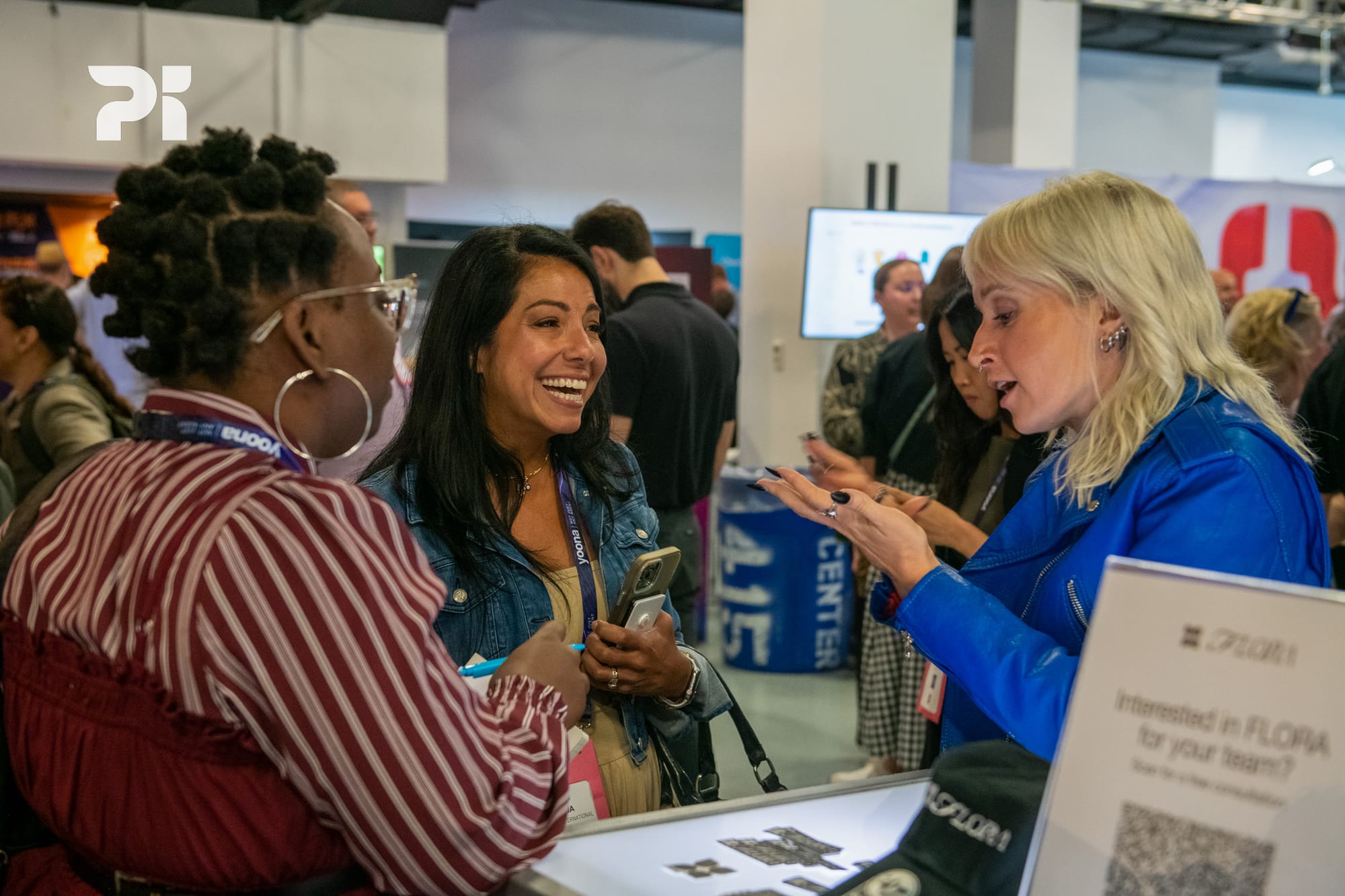
A kids-wear team at H&M cut its physical sample boxes from six down to one, because AI let them communicate design intent clearly enough that suppliers stopped guessing. A Weekday designer used inpainting tools to create the brand's first fully AI-assisted product, now sitting on shop floors. A team member travelling in Turkey photographed factory sample fabrics on an iPad and built visualisations on the spot. Nobody planned any of this centrally. Workers found the solutions and shared them sideways once they proved out.
This is not our idea. It's actually done by the community, how they wanted to come with different ideas of working.
— Bhargava Ram Kummamuru, H&M
H&M deliberately dropped classical tool training, the here-are-the-buttons approach, for process-first workshops where AI enthusiasts and sceptics solved real departmental problems together in the room. Adoption, in Ram's account, only really took off once the company stopped teaching the tool and started solving the problem with the people who'd have to live with the answer.
IX. Leadership Is the Infrastructure, Not the Tool
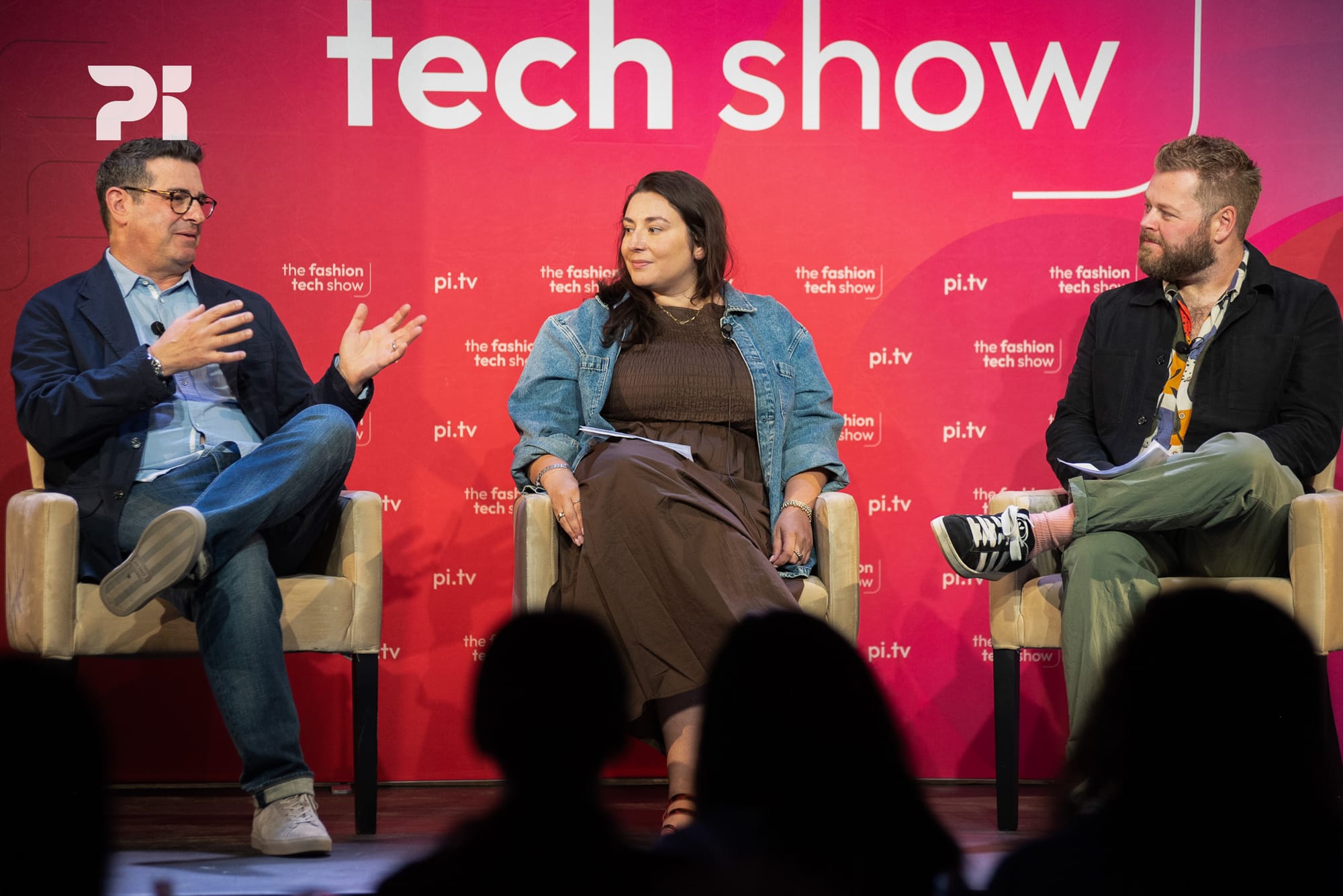
Meg Ball opened her keynote, "The Leader's Role in the AI Era," by reading out a leadership speech she'd asked ChatGPT to write the night before, which she described as "flawless, frictionless, and really quite empty." The machine could give her the language of leadership, she said, but not the cost of it: the part where you have to look a genuinely frightened member of your team in the eye and tell them their work is about to change.
That's the gap her actual argument lived in. Most rollouts fail, she said, not because the tooling is wrong, but because leaders manage fear badly. The cheerleader response, enthusiasm turned up loud, reads as dismissive to anyone genuinely worried about their role. The silent response, giving people "time" and hoping enthusiasm spreads on its own, doesn't spread anything.
People don't need to relax and they do not need more time alone. They need somebody who can say, the work is going to change and we will learn it together.
— Meg Ball, Centric Brands
Her framework - Test, Evaluate, Adopt, Rollout, which she called TEAR only half-joking - insisted rollout is not the same as licence count: "You can buy 300 plus seats tomorrow. You can't buy people experimenting and locking in." A transformation that still needs its champion in the room for every decision hasn't scaled, she said. It's still just a bottleneck but with good branding. The job is to move from hero to architect; go first, fail visibly, and make it safe for everyone else to go second.
At Gap Inc., Michael Gilbert and Olivia Sinisgalli onboarded 100% of Gap brand's categories to 3D and AI workflows within roughly a year. Asked what that kind of top-down commitment actually unlocks, Gilbert didn't talk about the tools. He talked about the pattern he's watched play out everywhere else.
I've seen a lot of transformation...where a leader believes in it, but that leader leaves, and then it kind of fades, and then it comes back a couple years later with some new leader who believes in DPC. I've seen this. You've all seen this, right?
— Michael Gilbert, Gap Inc.
Gap's version doesn't rest on one believer. Gilbert named names: the CEO, the COO, and chief creative officer Zac Posen are all aligned, and it's backed by a multi-year financial commitment rather than a mandate that lives only on a slide. When the company knows it isn't optional, he said, that's the difference.
At JD Sports, Balach-Kinsella credited her director, Elizabeth Larkin, with taking the same case directly to the CEO before a single tool was chosen. She got the mandate first and built second, rather than trying to build first and beg for the mandate afterward. Neither brand is claiming the tools did the work.
X. The Next Generation Isn't Waiting for Permission
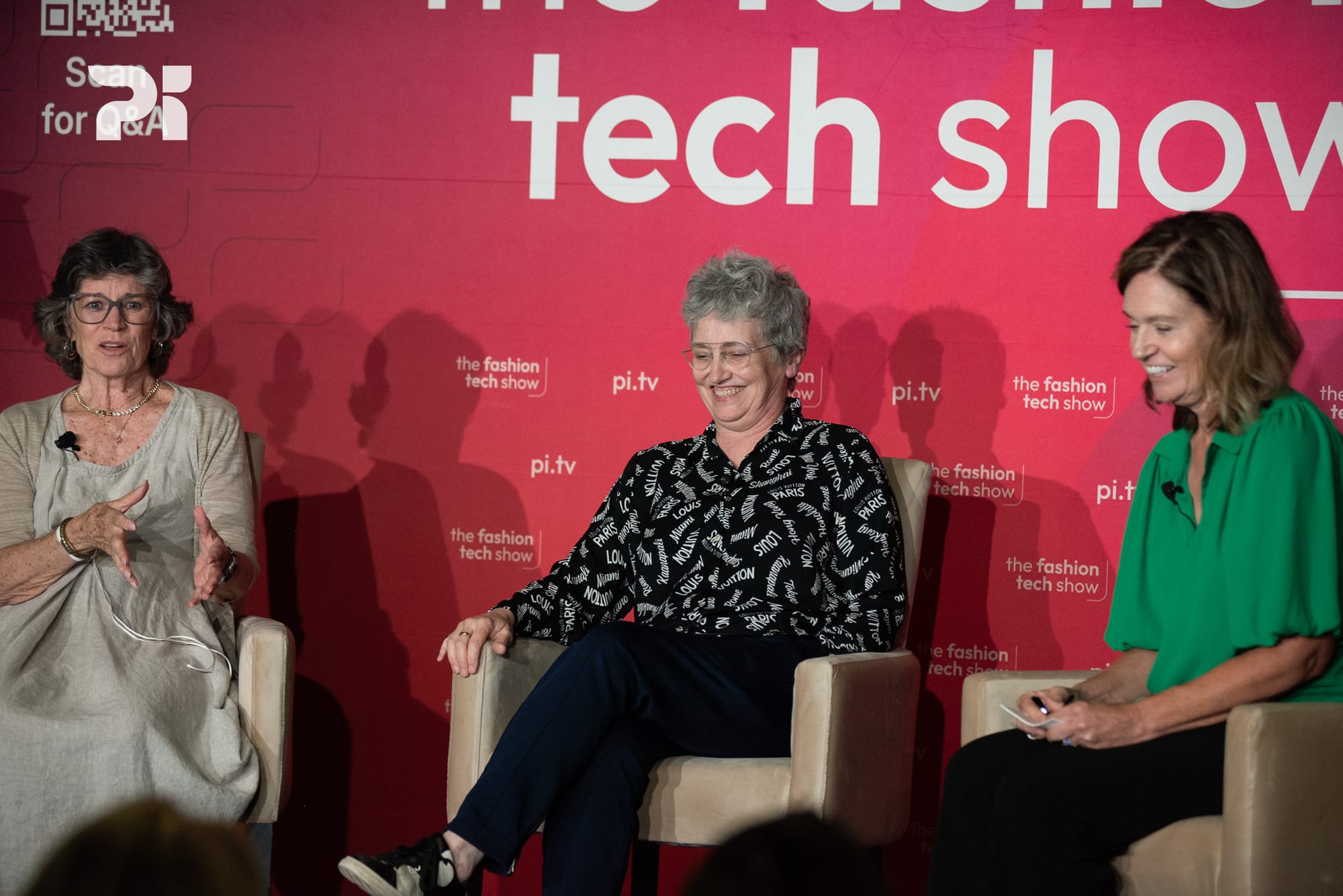
Miranda Morrison, VP of Sustainable Product Development at Steve Madden, sat on a panel with academics Sandy Bailey (Missouri State University) and Diane Limbaugh (Oklahoma State University), working through what a generation entering the industry already believes, and whether organisations are set up to use it.
Their students, Bailey said, arrive digitally fluent across any application, purpose-driven about who they'll work for, and, more than any previous cohort, genuinely collaborative and comfortable asking "why are we doing it this way?" out loud. Morrison, watching from the brand side after two decades in footwear, was candid about the risk of losing exactly that instinct: "I would not want to see the light in their eyes go dim because of where they will be in the power scale, and how little influence they will feel they can have."
The panel's clearest recommendation was old rather than new: pair junior hires with seasoned staff in a genuine mentorship model. Not to train the junior on the tool, but as a trade, craft knowledge moving one way, technological fluency moving the other.
Find someone who works at the company and send them your resume and your portfolio. Find someone on the inside who can push you around the algorithm and talk you up. It's who you know first, what you know second.
— Miranda Morrison, Steve Madden
Across every session, adopting the technology kept turning out to be the easy part. Who owns it, who mentors through it, who's accountable when it breaks: that was the actual work, every time.
None of this got resolved in two days, of course, and no one at the show seemed to think it would be. But now the real work starts, and that isn't in the model, it's in the handoff. The ownership nobody's claimed. The size chart nobody wants to fix first. The junior role nobody wants to lose. A leader willing to look foolish in front of their own team before anyone else has to.
Ram spent his opening minutes on a decade of claims that didn't come true. The room hadn't actually fixed any of that by the second afternoon, but it stopped pretending, which is further than most events of this nature get.
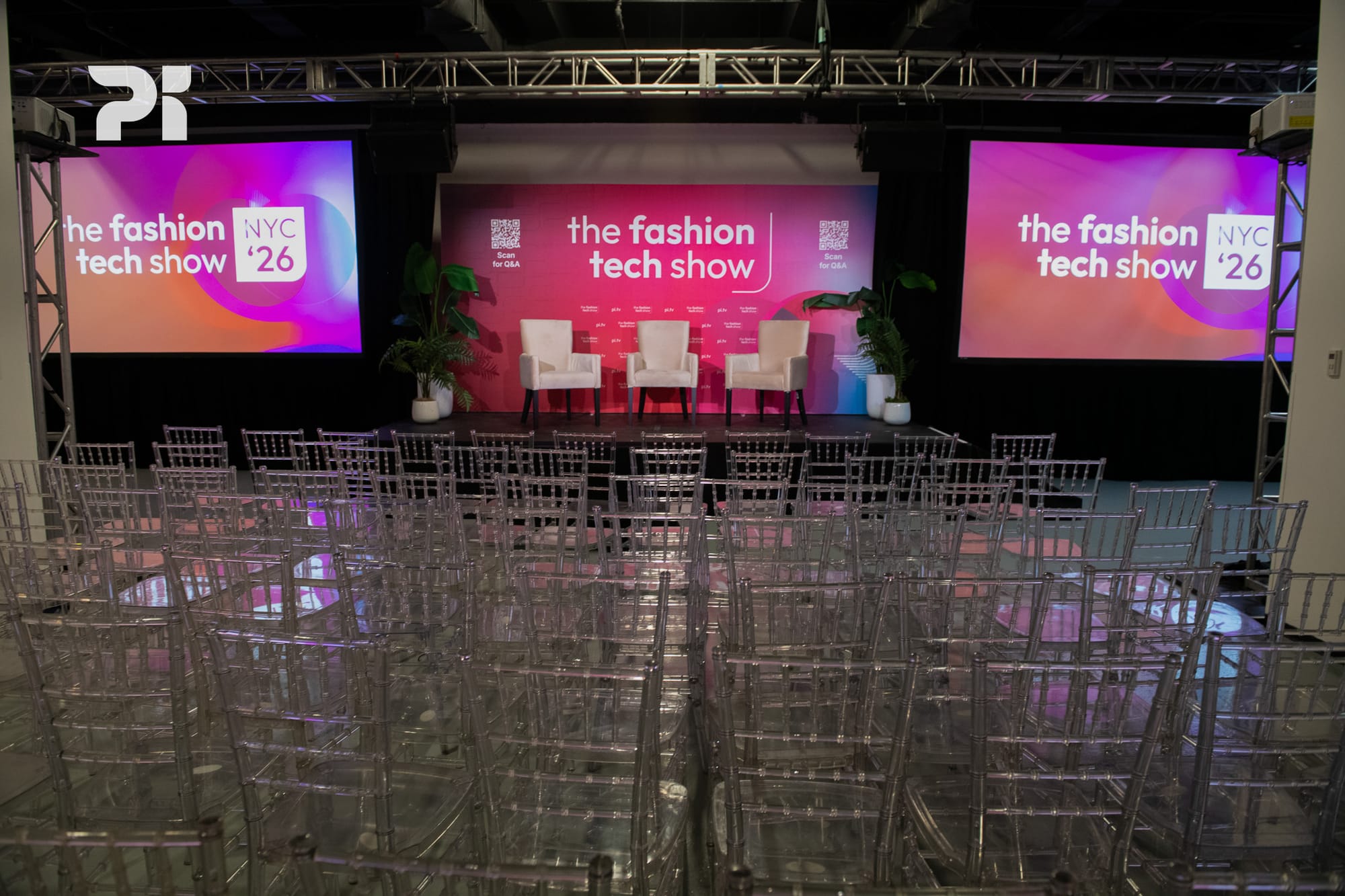
The Fashion Tech Show NYC will return in 2027. Register your interest here.

Takeaways at a Glance
- Speed is a byproduct of the process you rebuild, not the tool you buy.
Roughly 90% of brands cite speed as the reason they invest in DPC; only around 15% report their calendar has actually compressed by more than 10%. JD Sports' cut from three months to three weeks came from rebuilding the sequence of work, not adding a faster tool to the old one. - AI doesn't remove work. It redistributes it downstream, into validation.
Faster outputs mean more time spent checking and correcting, not less total effort. Plan headcount and budget around that redistribution rather than assuming it away. - Ownership, not access, is the real gap.
Tools are everywhere and cheap to trial. What's missing in most organisations is a person whose actual job, not an addition to an existing one, is to own the decision of what gets adopted and why. - Fit and sizing, not creative tooling, are the biggest returns problem in the industry.
Up to half of fashion e-commerce gets returned, roughly 70% of it down to size and fit. Solving that unglamorous problem is worth more than another flashy sketch-to-pattern demo. - Protect the junior roles. They're how craft gets inherited.
The tasks AI now automates in seconds were often how technical judgment got passed down. Removing them without replacing the mechanism of transmission trades this year's efficiency for a future expertise gap, a risk that predates AI, since offshored pattern-making already started it. - The most expensive gap in product development opens after "ready."
Roughly 40% of styles created never reach the floor, and every month of handoff delay costs another 20% in full-price sales. Fixing the handoff is worth more than optimising any single stage in isolation. - Document everything, now.
The US Copyright Office has confirmed fully AI-generated content isn't copyrightable; protection depends on documented human creative input. Timestamps and process records are the only real IP protection available while the law catches up. - Regulation is already live in places most brands aren't watching.
New York's Synthetic Performers Disclosure Act and Model Act are in force now. The EU's Digital Product Passport won't be fully built out until closer to 2030. Meeting one jurisdiction's requirements doesn't mean a brand is covered everywhere it trades. - The best use cases are usually discovered, not designed.
H&M's most-cited wins came from teams solving their own problems and sharing sideways, not a central plan. Teach the process, not just the tool, and let adoption travel horizontally. - Leadership commitment is the actual infrastructure.
The difference between transformation that sticks and transformation that fades with its champion is whether the mandate sits with one enthusiast or with the people who set the budget, and whether that mandate is secured before the rollout, not during it.


