

Vasilios Fasois did not grow up intending to spend forty-five years inside a knitting machine. He grew up in Sea Point, Cape Town, ignoring aptitude tests that said he was built for maths and science, until 1979, when his family lost everything. The restaurant his parents had sunk their savings into never recovered from the unrest that followed the 1976 uprisings, and it fell to an 18-year-old Fasois to get them back on their feet.
The family's answer was Greece, where his parents' roots trace to the Ionian Islands, whose people, as folklore has it, are "born travellers, a bit crazy, fiercely independent." Colleagues, he allows, might see some truth in that. Fasois landed on a factory floor sweeping up and degreasing machine parts, the lowest rung of an old-school hierarchy that guarded its craft knowledge jealously.
Craft knowledge was closely guarded back then. Whenever technicians opened the machines to adjust, they would send us to the far side of the room so we could not follow their moves. I promised myself that I would always be available to help others to learn what had been denied to me.
That promise is, in a sense, the whole of what follows.
Fasois went on to spend eight years at Nike, working on the Flyknit programme across Asia, Italy and the US, before founding Athens Knit Lab in 2020, a father-and-daughter studio that has become one of Europe's go-to resources for advanced 3D knit engineering.
His argument, in short: footwear has spent a decade treating 3D knitting as a materials story (lighter, greener, fewer parts) when it is actually a structural and manufacturing discipline the industry still doesn't take seriously enough to scale.
From the factory floor to Flyknit
Fasois's first real job was punching pattern cards and clipping metal selectors into jacquard chains; repetitive work handed to him with no explanation of the logic underneath. So he went looking for it himself. In the factory office he found the machines' operation manuals, written in English, and took them home. Out of 62 available positions on the punch cards, the factory was using around 34.
It stayed theoretical until a major international client arrived with an order the senior staff insisted was impossible. Fasois, called in to translate, recognised the structure from his reading.
I knew that the commands existed on the punch cards, they simply had never been activated in that factory before.
They secured the order, and he was moved into development and sampling, then trusted to programme the machines himself. It took knit engineering, he says, to realise his old aptitude tests were probably spot-on: knitting is "the exact intersection where visual creativity, tactile making, concept ideation and mathematical logic collide." The lesson stuck: a machine always holds capacity nobody has been shown how to use.
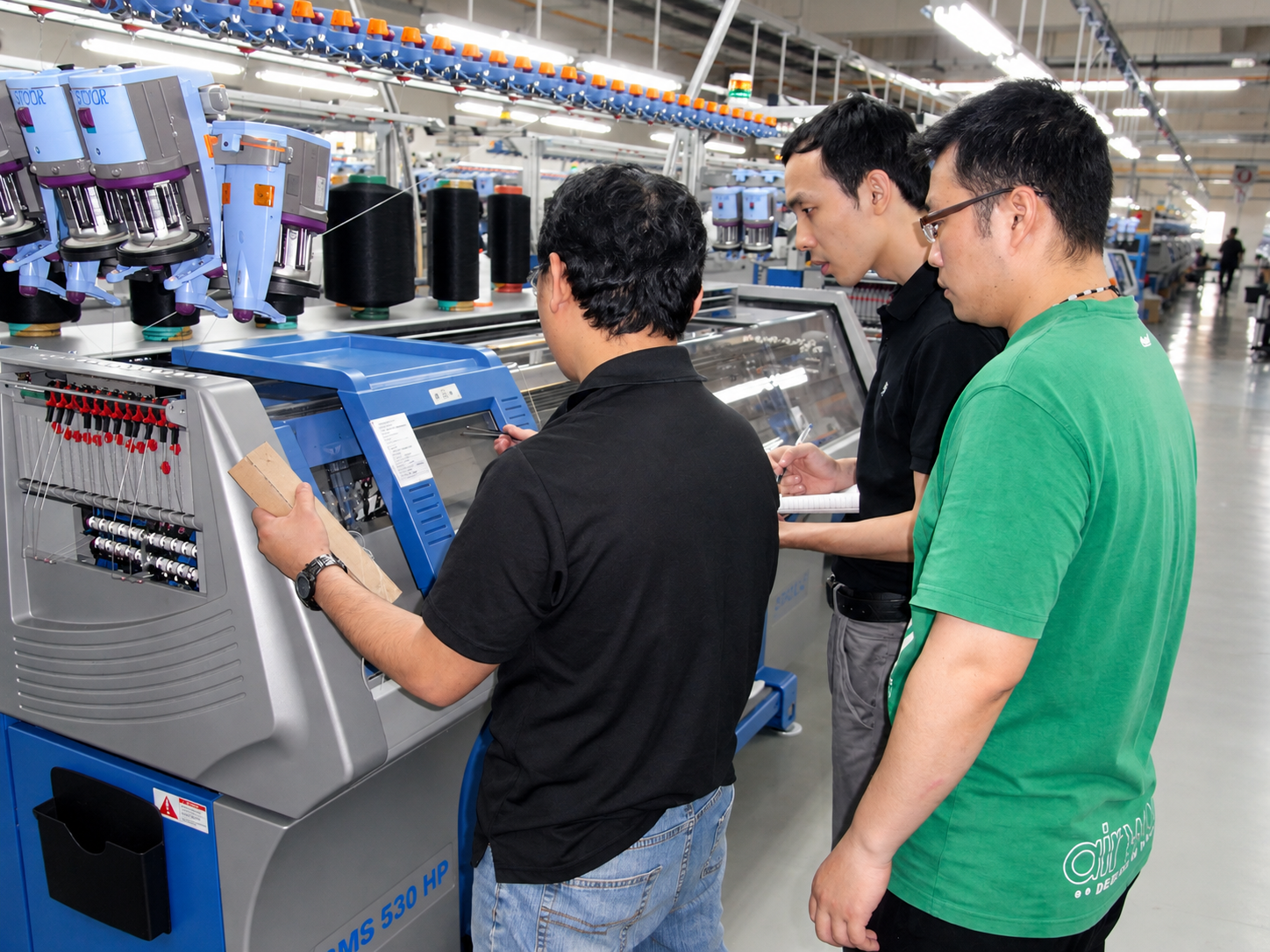
That instinct took him through Nike's knit operations in Ningbo and Taichung and, from late 2014, to Montebelluna, the Italian facility Nike put under a global spotlight this year as the heartbeat of its football heritage. He was part of a Flyknit innovation unit of around fifteen people, where, he says, decisions were "made over an espresso at the bar" without layers of bureaucracy. He doesn't think the "heartbeat" framing is hype so much as overdue recognition: the valley's craft runs from Venetian naval oak to a cobbler culture to a 1960s ski-boot boom, and Nike built on top of that.
The work was intensely physical, pulling raw knit structures straight off the machine and tensioning them over bespoke lasts built around individual professional athletes, whose feet, after ten or fifteen years at an elite level, often carry severe biomechanical adaptations and trauma. Accommodating those contours without sacrificing the structural lockdown, ball touch, and tensile containment required was a delicate balancing act. "I am not sure anyone ever solves it perfectly, but I came close," he says.
From 2015, while still based in Italy, he visited and taught at the new Flyknit design studio Nike had set up in Shoreditch, London, a small, largely off-radar team that, in his words, became "an extraordinary incubator of fearless creativity." Nike closed the studio down in 2024, which he still calls "a genuine loss to the design community."
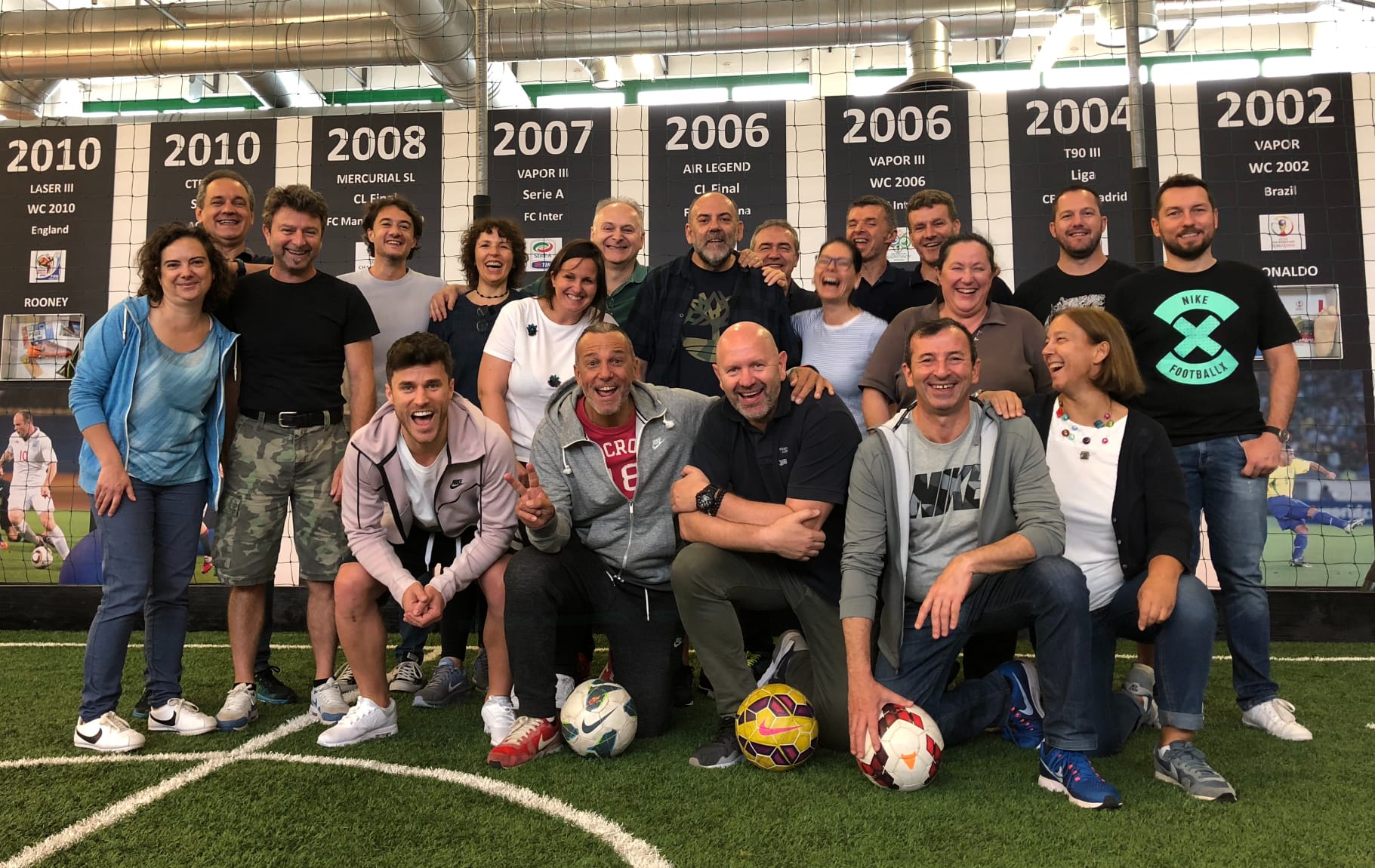
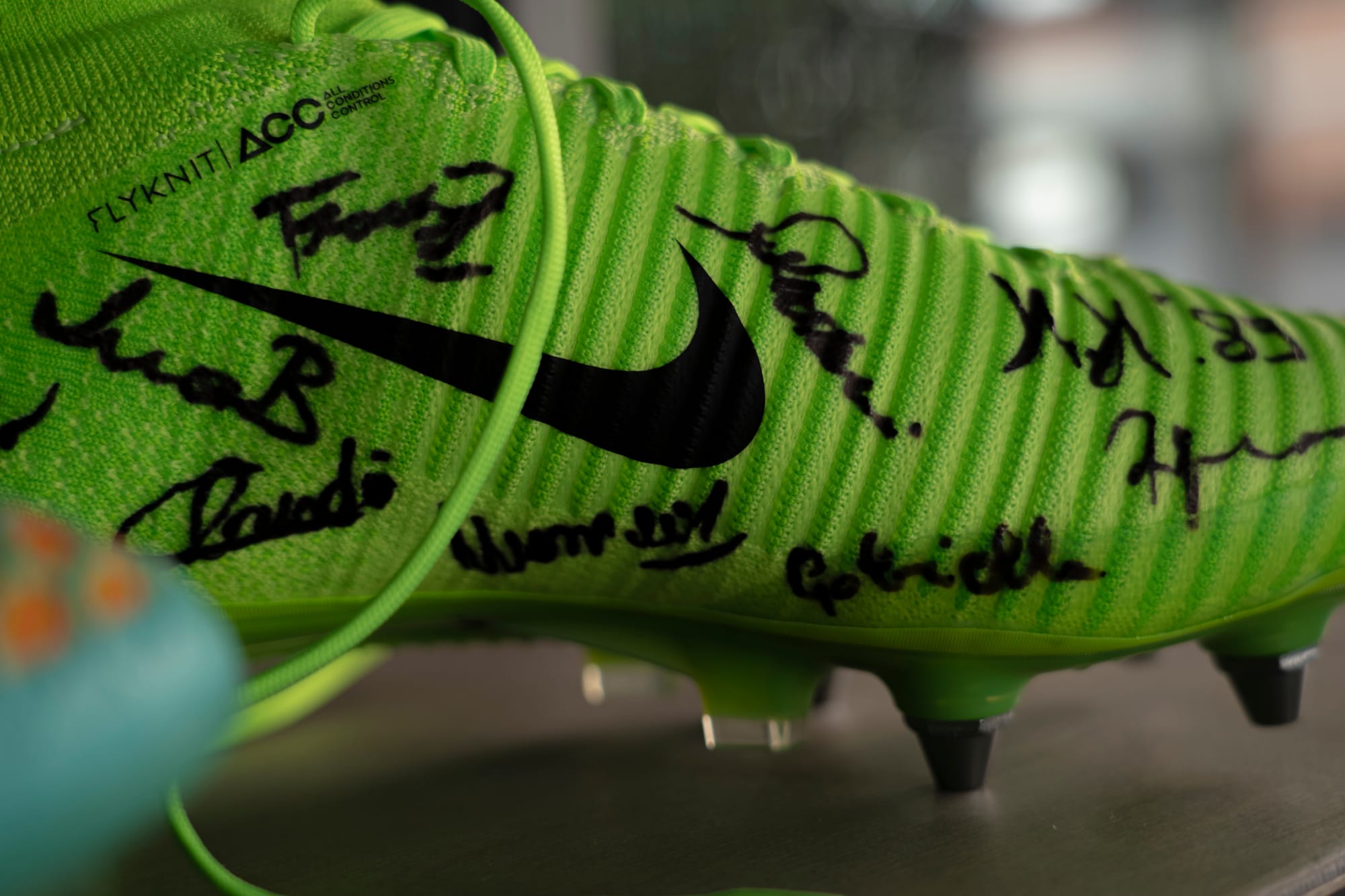
The Montebelluna team celebrating the 2018 World Cup Flyknit boots | Going away gift from the team at Montebelluna
Leaving Nike, building Athens Knit Lab
After eight years across Nike's global knit operations, including a move to Portland in 2018, Fasois left to found Athens Knit Lab in 2020. The practical reason was family. Years of moving across borders every two or three years, with a wife and children he couldn't keep uprooting, and a pull back toward the Mediterranean coastline.
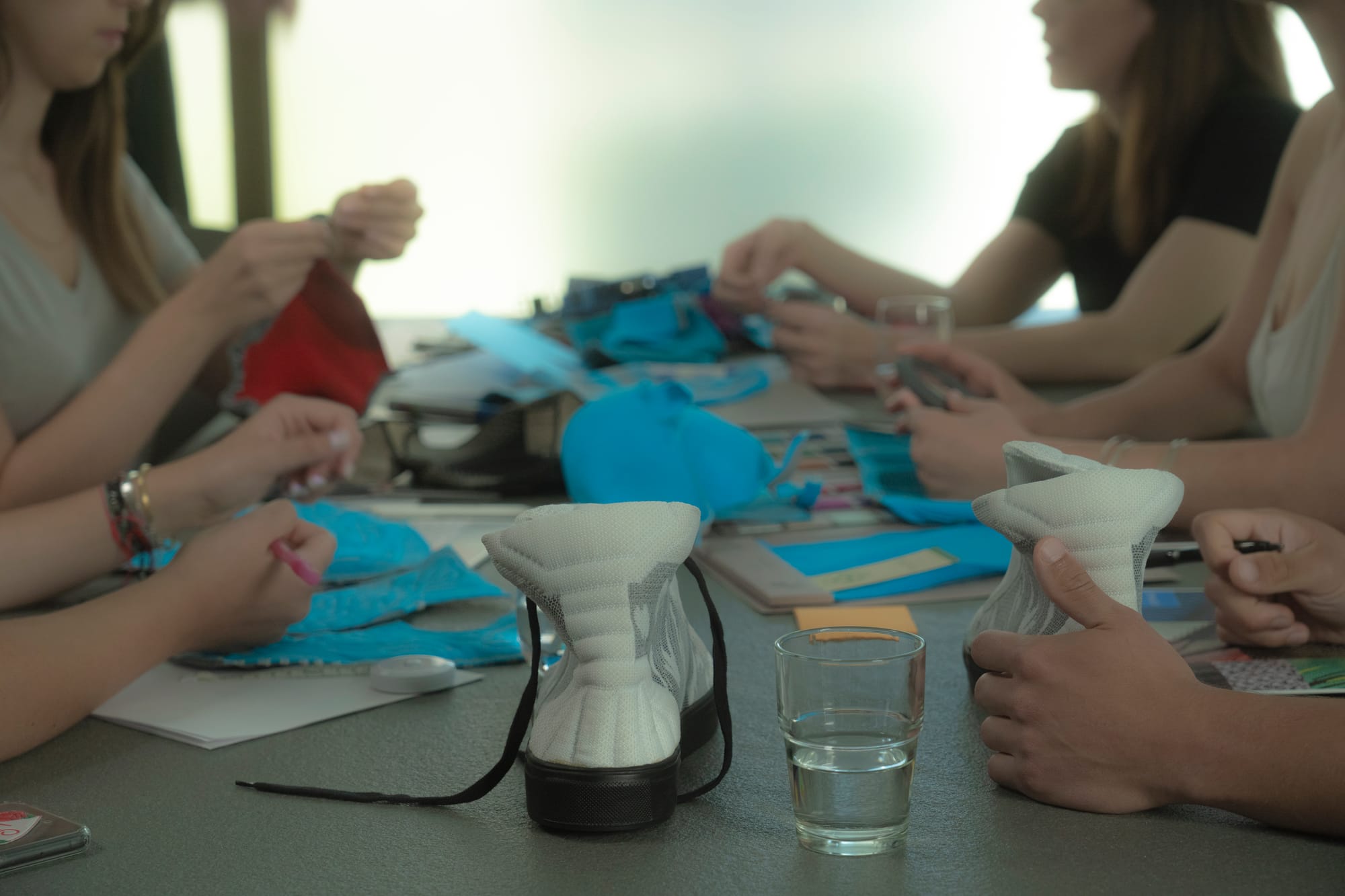
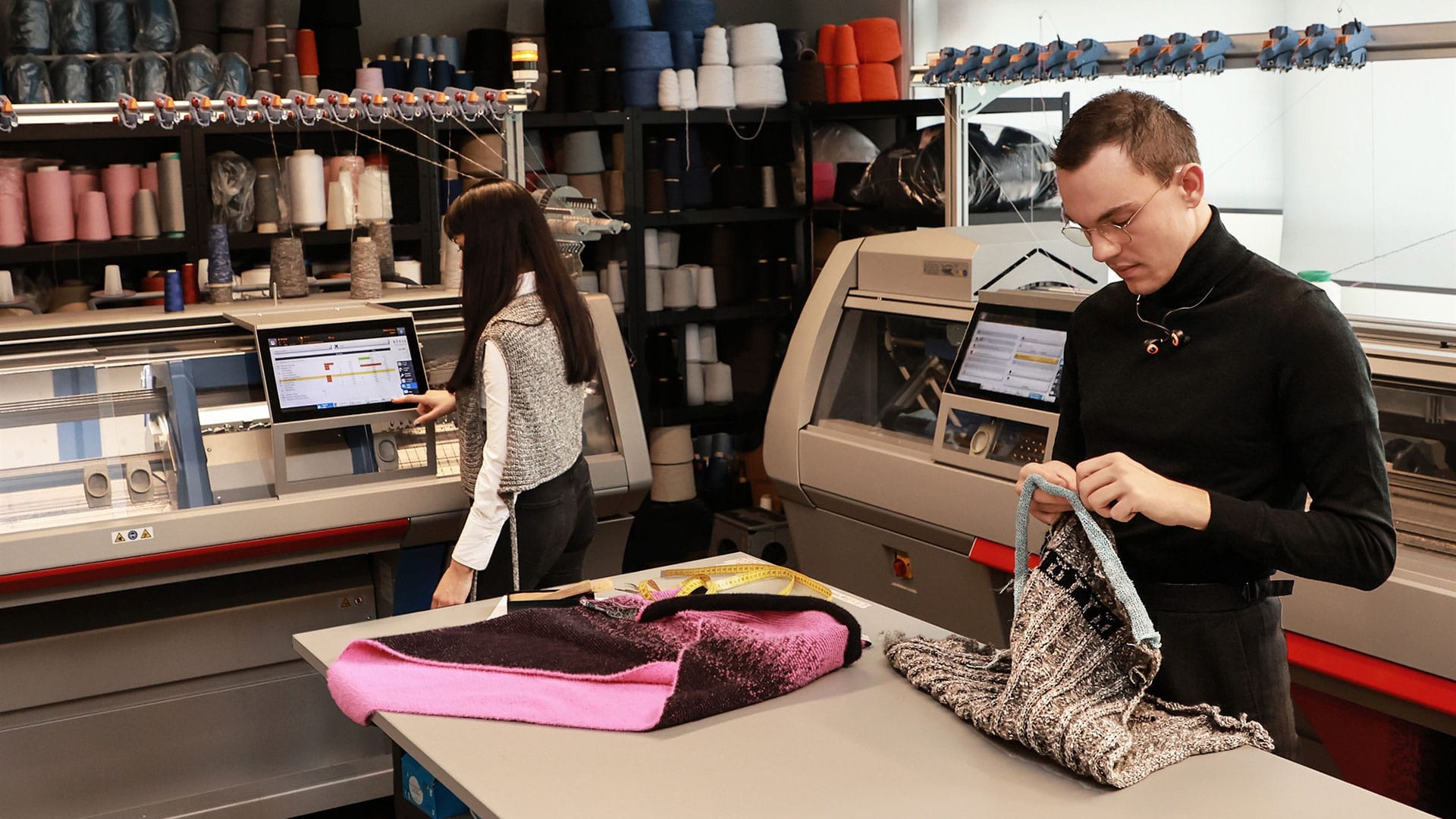
Athens Knit Lab at work, from pattern to knitted product
Alongside that was a feeling he couldn't shake, crystallised at a town hall at Nike's World Headquarters in Beaverton, with nearly two hundred colleagues in the room and leadership talking about diversity and inclusivity to applause.
While that global mosaic is genuine and admirable, I could not shake the contrasting sensation that, beneath the surface, everyone was increasingly being conditioned to speak, think, and work in the exact same corporate manner. Some of the identity challenges the industry faces today stem from that very uniformity.
His read is that the industry's original edge, the "unapologetic, rebellious" spirit, used to live inside the product creation teams themselves, not just on the athlete roster, and that a corporate environment smoothing down those rough edges costs exactly the friction that produces breakthroughs. Returning to Athens was a way of reclaiming that autonomy.
The lab's early years weren't smooth. Fasois landed back in Greece just as COVID hit, with no clients. His daughter Marianna, who studied acting in Edinburgh and cultural communications at Panteion University in Athens, was working across the arts when lockdown froze her own work, and she stepped in to help. Together they developed 3D-knitted masks that took off and put the lab on the map as an advanced technical studio spanning fashion, footwear and performance textiles.
It wasn't long before the balance shifted. Marianna's instinct for business, structure and aesthetic direction, which he thinks probably stems from her Panteion studies, quickly outpaced his own, and after some "generational friction" came "a real partnership." Today she runs operations, client relationships and business strategy while Fasois stays, in his words, "where I belong: deep in the technical development." She has since launched her own knitted-accessories label, alea-jacta, built out of the platform the lab gave her.
What we've built simply wouldn't exist without her vision and the energy of a younger generation pushing us forward.
Knit isn't soft. It's structural.
Fasois feels strongly about where the industry lost its footing. Flyknit and Primeknit landed as genuine breakthroughs, fully fashioned 3D-engineered structures designed to secure the foot and cut waste. What followed was a decade of brands simply producing flat jacquard knit fabric, treating it like any ordinary material, and cutting traditional upper patterns out of it to stitch back together: copying the surface without the engineering underneath.
When a brand uses knit purely as a decorative print or surface swap for cut-and-sew patterns, it misses the entire technological value of the medium.
Brands that do this forfeit the ability to programme directional stretch, containment, breathability and localised support directly into a single component, he says, while still incurring all the cut waste and post-processing labour of legacy footwear manufacturing. What gets missed, specifically, is what a flat-bed knitting machine can do when it's run by people who understand it structurally rather than decoratively: localised zonal properties built directly into the fabric matrix with no added seams or overlays; structural intarsia to lock down the midfoot; stitch density varied across millimetres to dial breathability or lateral containment up or down; integrated pockets, ribs, and padded zones knitted in a single cycle; and, shaped three-dimensionally on the needle bed to mirror the compound curves of a last, a true zero-waste upper that comes off the machine ready for lasting.
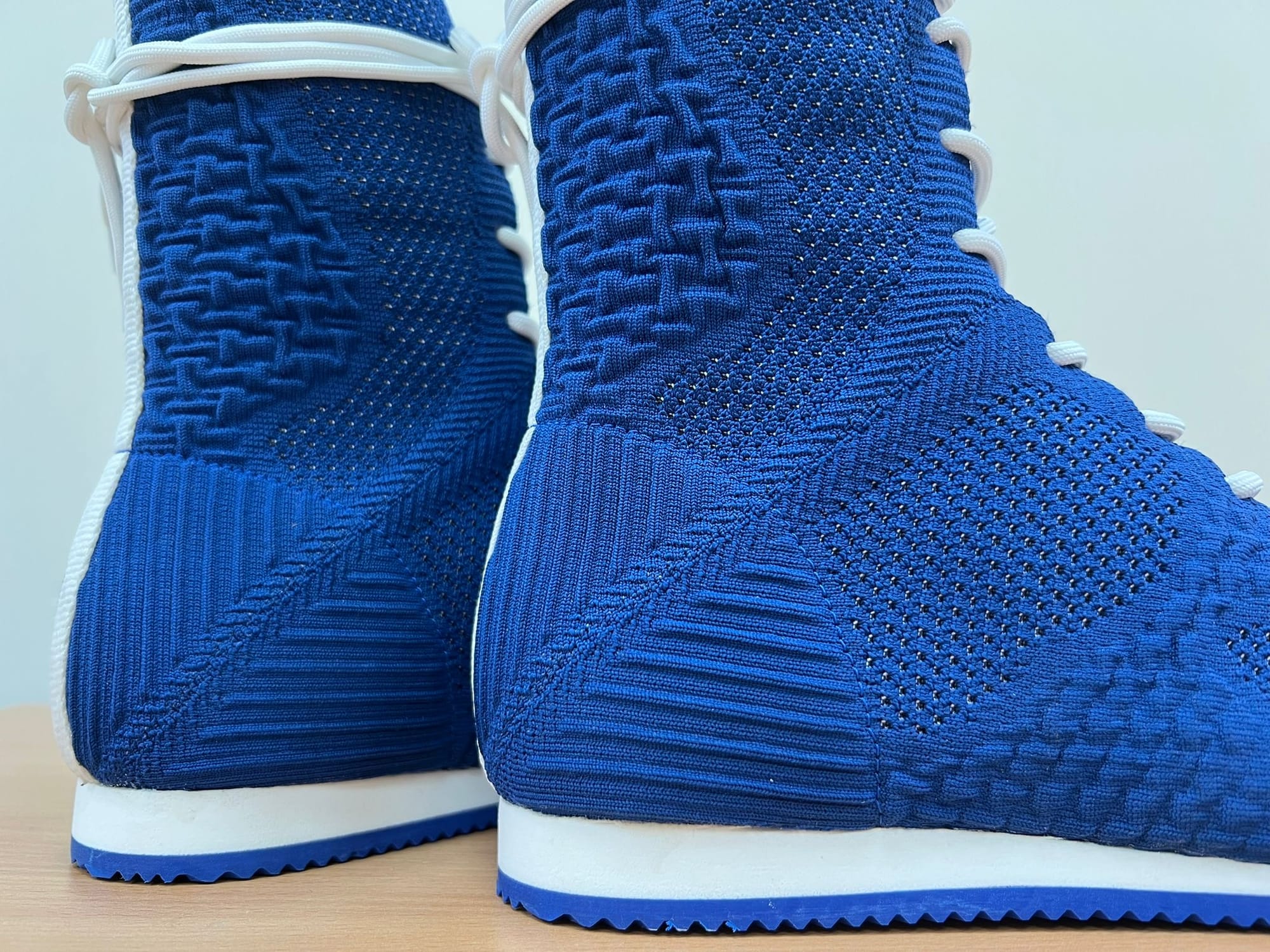
The same whole-system thinking runs through how he works. What he says he's never let go of is treating knit as part of a whole product system. Flyknit taught him that an upper doesn't exist in isolation from the last, the midsole, the outsole or the biomechanics of the foot inside it, and every project at the lab, whatever its scale, is judged against that total architecture.
Perversely, he argues the industry has become less adventurous with that capability over the last decade, not more. A decade ago, he says, engineers and programmers were collaborating directly at the needle bed to invent new geometries. Today, "that pioneering spirit has largely stalled," with most brands retreating to the safe, conventional horseshoe shape and leaning on decoration instead.
The gap he's asked to fill when a brand finally does come to him is foundational, not advanced. Most teams, he says, still think of knit as a flat canvas waiting for a graphic rather than an engineered architecture, and lack a basic grasp of how yarn behaves under mechanical stress. Concepts like directional shaping, goring, and short-rowing, the techniques that sculpt volume and heel cups without seams, are, in his words, "often foreign to them."
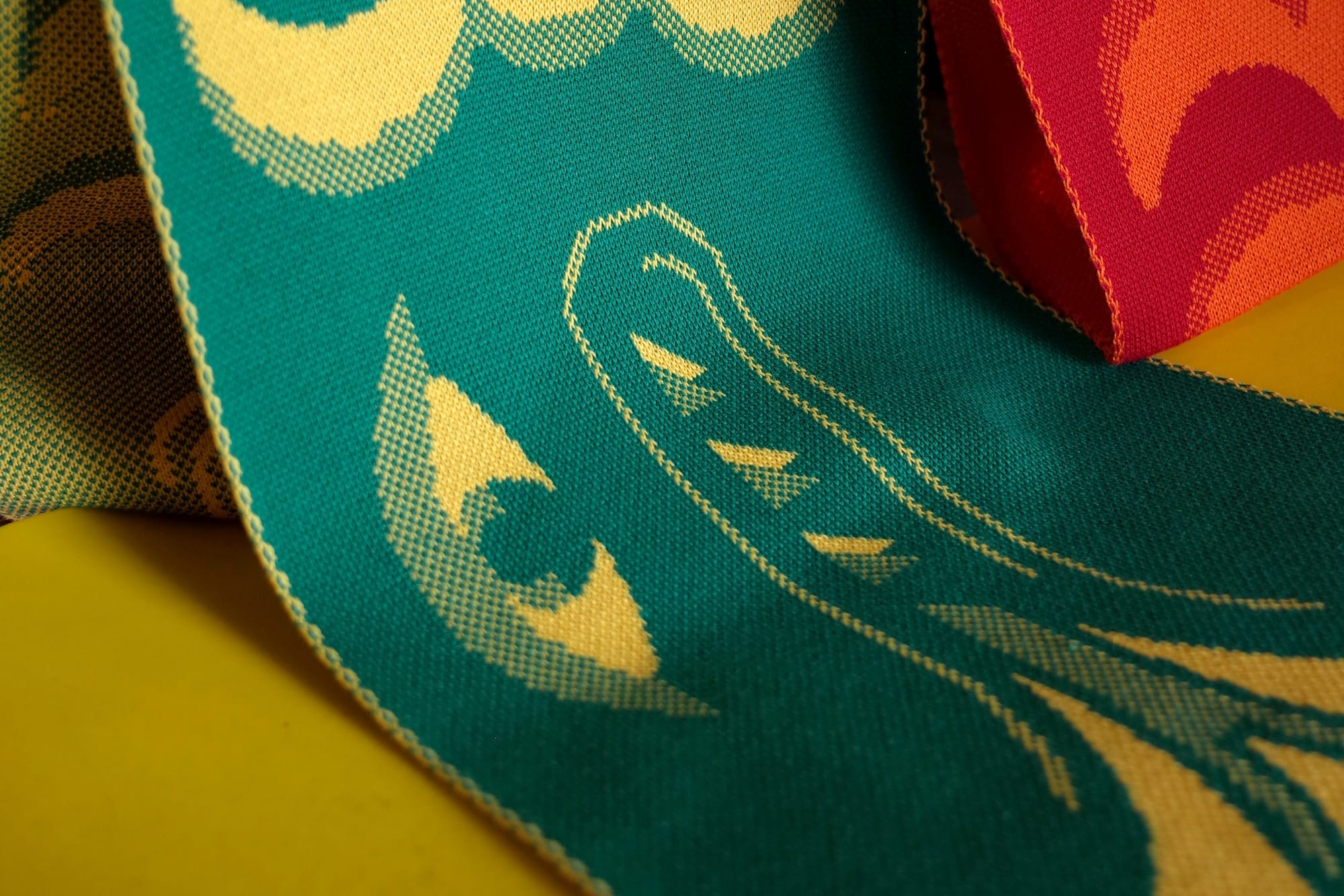

3D-knitted scarves made for a client | A shoot for alea-jacta in the lab
The sample that couldn't survive the factory
His second argument is that most brands can produce a brilliant knit sample and almost none can scale it into production.
The lab spent three months developing a project for a client whose brief called for transparent monofilament yarn across structural and aesthetic zones, and the client's own team kept assuring them that assembly trials were running cleanly. The breakdown came the moment the project moved from prototype approval to production scale, when the monofilament zones began failing during lasting and heat-setting. The prototypes had been assembled by hand in a boutique, low-heat room using bespoke cobbling techniques, while mass production was contracted to a high-volume plant running at entirely different temperatures and lasting tensions.
The heat and pull of industrial lasting melted and distorted the monofilament completely.
His takeaway is a rule he now treats as close to absolute: never validate a footwear sample in an isolated design studio. Run every trial on the exact factory floor where the shoe will actually be mass-produced.
After years of unlimited development time inside Nike, he spent a couple of painful, expensive years at the lab making intricate pieces that clients loved but that cost too much, and took too long to be viable. The deeper issue, in his view, is a tactile fluency that digital and generative tools have let teams skip. Textile engineering is an empirical discipline that can't be mastered through a screen or a prompt, and his advice to newcomers is the tortoise and the hare: master loop formation, yarn tension and take-down forces first, because programmers who rush a programme onto the machine produce work that is "inherently fragile and fails the moment it hits real manufacturing conditions."
Building that capability internally takes, in his unsentimental words, "money, money, money: sustained capital, and patience." Brands routinely buy the machines thinking that's the whole investment, he says, only to find the hardware is useless without the specialised training and engineering talent to run it.
What's holding it back
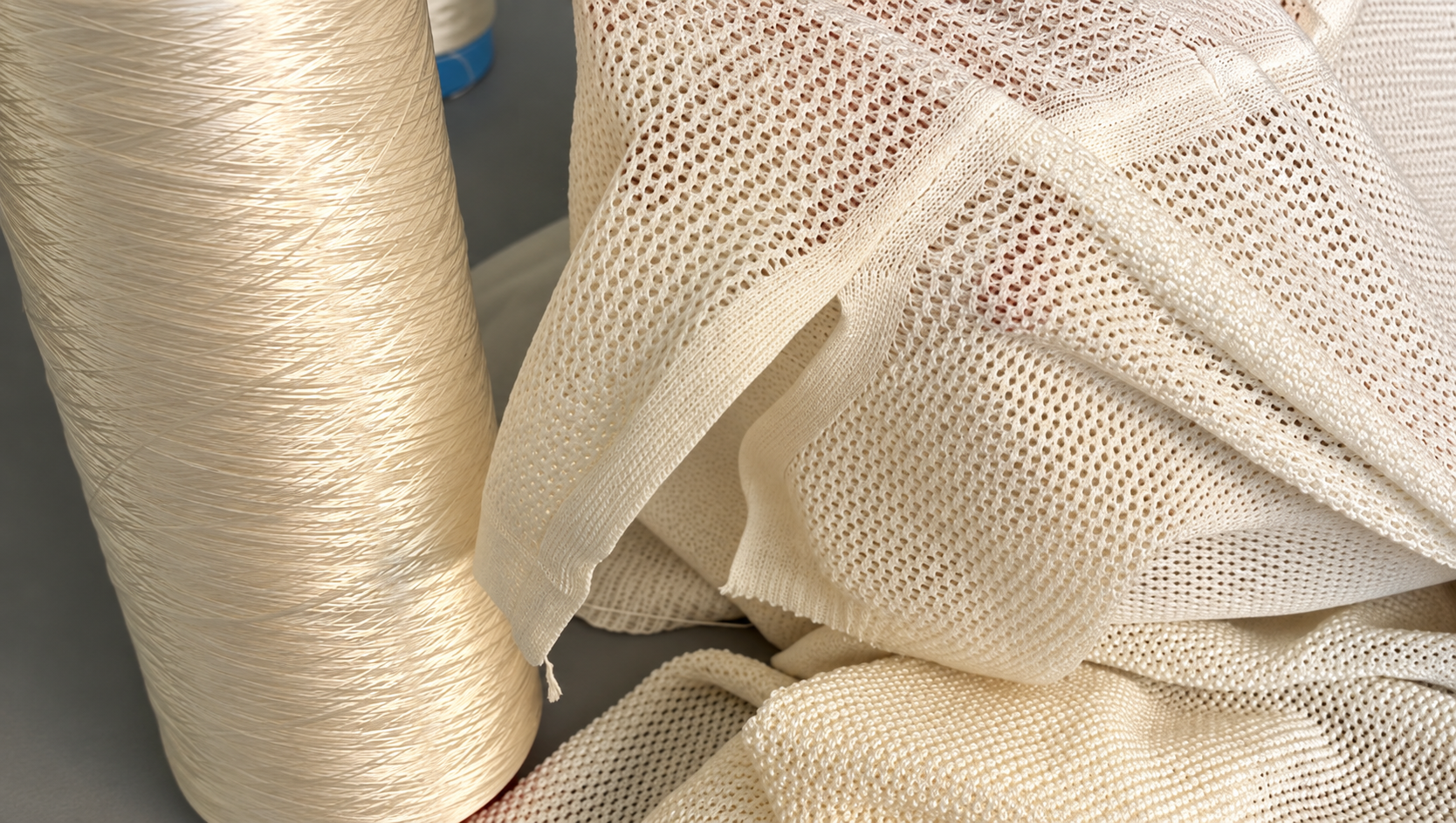
Materials show the same pattern. Earlier this year, Athens Knit Lab partnered with noéma, an innovative material startup developing fully compostable, bio-based yarns from renewable plant fibres. Together they showed the Zero Waste Bio-Knit at Fashion Beyond Waste in Athens in June, a prototype pairing 3D knit-to-shape technology with an experimental yarn spun from agricultural waste. The brief was less about design than proof: could a waste-derived fibre survive an industrial flatbed knitting environment at all? The hard part was inconsistency, with tensile strength, elongation and friction shifting from batch to batch, but by his account the lab and noéma showed that agricultural waste yarn, paired with knit-to-shape engineering, can produce a fully functional garment.
Is it production-ready? He is candid that the proof of concept now hits a commercial bottleneck that has nothing to do with the technology: it sits between the spinners and the brands. Spinning mills demand immediate, massive production volumes to justify their investment, he says, while "the multinational brand behemoths are always the very last ones to commit to unproven, pioneering materials." Real change, he argues, comes from small studios, yet they receive virtually no pragmatic support from European green initiatives or from the yarn manufacturers themselves. His fix is for spinners to offer smaller development batches that dozens of independent brands can test at once, alongside their high-volume contracts. Because that bridge has broken down, he says, innovative suppliers are closing their doors across Europe.
The Bio-Knit points to a wider problem: knit has no ecosystem behind it.
He wants footwear to take knit as seriously as it takes 3D printing, which got there through slicing software, materials research and an open, collaborative community compounding at once. Flat knitting is itself an additive manufacturing technology, he points out, building three-dimensional geometry loop by loop without cutting, and it needs the same ecosystem. He name-checks Variant's Loop Software as pointing in the right direction, but says the energy is concentrated in small brands, universities and independent labs rather than in mainstream boardrooms, and he feels that research is on the cusp of breaking through.
What's at stake if that doesn't change? He frames it as more than a missed commercial opportunity: a biomechanical and environmental one. Legacy construction, with its rigid internal stiffeners, restrictive lasted profiles and synthetic panels bonded with harsh adhesives, is in his view a primary root cause of acute podiatric issues, deformities and chronic foot pain for millions of everyday consumers, while traditional cut-and-sew assembly generates catastrophic amounts of landfill waste and toxic chemical bonding. Advanced 3D flat knitting speaks to both, he says: an organic, anatomical skin that flexes and breathes around natural foot motion without constrictive pressure points, and zero cut waste.
If the footwear industry continues to overlook knit as an engineered structural solution for another decade, it won't just miss a business opportunity. It will continue turning a blind eye to consumer physical well-being and the urgent environmental solutions our planet desperately requires.
Teaching the teachers
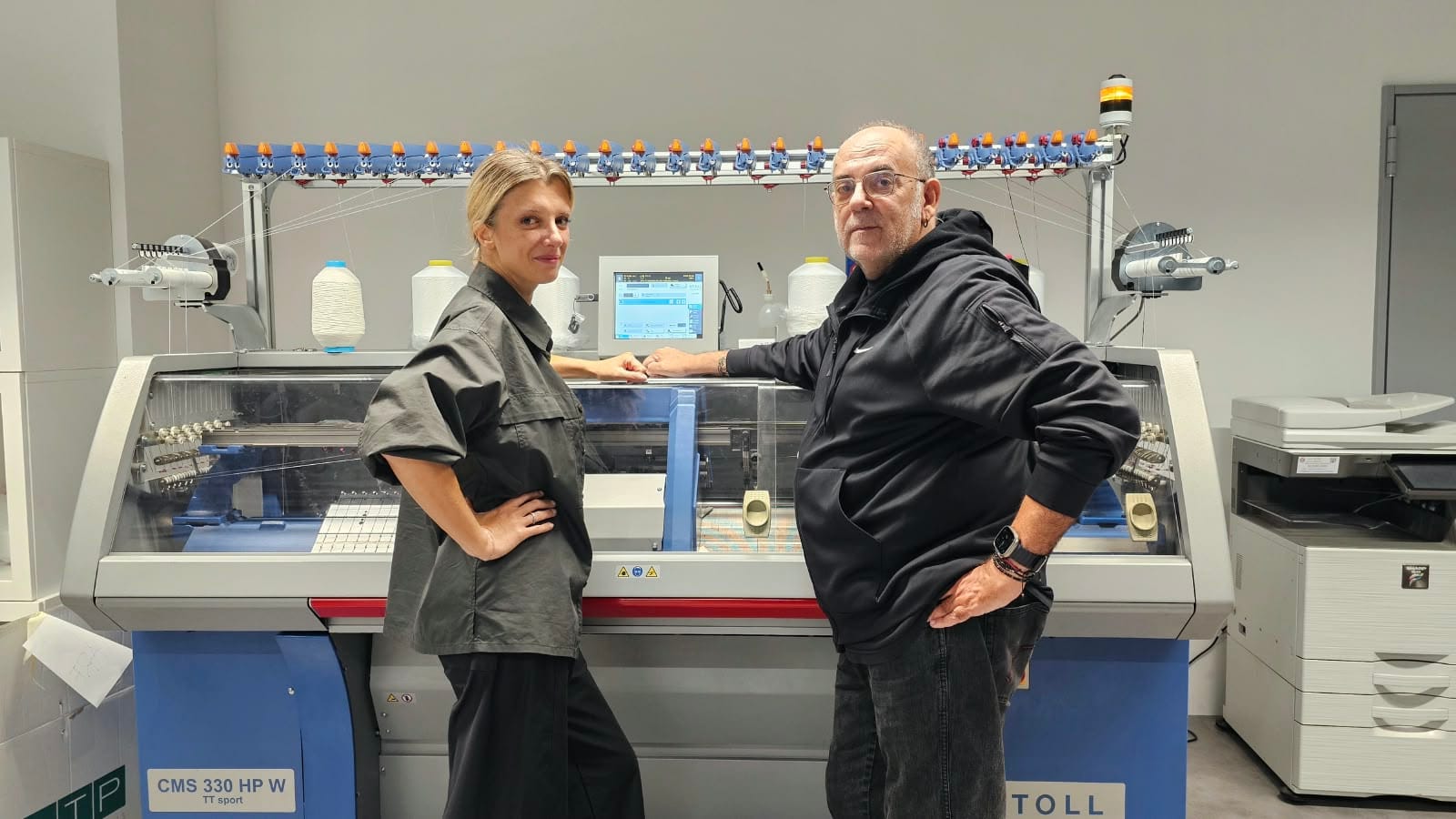
The way out starts with people. If knit is a discipline rather than a material, it has to be taught, and Fasois is testing that at Arsutoria, the Milan-based footwear school. It invested in a Stoll flat-knit machine at the end of 2025 and brought Athens Knit Lab in to train its faculty, funded in part by a Regione Lombardia programme. One instructor, Francesca Ratti, has completed her first two weeks, with further training planned.
The transfer has worked quickly, he says, because the instructors already have deep structural fluency from traditional shoemaking and CAD: they know the geometry and are learning a new medium. The barrier was confidence. Once the mechanical fear of the machine disappears, instructors stop seeing the needle bed as an impenetrable black box and approach it with the same creative authority they bring to leather, lasts and patterns.
His own approach to teaching comes from a humbling week in 1998. Confident after years as an independent technical consultant, he joined an Italian knitwear company expecting a technically punishing brief to show off on. The owner, an old-school Italian, came back after five minutes with a plain merino wool crewneck. Fasois was disappointed, and didn't hide it. But a basic garment exposes tension, fit and handle with no surface tricks, he says, and it took him until the Friday to meet the owner's standard, with the owner next to him at every adjustment, explaining the structural rationale behind every micro decision. It was the opposite of his first factory, where technicians sent him to the far side of the room so he couldn't follow their moves. That week recalibrated his eye, and it is the model for how he teaches now.
The teaching has run the other way too. Teaching at the Shoreditch studio broke his rigid sense of what was technically possible: he advised the new designers not to overreach on their first ambitious structural concepts, and the next morning they walked in with working swatches already programmed and run. He learns more from his students than they do from him. He might have engineered five hundred knit structures in his career and a younger programmer only fifty, but if he has never built those fifty, they know them "infinitely better" than he does. When he hits a problem he can't crack, he reaches out to mentors. "The only difference is that today, all my mentors are considerably younger than I am."
How will he know whether it has worked? It may take more than a year, he says. The bar is full independence, and beyond that a change in perspective: students who see knit as an advanced structural material.
The ultimate benchmark of success will be seeing their instructors independently programme, calibrate, and execute fully engineered footwear uppers from scratch, completely unassisted.
What success looks like now
Beyond one school's results, what does success mean to him after forty-five years? If it were judged by corporate titles or wealth, he says, he probably should have stayed at Nike and climbed the ladder. Where many returning Greeks look for a modest, quiet mark, he wants the lab's footprint to be bolder, proving technical knit engineering as a real, viable, urban manufacturing technology, with a renewed collaboration now underway with the University of Western Athens and its textile department.
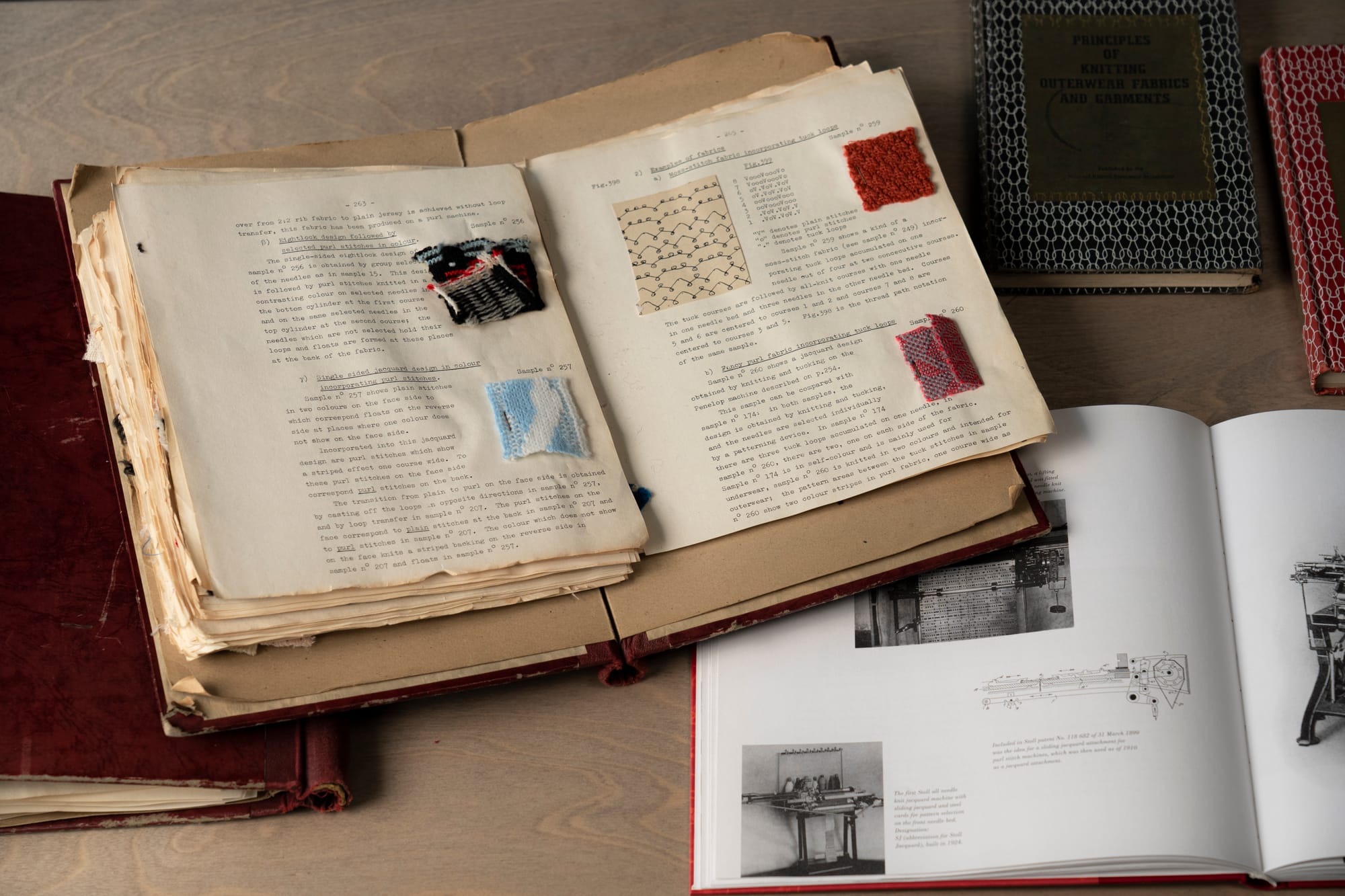
Pressed further, it narrows to people, and to generosity with knowledge. Social connections and sharing experiences with people are, he says, a very important part of success. He took a factory's manuals home to teach himself, and years later a veteran technician who had studied through a Nottingham university gifted him his course manuals and reference books on retiring. He still keeps them in his workspace.
The lab's next chapter is online technical resources and seminars. And as for Fasois, he's writing a book, inspired by Austin Kleon's Steal Like an Artist, built on the idea that mastering a craft quietly teaches you how to live. Working title: Things I Learned While Knitting.
Success is sharing what took me a lifetime to learn. It is staying relentlessly curious and creative, remaining healthy, being surrounded by love, and having the simple freedom to swim year-round in the sea.
A huge thank you to Vasilios and the team at Athens Knit Lab for hosting me at the lab earlier this year, and for making the time for this feature. Vasilios is humble, open, kind, and very funny, often at his own expense. He and his team were a pleasure to spend time with. If you would like to work with them, or just find out more, get in touch with Athens Knit Lab now.