


Asher Clark grew up in Somerset in the 1980s, the sixth generation of the Clarks shoemaking family, though his dad wasn't in the trade so he came to it sideways.
What got him wasn't heritage. It was Nike. Reebok. The sweet petrochemical smell of EVA foam. He'd visit his grandparents in Canada and come back obsessed with whatever was on the wall. He left school early, went to London College of Fashion, was named Designer of the Year on graduation, and built a career working with DKNY, Paul & Joe, and Kenzo.
He knew a lot about shoes, but it took him years to realise how little that had to do with feet.
That gap between what the industry makes and what the human body actually needs is what eventually produced Vivobarefoot. And over a decade later, it's what produced VivoBiome: a scan-to-print personalised footwear platform that may be one of the most genuinely radical things happening in footwear manufacturing right now.
At Stride Europe 2026, I sat down with Asher for a fireside conversation about the journey from shoemaking to systems thinking, and what first-principles design actually costs.
🎥 Watch the full discussion below & read on for the full write-up.
From Sneakers to Feet
Clark's entry into footwear came through brand, aesthetics and culture. But around 2008, his thinking about shoes and their relationship to feet pivoted. A friend kept twisting his ankle playing tennis, and in an effort to resolve this, had cut the sole off his Nikes to get closer to barefoot. When he brought it to Clark, something clicked. Not just as a quick fix for the ankle, but as a larger design principle.
What followed was years of unlearning.
You don't learn biomechanics in the shoe industry, which is bananas.
Vivobarefoot launched in 2012, into a brief barefoot moment that included Nike Free, New Balance Minimus, and Vibram Five Fingers, then collapsed when a wave of injuries followed the Born to Run boom and the industry swung back hard toward maximalism.
The overnight success didn't happen, but Asher was still committed, recognising it was going to be a longer burn.
The Origin Story of the Wrong Shoe
Clark set the scene with an account of how the modern sneaker was born, and why, in his opinion, it was the wrong turn.
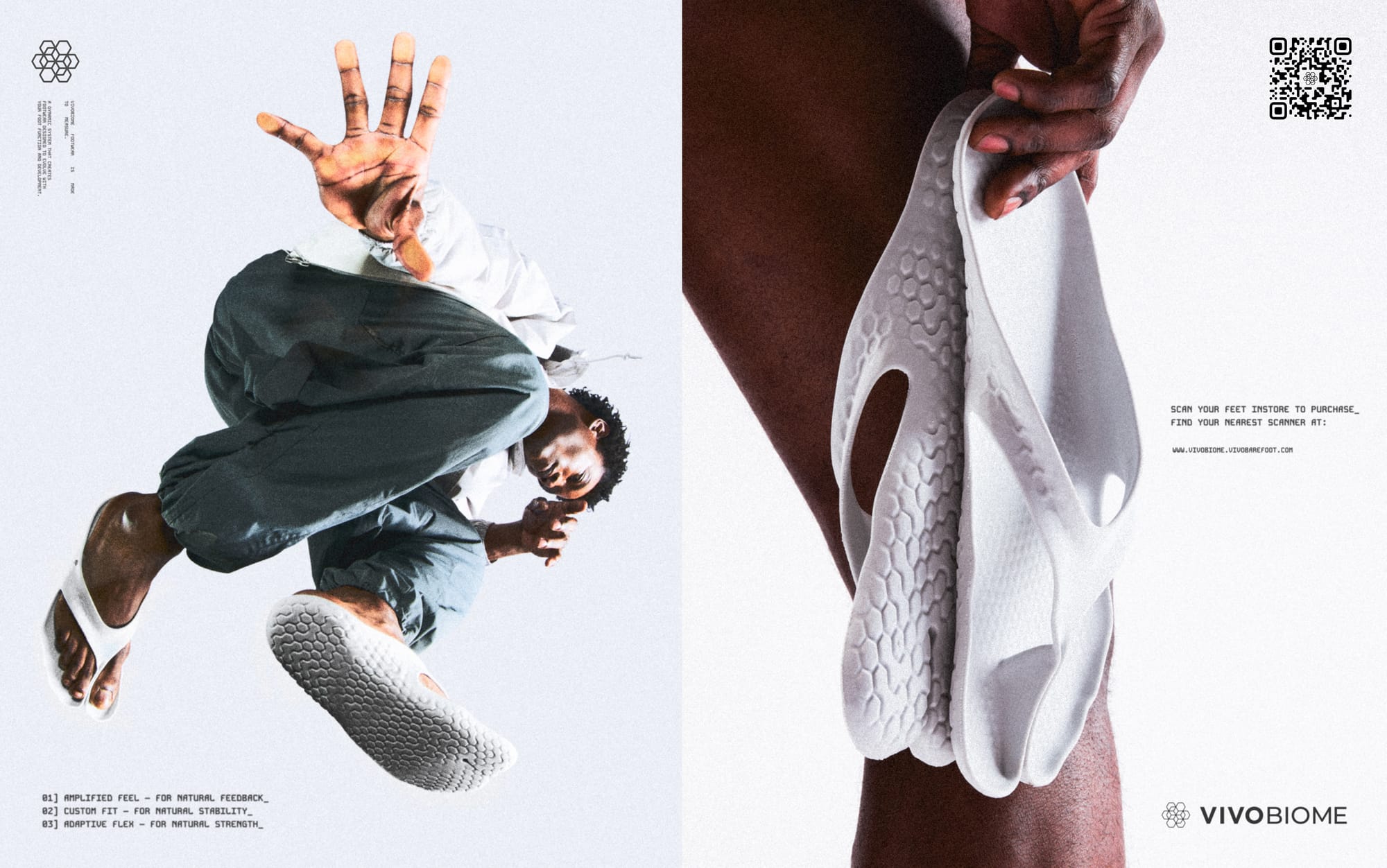
Millions of years of evolution produced a foot designed to stand, walk, and run. Shoes arrived as protection from cuts and cold. Then came the stirrup, and a shoe designed to fit it: a pointed toe and a heel to stop you sliding out.
If you look down at your shoes now, they still resemble that exact architecture. But I don't know if anyone here has a horse parked outside.
The sneaker industry repeated the same error at scale. Phil Knight and Bill Bowerman got Middle America jogging, people got injured, the podiatrists were called in, and the response was more support, more arch control, more cushion.
You could say the rest of the shoe industry was born trying to create a shoe that solves the problem that shoes cause in the first place.
His three principles for what a shoe should actually do are simple: foot-shaped to let toes splay (skeletal system); flat and flexible to let muscles and tendons load and recoil (musculoskeletal system); and thin-soled to let the foot feel the ground.
Your feet have the same amount of nerve endings as your hands. If you dull that sensory feedback, bad movement happens.
The Unfashionable Foot
Clark didn't shy away from the challenge of consumer behaviour.
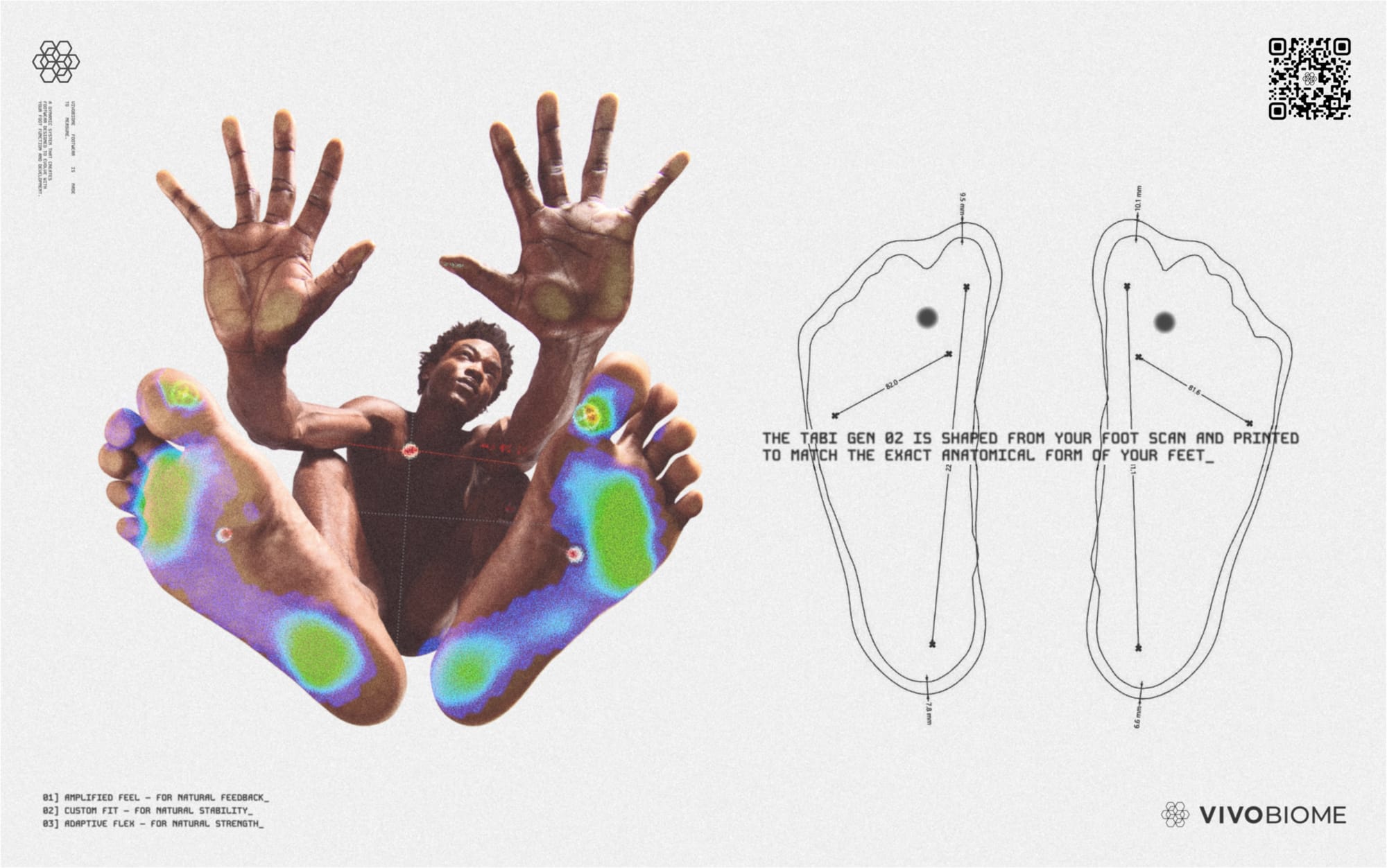
The foot is unfashionable. That's just a fact.
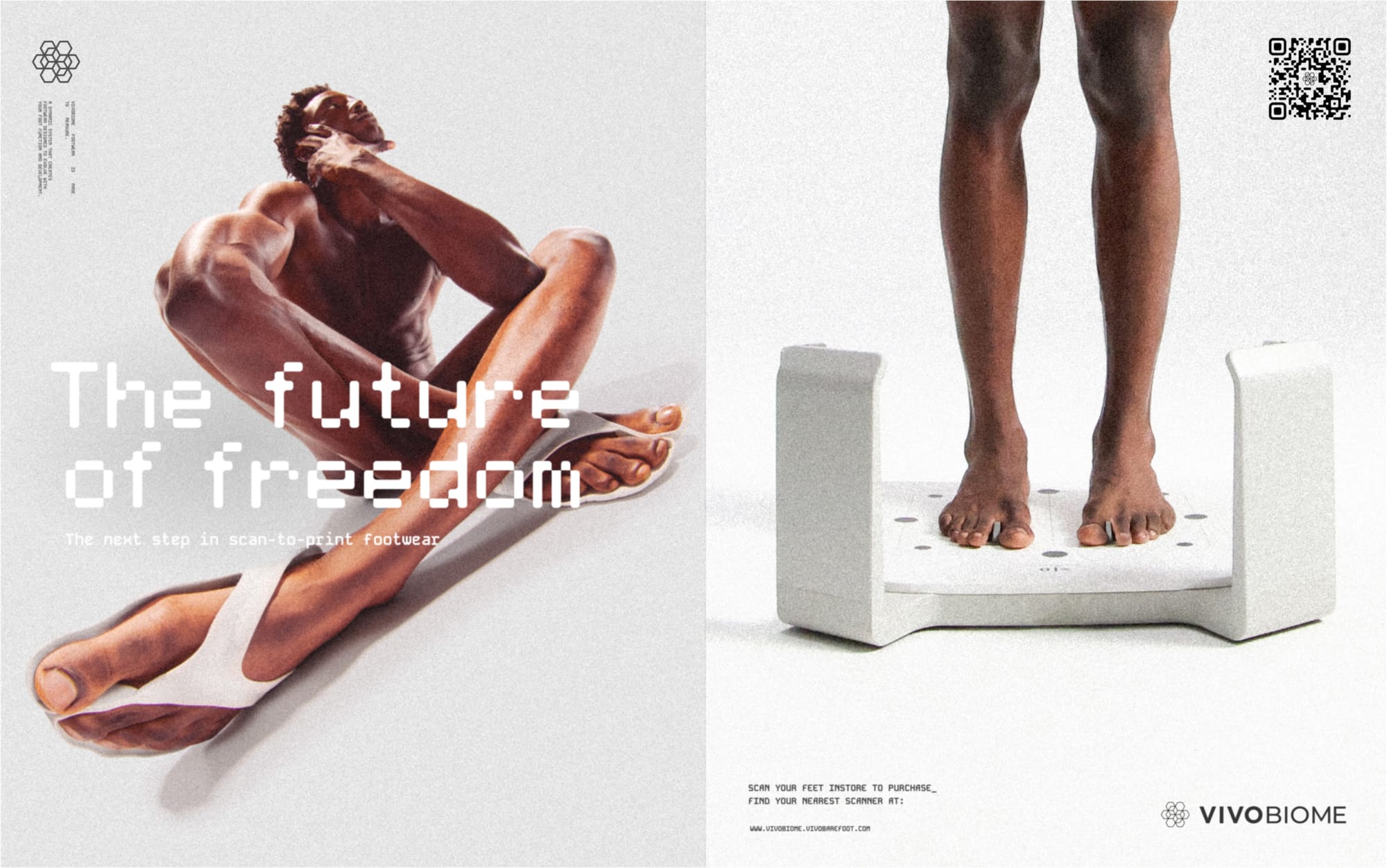
Even within Vivobarefoot's existing line, wide foot-shaped shoes are a hard sell. Footwear that literally follows the outline of a foot looks squared-off, strange, nothing like what decades of shoe marketing has trained people to find desirable. With VivoBiome, they're asking someone to step onto a scanner, wait four to six weeks for a product that looks like nothing they've worn before, and trust that feet doing what feet are supposed to do will feel better than the cushioned, supported, shoe-shaped shoes they've worn their entire lives.
Clark describes it as a ladder of truth that people have to climb down, from performance technology and familiar silhouettes toward something that follows the foot rather than putting the foot into the shoe. The opening VivoBiome campaign leans directly into this, asking whether something that looks odd might be beautiful after all. It's a deliberate attempt to get ahead of the aesthetic objection before it kills the consideration.
The transition challenge is real for feet too, not just minds. Clark was candid that jumping into barefoot footwear for 20,000 steps a day if you've spent your life in supportive shoes is the wrong approach.
Start by just taking your shoes off. Get a standing desk. Take baby steps.
The foot needs time to strengthen and adapt, and that gradual journey is, in its own way, part of the product proposition.
When the Product Wasn't Enough
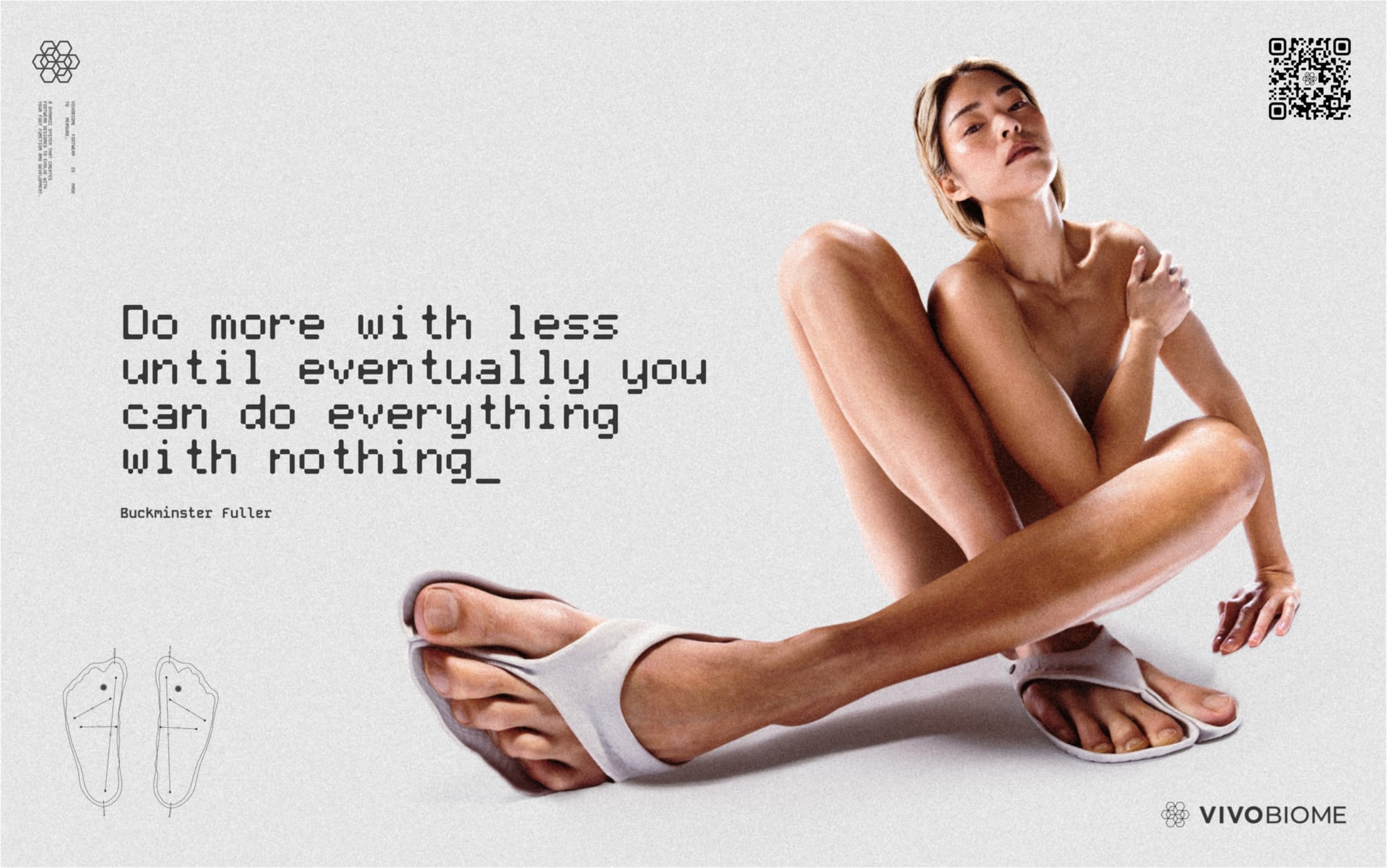
The scan-to-print journey started at Outdoor Retailer in 2019, when Clark stood on a 3D foot scanner for the first time. He persuaded them to give him the data, flew back to the supply chain in China, made a foot-shaped last, 3D printed a sole, built a 3D-knitted upper, and went for a run.
It was a swearing moment. This is the way we need to make footwear.
The problem was immediate: feet are biomechanically similar but morphologically unique. If the goal is footwear that genuinely fits, you have to make it one-to-one. That realisation meant changing not just the product but the entire system around it: the point of sale, the scan infrastructure, the production workflow, the logistics.
It's really systems thinking almost as much as it is product thinking.
A Manufacturing Thesis, Not Just a Product
I've spent 15 years in Asian supply chains. We still make 99.9% of our shoes in the same factories as Nike and Adidas. It was bananas when I first walked in and it was bananas when I last walked out.
The VivoBiome model is built on four principles: made to order, made to measure, made locally, made to be remade. The result, after years of development, is a system built on 52 bespoke computational tools written in Grasshopper and Rhino, taking a Volumental foot scan and generating a product shaped precisely to that foot's geometry in seconds. The workflow runs from scan to Carbon printer autonomously. Each product is unique; each runs through the same automated process.
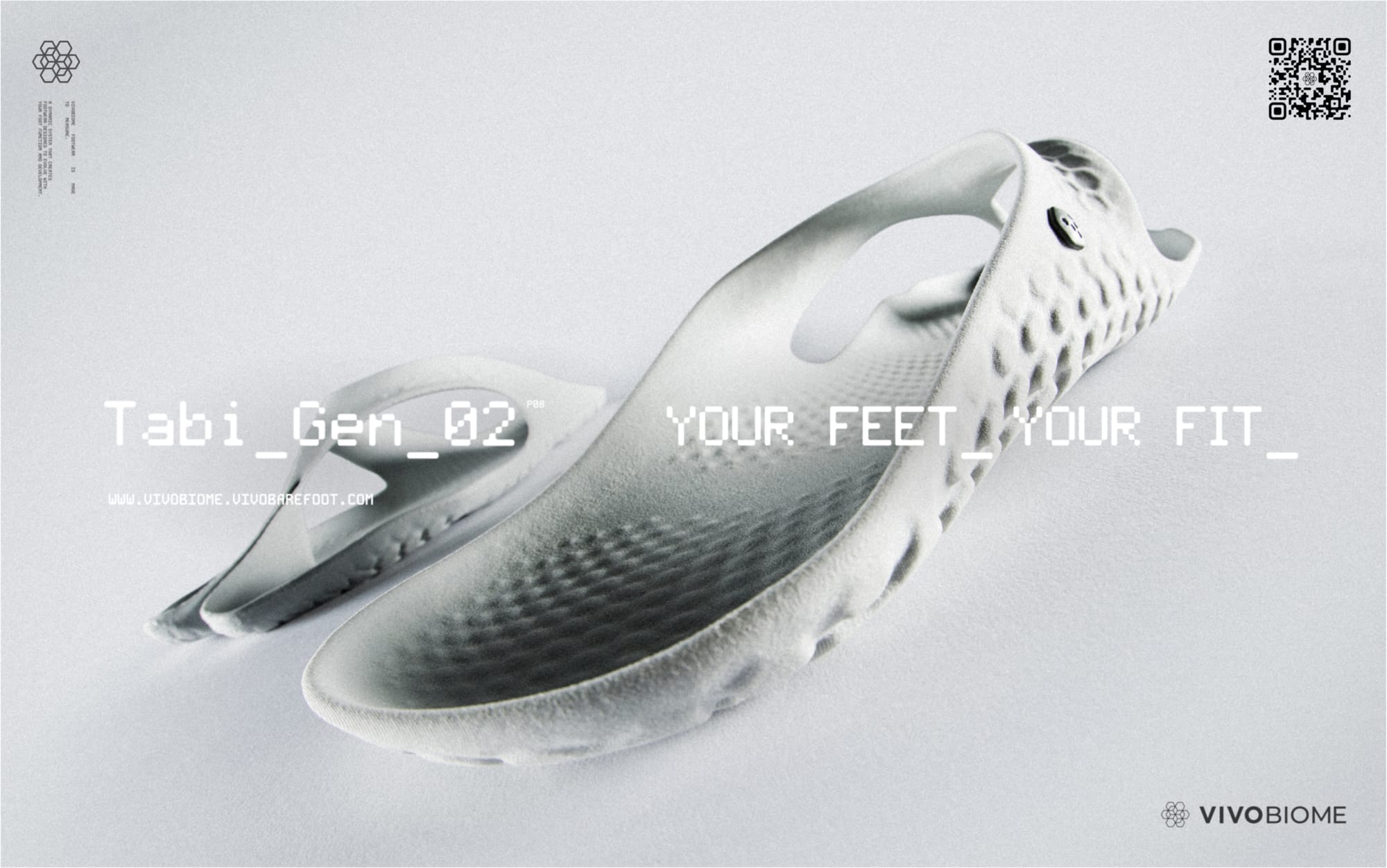
The shift from SLS to Carbon's new foamed PU material was significant: lighter, more compliant, softer, with better grip and durability. At around 91g per sandal and a 2mm sole, it's about as close to a second skin as printed footwear has gotten. The commercial logic follows the same principle: making only what's needed, when it's needed, where it's needed. No inventory risk. No landfill. No complex multi-material assembly.
The current infrastructure is deliberately small: scanners in London, Tokyo, Austin, and Prague, with production in Germany. Clark used the Tesla charging network analogy: you can't scale scanners without demand, and you can't build demand without scanners. The midterm plan is direct-to-consumer with three production systems; the longer term is regional hubs at continental scale.
The Fit Visualisation Future
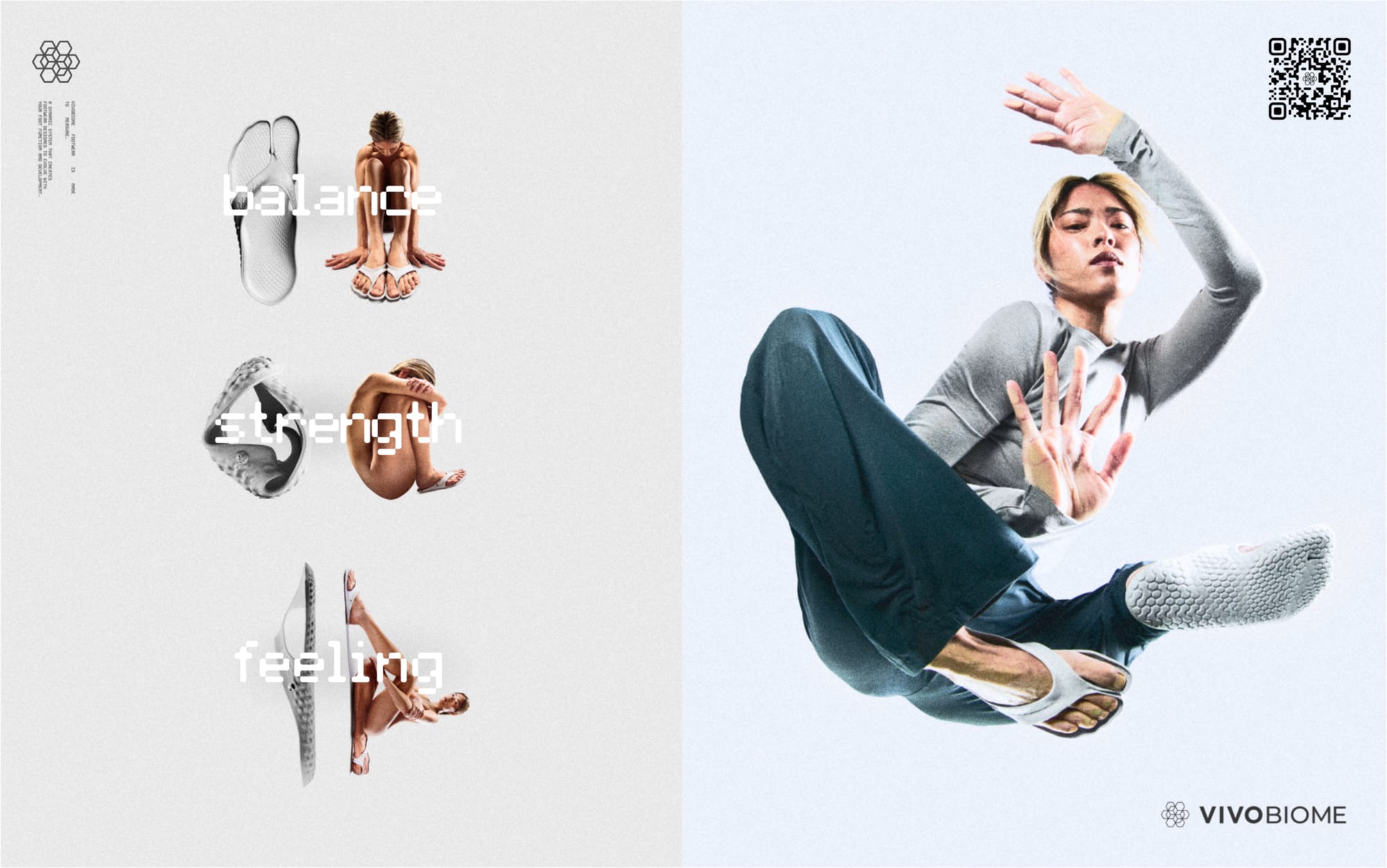
One of the most forward-looking threads in the conversation was where fit itself is going. Right now the Tabi Gen 02 is shaped to your foot's exact geometry. The next layer is giving customers agency over how that fit feels, not just how it's measured.
Clark's vision is a screen-based experience where you see the product built to your foot scan in real time, then make deliberate adjustments before it goes to print: a little more toe space, a slightly firmer strap. Fit becomes a decision, not just a result. You're not selecting a size. You're co-designing something.
There's also a longer data story here. As feet change over time, particularly when people move from supportive shoes toward barefoot, the scan from one purchase becomes part of an ongoing record. Arches strengthen, toes splay, loading patterns shift.
The footwear you buy today is going to be different from the footwear you buy in a year.
The longer ambition is for VivoBiome to function as a foot health platform as much as a footwear brand, tracking that journey and responding to it.
What it Costs
We're building the spaceship as we're flying it.
Nothing here is off-the-shelf. The code is bespoke, the manufacturing process is new, the customer experience is entirely unlike walking into a store. Every time they want to improve something, they write the code first.
It's like software as opposed to footwear. Everything is updating all the time.
On whether VivoBiome is a product launch or a manufacturing thesis, Clark believes that it's somewhere in the middle. The fear and the excitement are running in parallel. The commercial stakes are real: a product that requires a physical scan, a four-to-six-week wait, and an entirely different relationship with footwear has a lot to prove before it reaches meaningful scale.
But the argument is hard to dismiss. The current system wasn't designed around feet. It was designed around stirrups, and then around the problems that the shoes those stirrups produced went on to cause. If footwear is ever going to be genuinely regenerative, for human health and for the planet, it probably has to look something like this.
The Asia Opportunity
One signal worth watching is Asia. Clark is already seeing strong traction in Japan, four stores and a growing business, and his read is that Japan could be among the earliest markets to embrace VivoBiome. The instinct is cultural as much as commercial: a market that's tech-forward, values precision and craft, and where the commerce and social layers are more tightly integrated than almost anywhere else.
China is also on his radar. Early conversations with potential partners there suggest real enthusiasm for the model. Clark noted that Asian consumers and retail partners are, if anything, more comfortable with the kind of tech-mediated purchase journey that VivoBiome requires than Western markets currently are. Scanning your feet in-store, waiting for a made-to-measure product, tracking it to your door: that's closer to a normal commerce experience in parts of Asia than it might feel in London or New York.
It's early, and Clark was measured about it. But if VivoBiome finds its first real mass-market moment anywhere, the signals suggest it may be in the East before the West.
What the System Means
The Tabi Gen 02 is live now. You can scan your feet, order a pair, and have them arrive shaped to your specific foot geometry. That's not a concept or a pilot. It's a working commercial system, operating across five cities, with a real supply chain behind it.
But what it represents is bigger than a sandal. It's a proof of concept for a fundamentally different way of making things: demand-led rather than forecast-led, additive rather than subtractive, local rather than centralised, personal rather than standardised.
Whether it scales to the point of challenging the incumbent model is genuinely open. But the system exists, it works, and it's shipping. And that's further than almost anyone else has got.
🔗 Interested in finding out more? Locate your nearest scanner at vivobiome.vivobarefoot.com


